Custom Production Machinery
Purpose designed production equipment developed around a defined process, product, throughput, footprint and operating environment

Industrial machinery engineering
Custom and special purpose machinery for production, testing, development and equipment modification. Fabrixon connects process requirements, machine architecture, mechanisms, structures, validation and controlled manufacturing documentation within one coordinated engineering scope
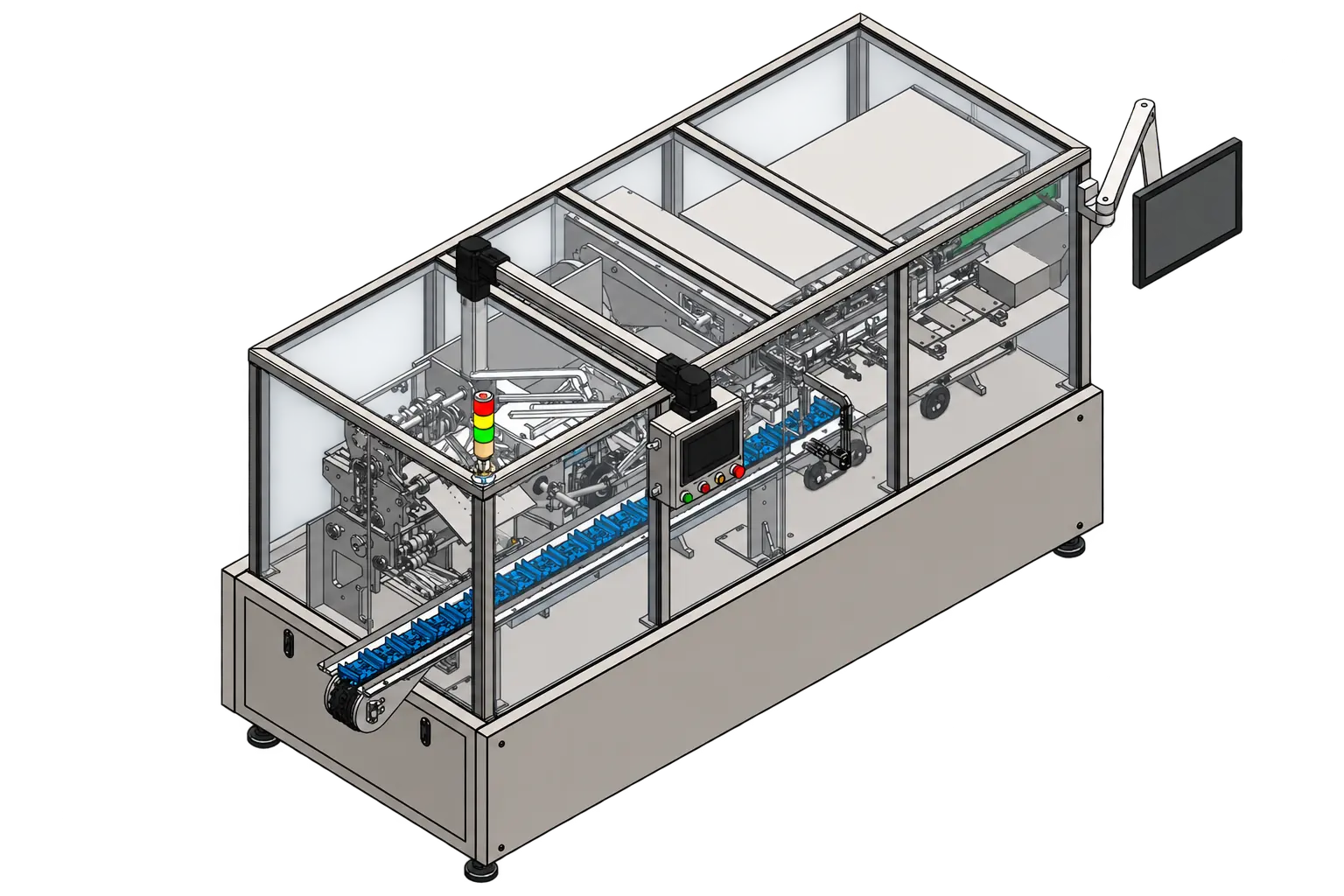
Machinery, automation, structures, tooling, validation and documentation
Custom machinery, equipment modifications, tooling and engineering programmes
Production machinery, test equipment, retrofits, mechanisms, frames and tooling
From process definition through controlled engineering handover
Machinery design capabilities
From a defined production requirement to a test rig, machinery retrofit or focused mechanism scope, the engineering develops around process duty, motion, loads, access, interfaces and the intended manufacturing route
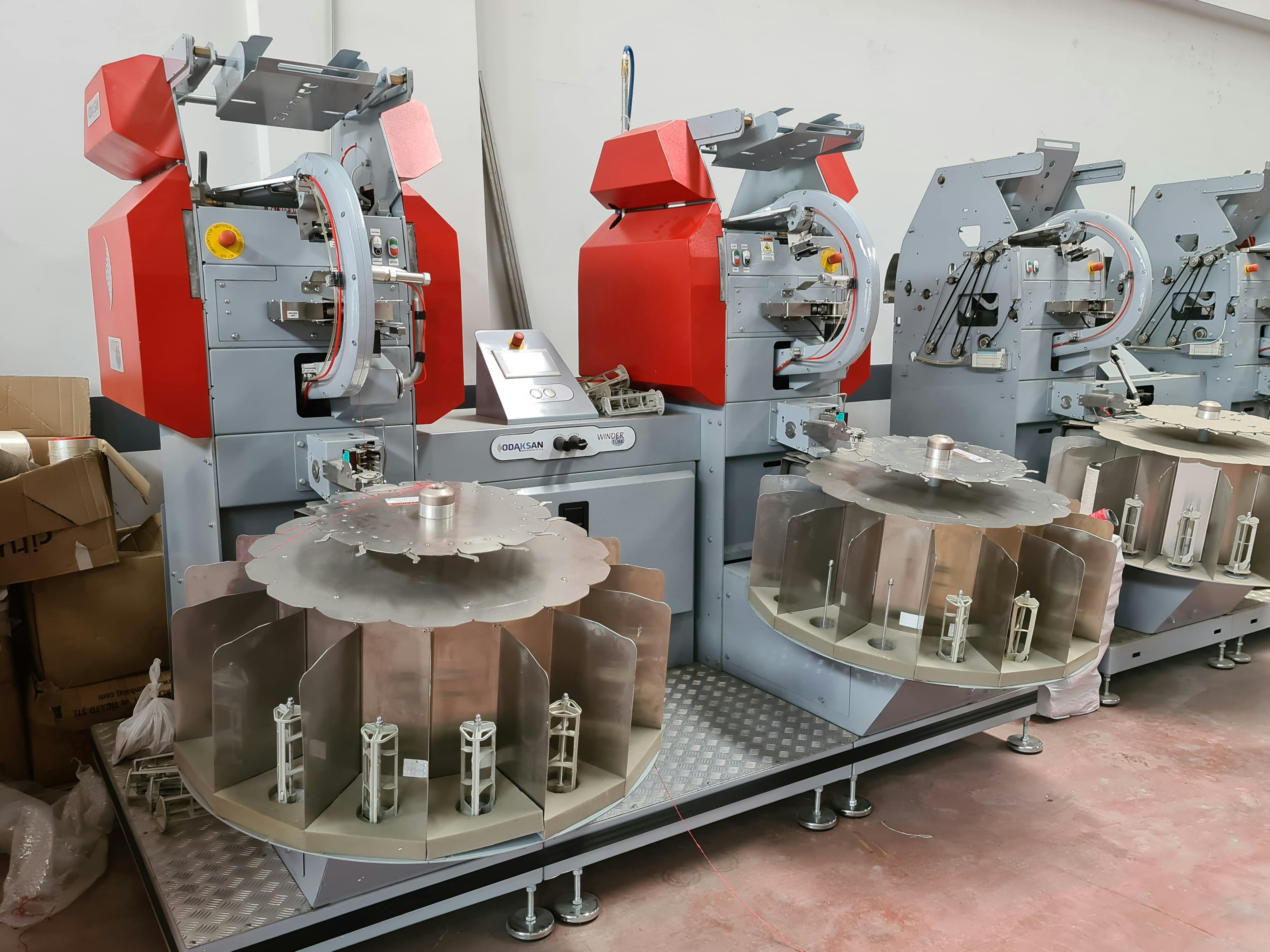
Integrated machinery programme
Machine architecture, mechanisms, structures, tooling, guarding interfaces and critical validation are developed around the same operating requirement. CAD, drawings, BOMs and supplier information remain aligned as the machine develops
Purpose designed production equipment developed around a defined process, product, throughput, footprint and operating environment
Research rigs, pilot systems and instrumented machines developed to prove a process, measure performance or support product development
Controlled engineering for installed machinery requiring a new product, increased duty, revised interface, improved access or documented redesign
Indexing, lifting, clamping, transfer, rotation and adjustment mechanisms developed around motion, force, speed, accuracy, duty and service conditions
Welded and bolted machinery structures developed around loads, stiffness, alignment, access, transport, lifting and mounting interfaces
Workholding, assembly, welding, inspection and production tooling developed around datums, access, tolerance, repeatability and maintenance
Typical project conditions
Fabrixon supports machinery projects when the operating requirement, machine architecture, mechanism behaviour or existing equipment needs coordinated engineering before the design can progress with confidence
Throughput, duty, product variation, operating modes, environment and acceptance criteria need to become traceable engineering inputs before architecture is fixed
A sketch, prototype or partial CAD model may show the idea without confirming kinematics, loads, clearances, component selection or connected interfaces
Fabrication access, tolerance stack, assembly sequence, service access and guarding interfaces can expose expensive changes if they are considered too late
Changed load, throughput, product geometry, interfaces or reliability requirements can affect several connected mechanisms and structures at once
Engineering approach
The machine develops around the required process and duty, with mechanisms, structures, validation and manufacturing information connected through the programme
Function, product variation, throughput, cycle demands, operating modes, environment, footprint and acceptance criteria
Stations, mechanism strategy, frames, purchased components, tooling, access and principal interfaces
Motion systems, loads, stiffness, tolerances, component selection, guarding interfaces and manufacturing route
Kinematic studies, calculations, tolerance analysis, DFM, FEA or CFD where engineering evidence is required
CAD, drawings, BOMs, assumptions, validation evidence, revisions and supplier information issued as one controlled package
Selected machinery work
Selected engineering projects covering packaging assembly, horizontal cartoning and adjustable vacuum end-of-arm tooling.
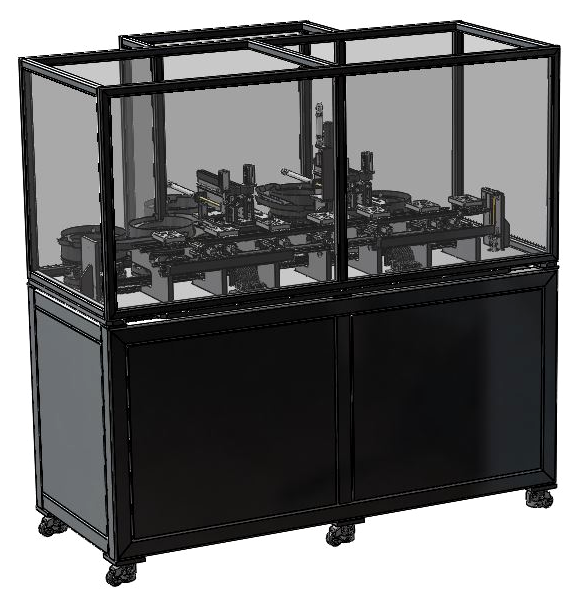
Mechanical design of a guarded assembly machine combining bowl feeding, datum controlled carriers and repeated pick and place stations for packaging component assembly.
View case study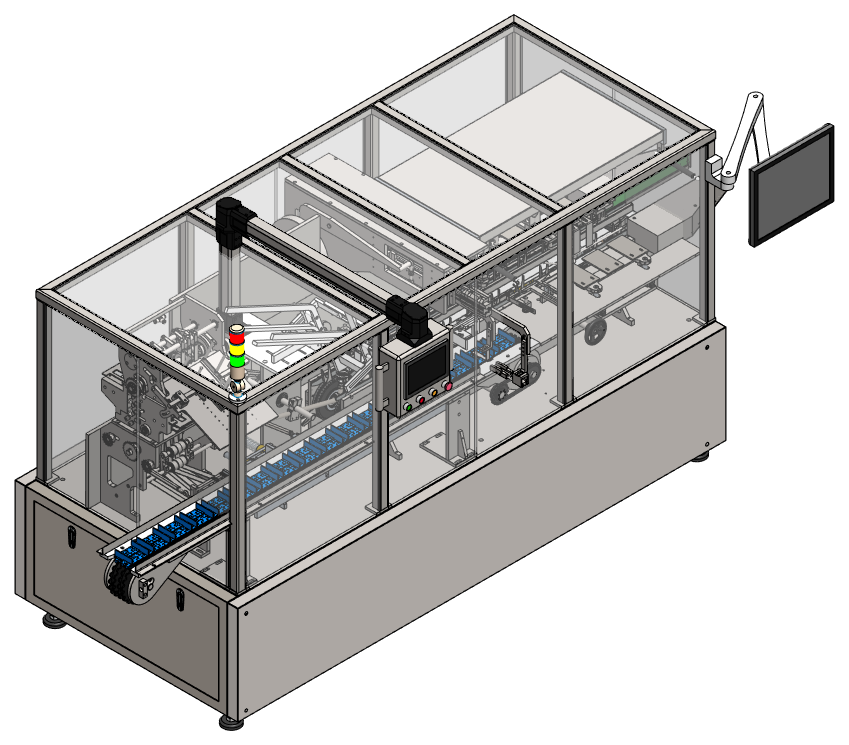
Mechanical design of an intermittent horizontal cartoner integrating product infeed, carton handling, timed transfer, insertion, flap control and guarded operator access.
View case study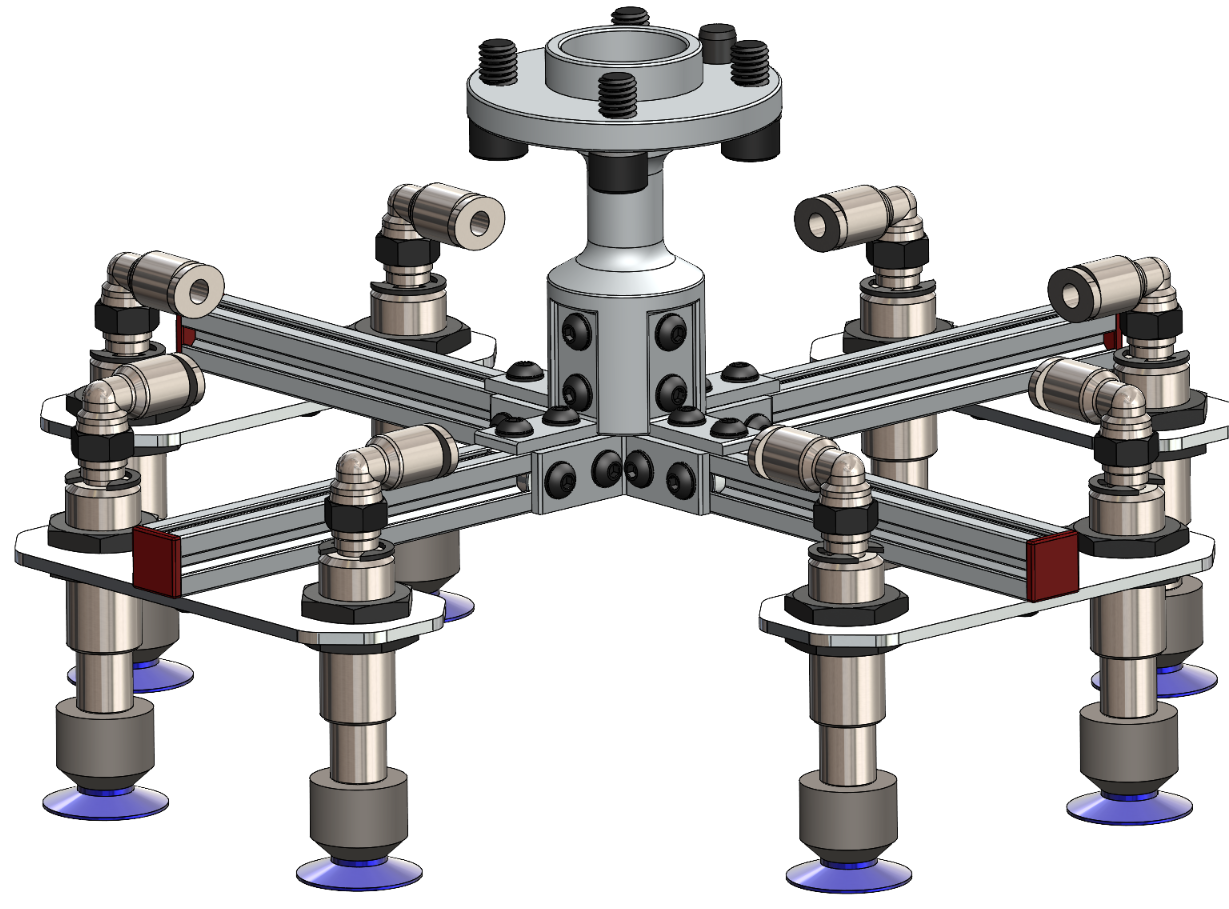
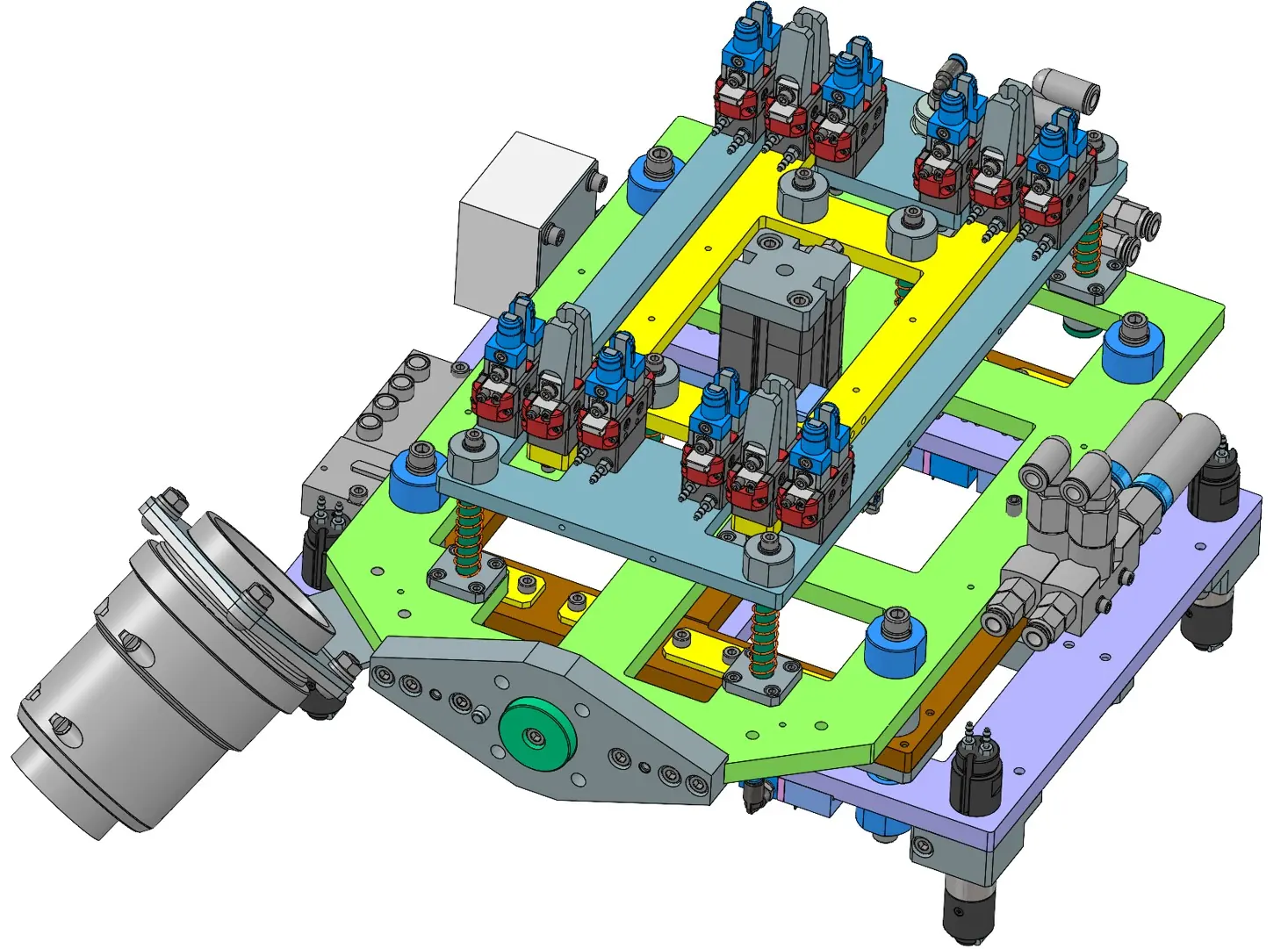
Adjustable eight cup vacuum EOAT with profile arms, distributed suction and a central robot interface for multi format robotic handling.
View case studySpecialist engineering review
Machinery work is reviewed as a connected operating system, not as a collection of isolated CAD parts. The objective is to challenge the assumptions most likely to affect function, integration or downstream release
Review of what the machine must do, product variation, cycle demands, operating modes, environment and the conditions that define acceptable performance
Review of mechanisms, forces, stiffness, tolerance conditions, purchased components, access and the interfaces between structures, tooling, guarding and controls
Review of manufacturing route, assembly sequence, maintenance access, assumptions, revision status and the information needed by suppliers and adjacent project teams
Typical deliverables
Outputs are agreed around the project scope and manufacturing route, so the information needed for review, procurement, fabrication, assembly and supplier handover develops with the machine
CAD · drawings · BOMs · validation evidence · interface records · revision control
Machine layouts, parts, assemblies, configurations and agreed native or neutral CAD outputs
Part, assembly and weldment drawings with agreed dimensions, tolerances, manufacturing information, notes and revision status
Manufactured items, purchased components, materials, supplier references and relevant interface schedules
Engineering calculations, assumptions, FEA or CFD reports, sensitivities and recommendations where included
Mounting provisions, routing allowances, mechanism interfaces, guarding interfaces and coordination information for adjacent teams
Assumptions, open actions, change records, agreed manufacturing files and clarification notes for downstream teams
How engagements work
A clear engagement path keeps the technical and commercial basis defined without turning the service page into a process manual
Send the machine requirement, process brief, sketches, CAD, drawings, photographs, videos or existing equipment information
Agree function, duty, interfaces, assumptions, required outputs, review points, responsibilities and programme
Engineering progresses through defined technical reviews, with mechanism, structure, tooling, DFM and validation issues raised as they surface
Models, drawings, BOMs, evidence and agreed records are issued under revision control with supplier clarification support as scoped
Buyer questions
Direct answers to the technical and commercial questions that most often determine whether a custom machinery project can be scoped correctly
The scope can include process and duty definition, machine architecture, mechanisms, frames, fixtures, guarding interfaces, component selection, calculations, FEA or CFD, manufacturing drawings, BOMs and supplier handover. The exact package depends on whether the project begins as an early requirement, an existing design, a prototype, a retrofit or a defined subsystem problem.
A complete specification is not required. Useful starting information includes the required machine function, product details, throughput, duty cycle, operating environment, available footprint, interfaces, existing CAD or drawings, known constraints and the outputs your team needs. Missing inputs are identified during the initial engineering review.
Yes. Fabrixon can develop a sketch, prototype, partial CAD assembly or existing machine into a controlled engineering package. Reusable work is retained, unresolved mechanisms and interfaces are identified, and the remaining design, validation and documentation tasks are defined before detailed work begins.
Selection begins with the required motion, force, accuracy, duty, environment, access and maintenance conditions. Kinematic studies, calculations, supplier data, tolerance review and validation are used as needed so mechanisms, frames, actuators, guides, bearings and purchased components work as one coordinated system.
DFM is applied against the intended fabrication, machining and assembly routes while the design develops. Calculations, FEA or CFD are used where the engineering decision needs evidence. Guarding, access and safety device interfaces can be incorporated where scoped, while final conformity assessment, declarations, markings and statutory certification remain with the responsible manufacturer and applicable approval bodies.
Fabrixon provides machinery design, validation and manufacturing documentation rather than acting as the machine builder. Fabrication, assembly, controls integration, installation and commissioning are normally completed by the client or appointed suppliers. Fabrixon can support supplier questions and controlled design revisions during handover.
Cost and duration depend on the starting information, machine complexity, number of mechanisms and stations, validation depth, documentation requirements, review cycles and project interfaces. A defined subsystem or redesign may be shorter than a complete machine programme. Scope, assumptions, programme and commercial basis are confirmed in writing before work begins.
Next step
Share the machine function, process requirement and available files. An engineer will review the starting point and confirm the most suitable design, validation and documentation scope
A brief outline is enough to start the conversation.
