For machinery OEMs, machine builders and automation integrators

Machine Safety and Compliance Engineering

Machinery risk assessment, safeguarding engineering, safety function interfaces and controlled documentation for new machines, automated cells and legacy equipment upgrades.

Risk assessment Guarding and access Safety functions Legacy upgrades

Machine safety capability

Risk reduction connected to the engineering package

Effective machine safety work depends on understanding the equipment, operating modes, intervention points, users, safeguarding, electrical interfaces and target market. Fabrixon connects those decisions to the machine design and the controlled records used to review and hand over the work.

01

Hazards and machine limits

Define intended use, operating modes, lifecycle tasks and the hazards that require risk reduction.

02

Safeguarding and access

Coordinate guards, gates, intervention zones, maintenance access and protective device provisions with the machine layout.

03

Safety function interfaces

Translate risk reduction measures into defined safe states, device interfaces, schedules and controlled multidisciplinary inputs.

04

Traceable documentation

Keep hazards, decisions, drawings, calculations, interface information, actions and responsibilities connected through revision control.

Safety engineering scope

Machine safetyengineering services

These four scopes are delivered directly within this pillar. Each card shows when the service applies, the engineering work covered, the controlled outputs and the inputs needed to start.

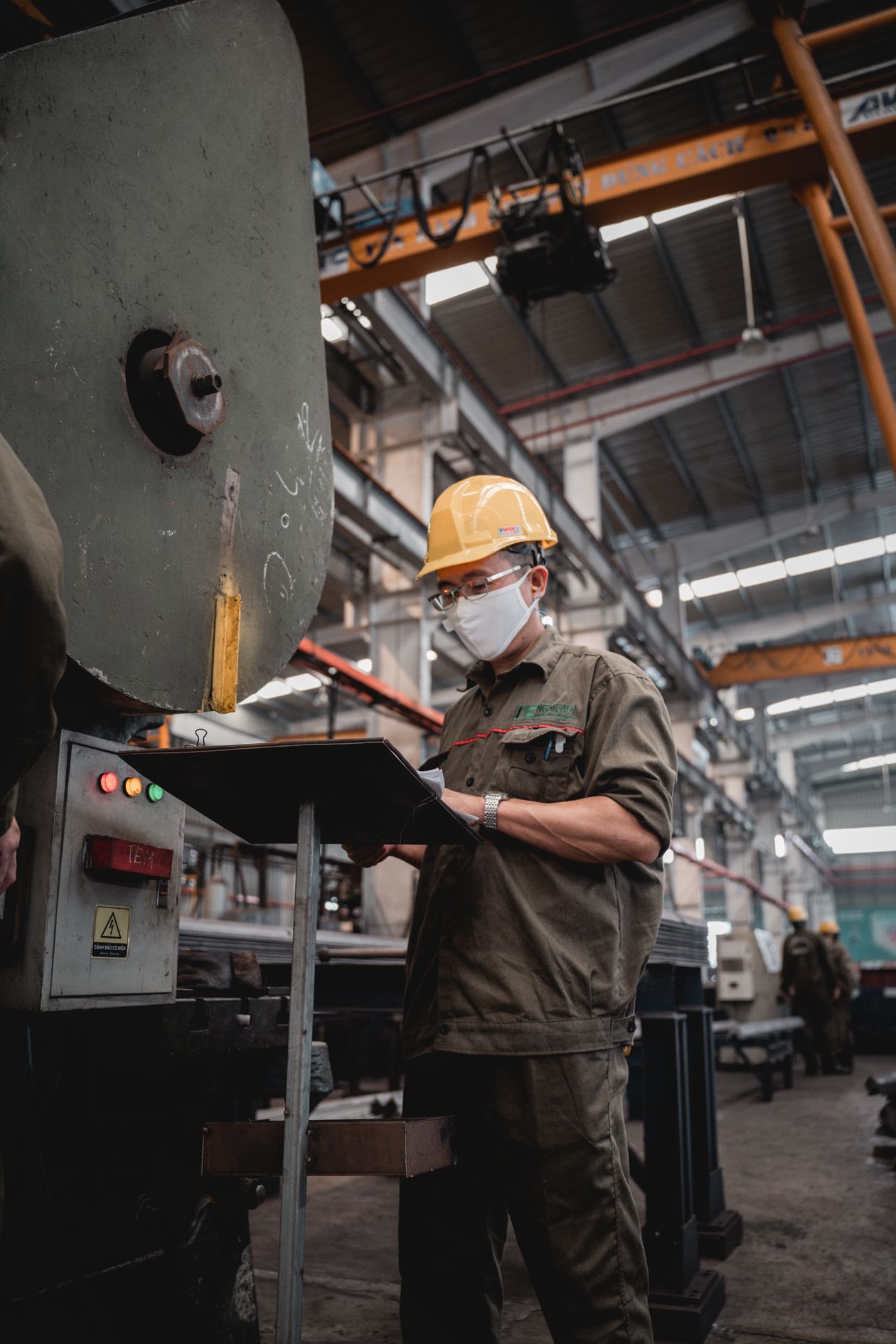
Factory engineer reviewing machinery documentation during an industrial safety inspection
01

Risk and reduction

Machinery Risk Assessment and Risk Reduction

Connect machine limits, operating modes, lifecycle tasks, hazards and practical risk reduction decisions in one traceable engineering record.

Where this applies

  • New machinery and automated cells
  • Modified equipment or variants
  • Changed operating modes or use
  • Risk records not matching design
  • Projects needing defined actions
  • Early design risk reduction

Engineering scope

  • Machine limits and lifecycle tasks
  • Hazard identification by task
  • Risk evaluation and reduction measures
  • Safer design opportunities
  • Safeguarding and function inputs
  • Residual risks and open actions
Controlled outputs

Risk assessment · Hazard register · Reduction actions
Safeguarding and safety function inputs · Review record
Best used when

Before concept freeze, design release, quotation or a conformity review where risk reduction can still influence the machine architecture.

Typical inputs

Machine layout or CAD, intended use, operating modes, users, lifecycle tasks, existing risk records and known safety concerns.

Discuss this service →
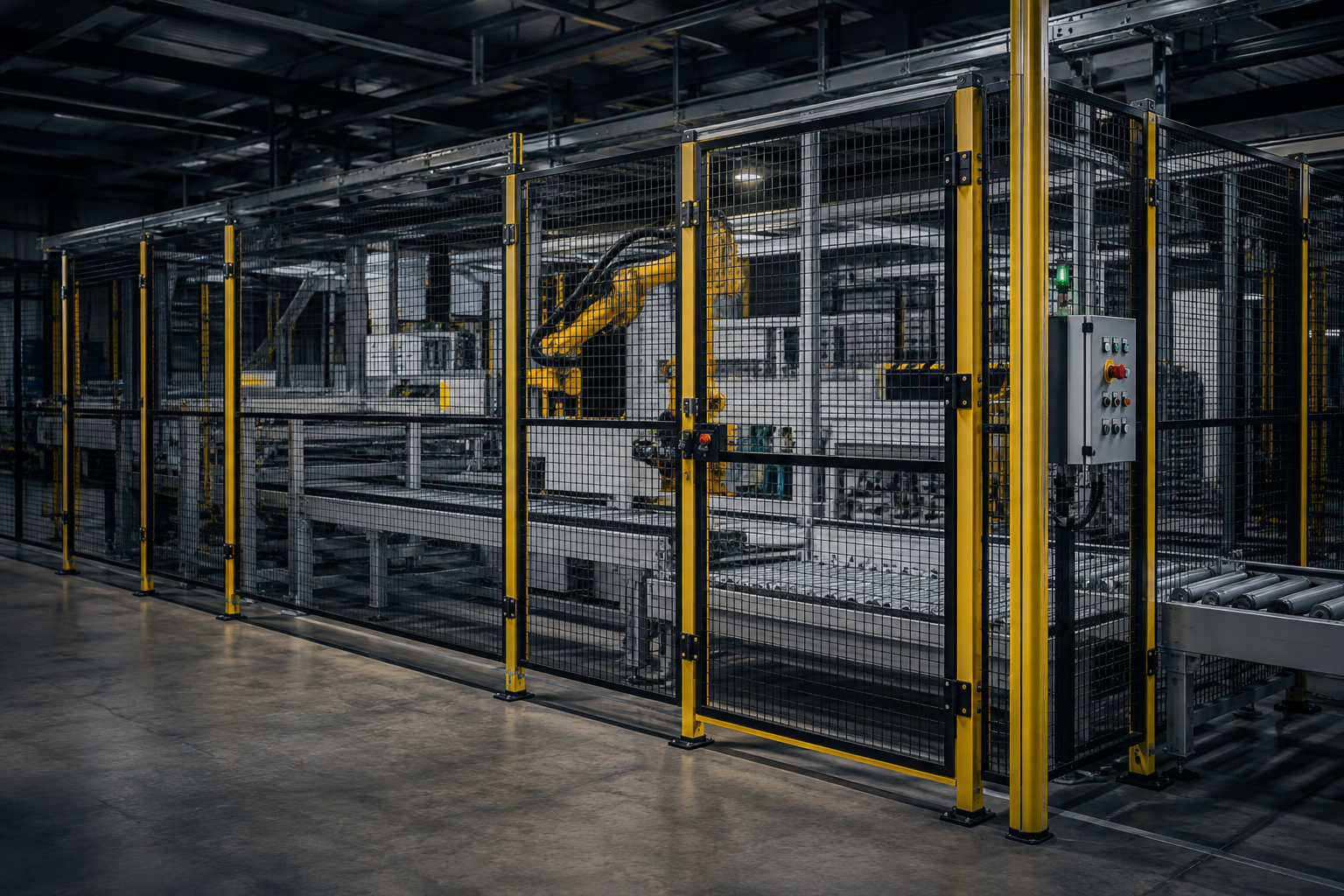
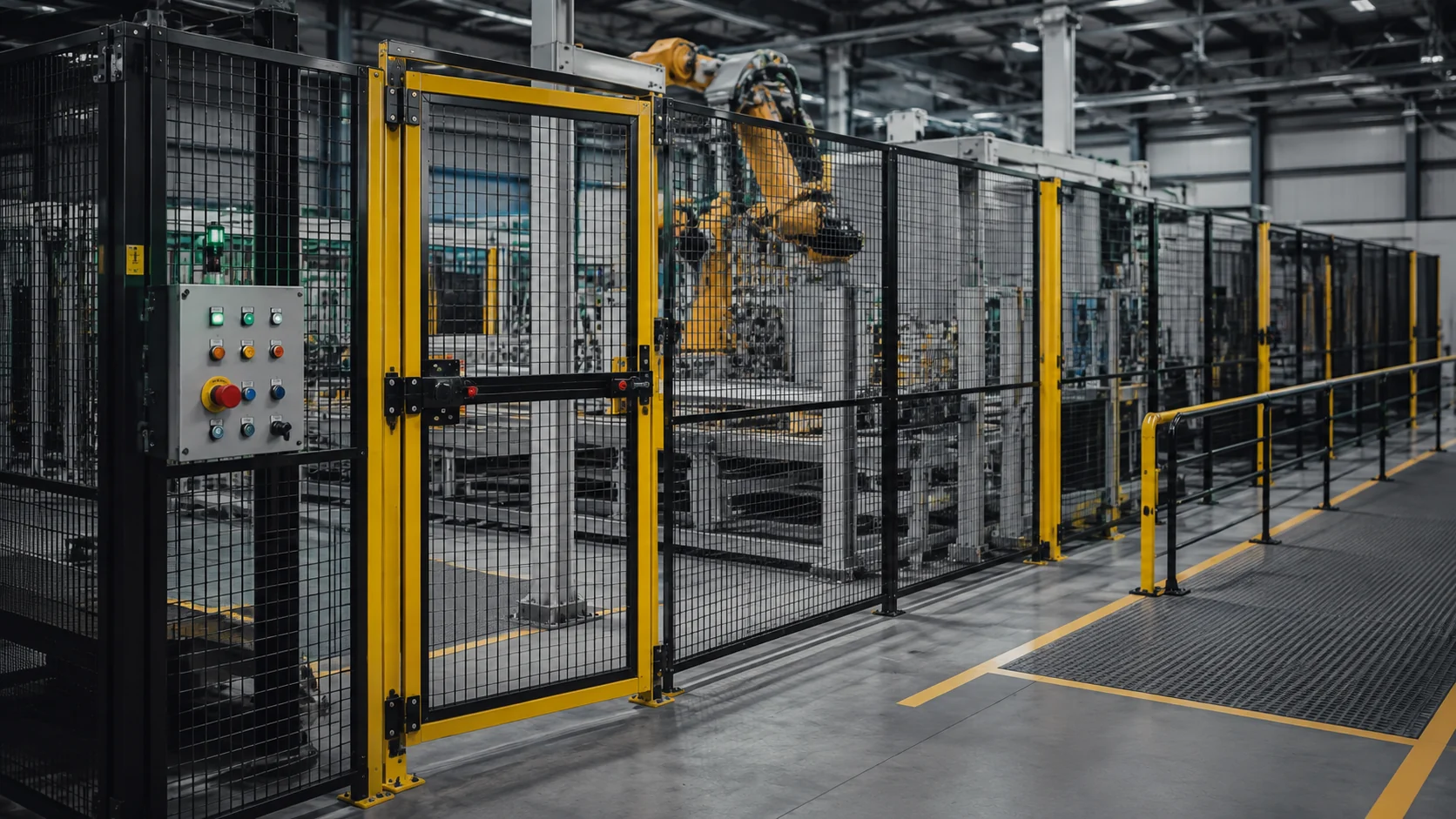
Industrial robotic cell with safety fencing, interlocked access gate and control panel
02

Guarding and access

Guarding, Access and Safeguarding Engineering

Develop guarding, access and protective device arrangements around real production, intervention, cleaning and maintenance requirements.

Where this applies

  • New machinery and robotic cells
  • Conveyor and line safeguarding
  • Guarding that restricts workflow
  • Maintenance access conflicts
  • Protective device mounting needs
  • Existing guarding redesign

Engineering scope

  • Fixed and movable guards
  • Perimeter fencing and gates
  • Loading and maintenance zones
  • Safety distance and reach checks
  • Guard geometry and mounting
  • Interlock, scanner and curtain interfaces
Controlled outputs

Safeguarding layouts · Guard assemblies · Access details
Device provisions · Distance checks · Review record

Best used when

Before guard fabrication or when the current arrangement restricts production, cleaning, maintenance, visibility or safe operator access.

Typical inputs

Machine CAD, operating sequence, access requirements, maintenance tasks, intervention points, site constraints and existing guarding details.

Discuss this service →
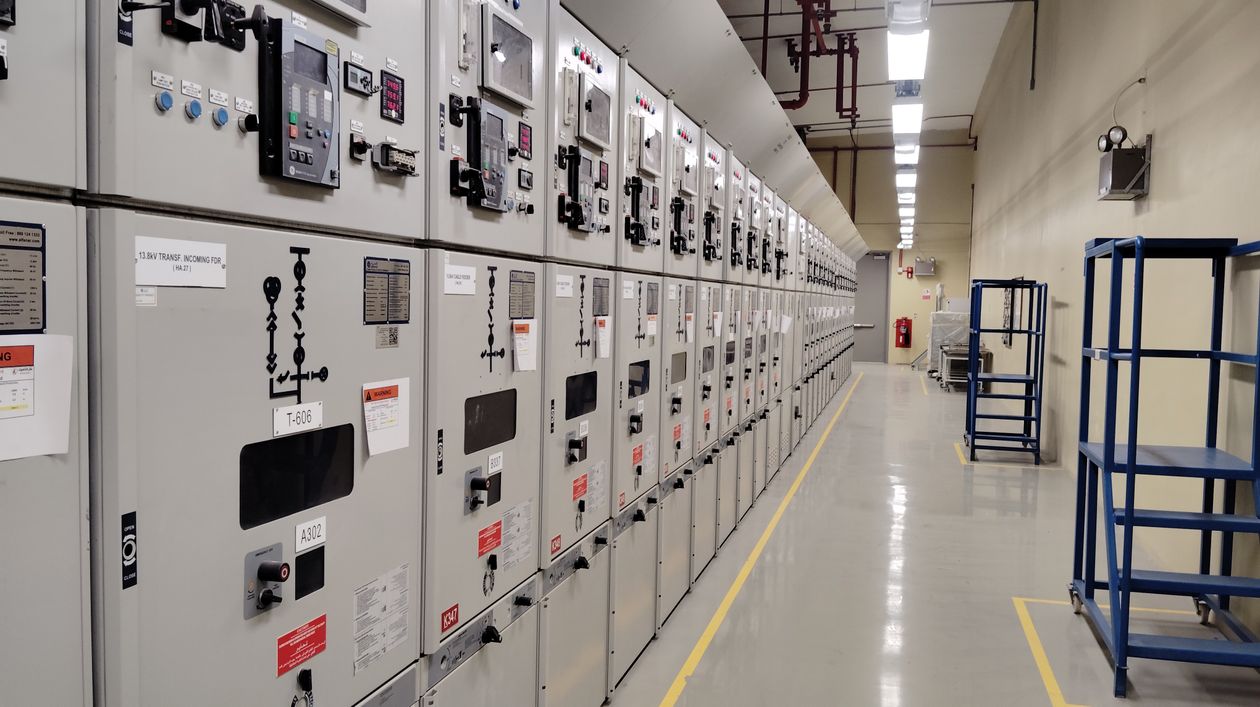
Industrial electrical control panels representing safety function and interface documentation
03

Safety functions

Safety Functions and Electrical Interface Documentation

Translate identified hazards and safeguarding measures into defined safe states, trigger conditions, device interfaces and controlled multidisciplinary inputs.

Where this applies

  • Safety functions not fully defined
  • Unclear safe states or triggers
  • Device interfaces need coordination
  • Mechanical and electrical gaps
  • Circuit schedules are incomplete
  • Specialist inputs need a basis

Engineering scope

  • Required safety functions
  • Safe states and reset behaviour
  • Interlock and stop interfaces
  • Device, drive and actuator interfaces
  • Device schedules and I/O needs
  • Responsibility coordination
Controlled outputs

Safety function register · Interface schedules · Circuit requirements
Mechanical markups · Actions · Responsibility record

Best used when

When electrical, controls or functional safety specialists need a clearly defined interface basis before detailed design and validation begins.

Typical inputs

Risk assessment, machine sequence, guarding concept, safety devices, actuator and drive information, electrical architecture and existing circuit records.

Discuss this service →
Technician inspecting existing industrial machinery during a retrofit or upgrade
04

Existing equipment

Existing and Legacy Machine Safety Upgrades

Review existing equipment as one system so guarding, access, mechanical changes, safety device interfaces and documentation form a practical upgrade scope.

Where this applies

  • Relocated or repurposed machines
  • Modified legacy equipment
  • Missing or outdated risk records
  • Unsuitable guarding or access
  • Undocumented interface changes
  • Changed production requirements

Engineering scope

  • Existing machine condition review
  • Safeguarding and access review
  • Prioritised upgrade actions
  • Mechanical retrofit concepts
  • Safety device interface provisions
  • Updated risk and drawing records
Controlled outputs

Existing condition review · Upgrade schedule · Safeguarding concepts
Revised drawings · Interface updates · Action register

Best used when

For modified, relocated or older equipment where practical improvements must be prioritised around the real machine and operating requirement.

Typical inputs

Existing records, site photographs, CAD or surveys, current guarding, operating modes, modification history and known safety concerns.

Discuss this service →

Market pathway support

Engineering evidencefor EU, UK and USmachinery programmes

The target market affects the standards basis, engineering records, electrical documentation and review responsibilities that need to be coordinated through the safety scope.

EU

EU machinery conformity support

  • Machinery risk assessment records
  • Standards applicability and mapping
  • Safeguarding and technical drawings
  • Engineering calculations and evidence
  • Technical file engineering inputs
UK

UK machinery conformity support

  • UK documentation basis
  • Applicable standards references
  • Risk and safeguarding records
  • Engineering calculations and evidence
  • Product marking documentation inputs
US

UL and NRTL coordination support

  • Machinery and electrical documentation
  • Relevant OSHA and ANSI considerations
  • Component and equipment information
  • Open item and responsibility tracking
  • Engineering inputs for NRTL review

Fabrixon prepares and coordinates engineering evidence within the agreed scope. Final declarations, markings, listings and certification decisions remain with the responsible manufacturer, client and applicable assessment organisations.

Common machine safety scenarios

When clients bring us in

Safety work usually begins when a design decision, market requirement or existing machine condition creates a clear engineering question.

01

A new machine needs a defined safety strategy

Hazards, risk reduction, safeguarding requirements and safety function inputs need to influence the design before release.

02

The machine is intended for more than one market

Standards, engineering records, product marking routes and review responsibilities must be coordinated before the package is issued.

03

Safeguarding conflicts with operation or maintenance

Guards or access arrangements are slowing production, restricting service tasks or encouraging bypass and need to be redesigned around the real work.

04

Existing equipment needs a safety upgrade

Modified, relocated or legacy machinery needs prioritised safeguarding, interface and documentation improvements supported by updated engineering records.

Engineering approach

How a machine safety scope is developed

A five stage engineering sequence connecting machine limits, hazards, safeguarding, specialist interfaces and controlled documentation.

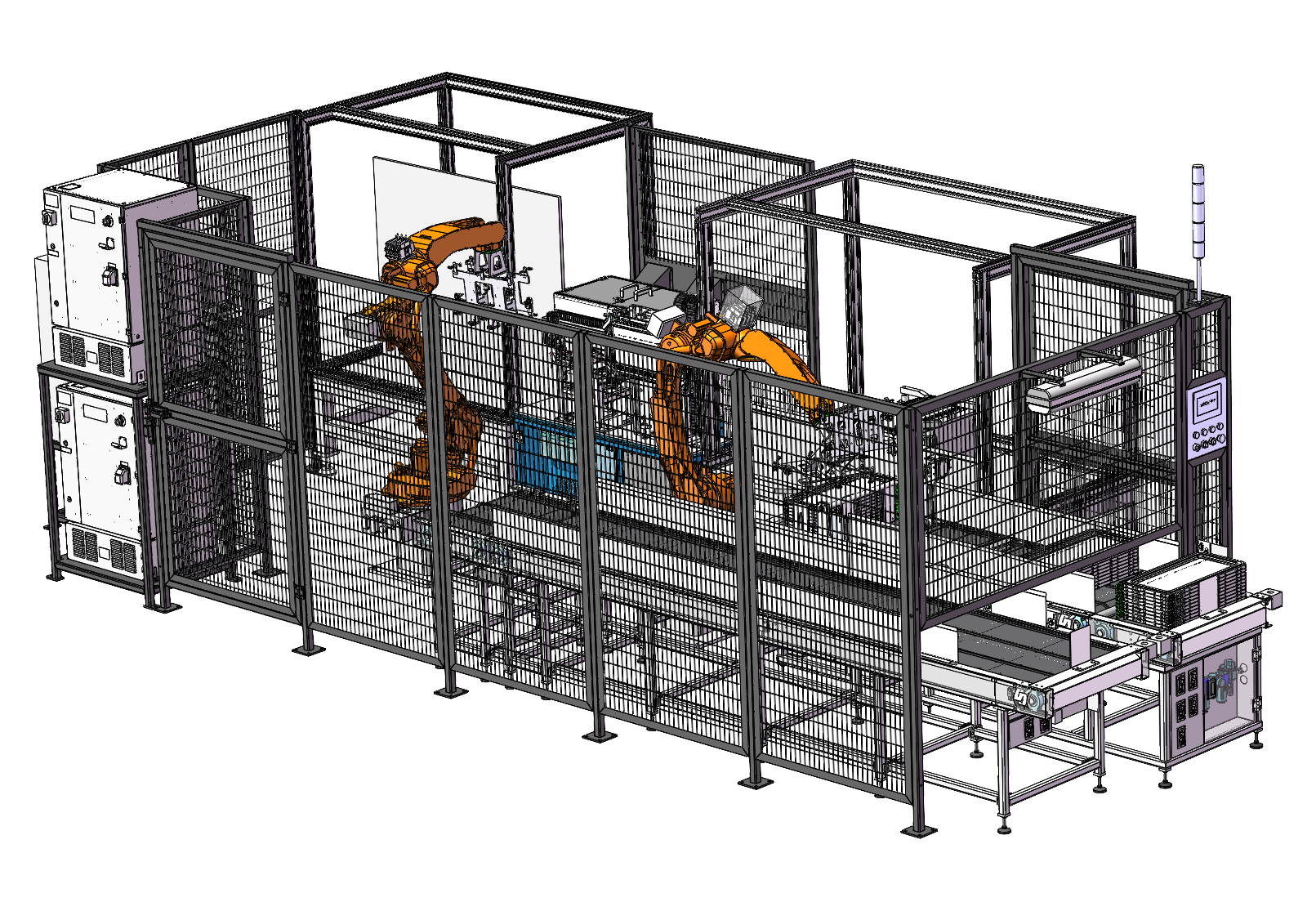
Machine safety workcell CAD layout showing fenced robotic cell, guarding, access gates and control equipment
01

Define machine limits and responsibilities

Confirm intended use, operating modes, users, lifecycle tasks, intervention points, environment, target markets and available information.

02

Identify hazards and evaluate risk

Review hazards across operation, setup, cleaning, maintenance, recovery, loading and reasonably foreseeable misuse.

03

Engineer risk reduction and safeguarding

Apply safer design where practicable, then guards and complementary protective measures, with residual risks recorded within scope.

04

Define safety functions and interfaces

Document required safe states, trigger conditions, device interfaces and the inputs that require controls or functional safety specialists.

05

Document, review and hand over

Issue the risk records, drawings, interface information, calculations, review actions and revision controlled handover package.

Representative scopes

Machine safetyengineering examples

Examples of the engineering questions and deliverables this pillar is structured to support. Approved client case studies can replace these scope examples as they are cleared for publication.

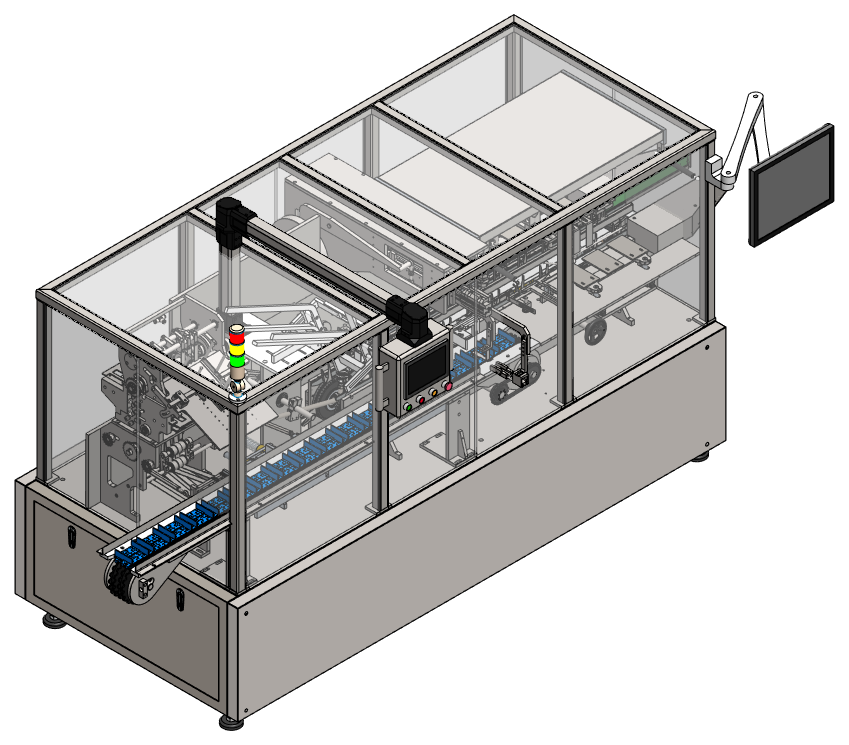
Complete horizontal cartoning machine with transparent enclosure and external operator interface
Custom Machinery Design

Horizontal Cartoning Machine

Mechanical design of an intermittent horizontal cartoner integrating product infeed, carton handling, timed transfer, insertion, flap control and guarded operator access.

View case study
Food Packaging Component Assembly Machine
Custom Machinery Design

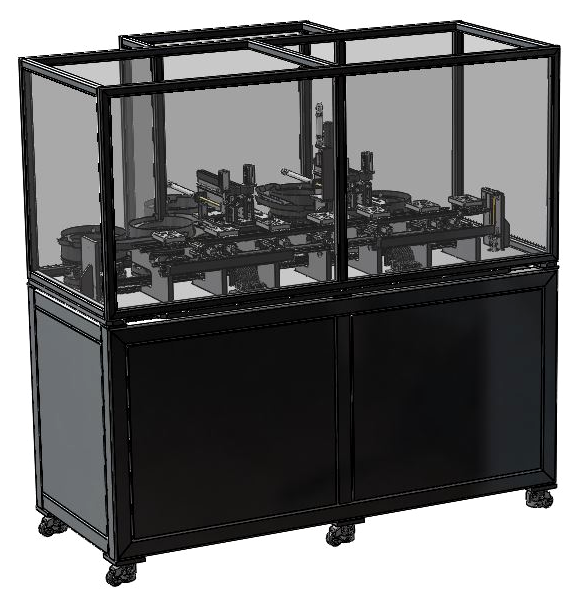
Food Packaging Component Assembly Machine

Mechanical design of a guarded assembly machine combining bowl feeding, datum controlled carriers and repeated pick and place stations for packaging component assembly.

View case study
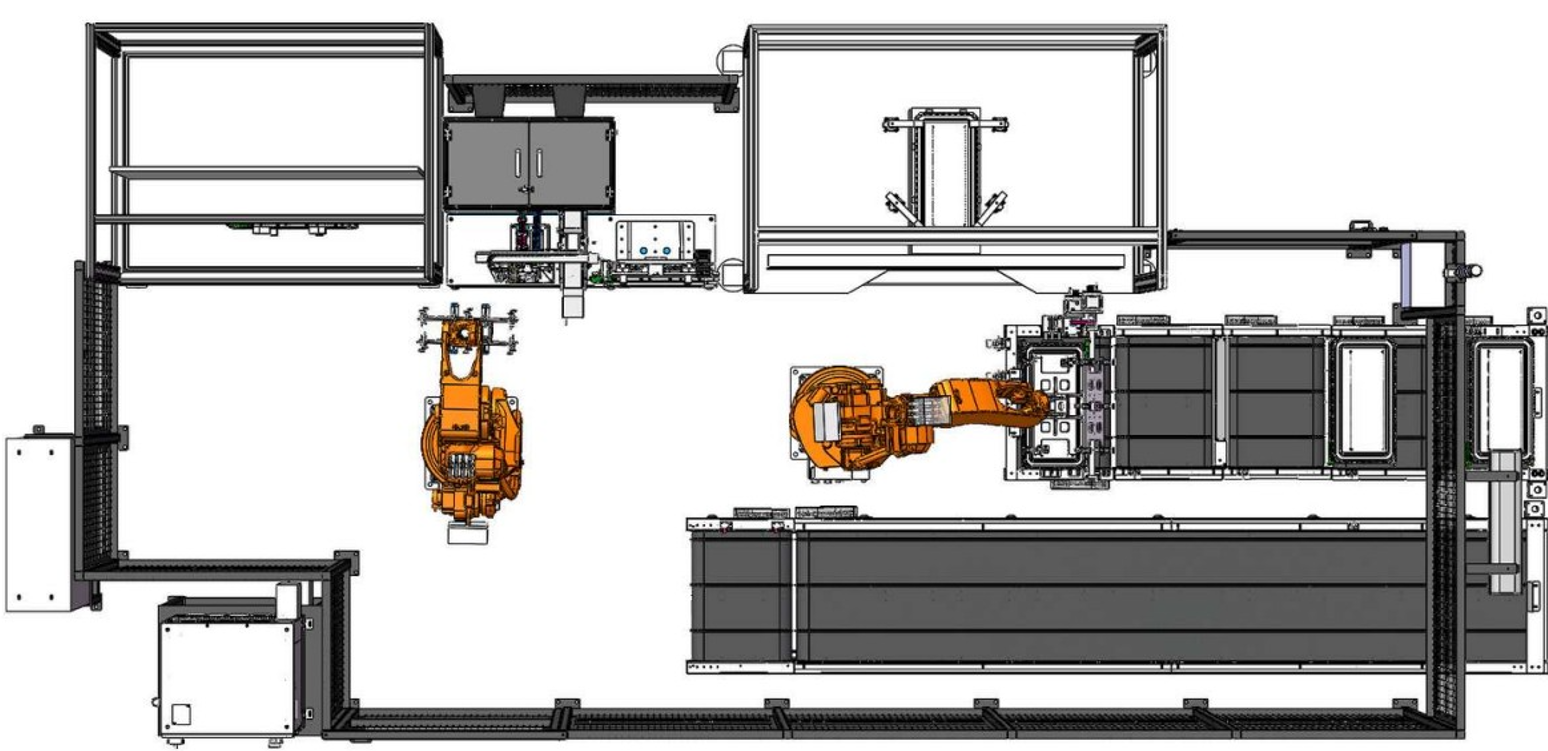
Workcell plan view showing the two robots, process stations, conveyors and surrounding cell layout
Automation Equipment Design

Automated Riveting Workcell Integration

Mechanical integration of OEM process modules, twin robots, conveyors and safety infrastructure into a production workcell.

View case study
Hassan Khan

Technical leadership

Machine Safety Technical Lead

Hassan Khan

Engineering Manager

Leads engineering coordination and technical review across mechanical design projects, supporting design quality, documentation and delivery across Fabrixon engineering programmes.

LinkedIn

Project process

From safety question to controlled handover

The commercial delivery path is kept separate from the engineering risk reduction sequence above.

01

Scoping and proposal

Clarify the machine, target market, safety question and required outputs, then confirm scope, responsibilities, review points, timing and commercial basis.

02

Machine and input review

Review CAD, layouts, operating modes, interventions, existing risk records, safeguarding and interface information against the agreed safety scope.

03

Safety engineering

Develop the agreed risk reduction, guarding, safety interfaces and documentation through defined engineering reviews, with key decisions recorded as work progresses.

04

Controlled handover

Issue the controlled safety records, drawings and interface information with open actions, responsibilities and clarification support clearly identified at handover.

RISK

Risk Assessment and Hazard Record

Machine limits, hazards, risk evaluation, reduction decisions, assumptions, required actions and residual risk information.

GUARD

Guarding and Safeguarding Drawings

Guard layouts, access zones, gates, distance checks and mounting provisions for protective devices.

FUNC

Safety Function and Interface Records

Required safe states, trigger conditions, device interfaces, schedules, markups and assigned responsibilities.

CALC

Engineering Checks and Validation Evidence

Applicable distance checks, structural calculations, design evidence, test records and engineering recommendations where included.

MARKET

Conformity and NRTL Support Inputs

Risk records, standards mapping, drawings, calculations and engineering evidence supporting the agreed market pathway.

HANDOVER

Controlled Documentation and Action Register

Assumptions, responsibilities, open actions, specialist inputs, revision status and agreed handover records.

Questions technical buyers ask

Machine safety engineering FAQs

What does machine safety and compliance engineering include?+

Scope can include machinery risk assessment, risk reduction, guarding, access review, safety function requirements, safety device interfaces, controlled documentation and legacy machine upgrade support. The exact responsibilities are defined before work begins.

Can Fabrixon support an ISO 12100 machinery risk assessment?+

Yes. Fabrixon can provide ISO 12100 informed risk assessment support covering machine limits, operating modes, lifecycle tasks, hazards, risk evaluation, risk reduction decisions, required actions and residual risk information within the agreed scope.

Can Fabrixon design machine guarding and access arrangements?+

Yes. Work can include fixed and movable guards, perimeter safeguarding, access gates, maintenance zones, safety distance checks and integration provisions for interlocks, light curtains and scanners.

Can Fabrixon support CE or UKCA machinery conformity work?+

Fabrixon can prepare or coordinate risk records, standards mapping, technical drawings, calculations, validation reports and other engineering inputs supporting the applicable route. Final declarations and marking responsibilities remain with the responsible manufacturer or organisation.

Can Fabrixon support UL or NRTL machinery programmes?+

Fabrixon can support the engineering package with mechanical and electrical documentation, safety device interfaces, calculations, validation evidence and coordination inputs. Testing, listing and final certification remain with the applicable NRTL and responsible organisations.

Do you provide PLr or SIL determination and functional safety validation?+

These activities are included only when explicitly scoped and delivered or reviewed by a suitably competent functional safety engineer or qualified partner. Standard scopes may define safety function requirements and interfaces without claiming achieved PL or SIL verification.

What if we do not have an internal electrical or functional safety team?+

Fabrixon can coordinate qualified partner firms where required or collaborate with the client appointed team. Responsibilities, deliverables, review points and approval ownership are agreed before engineering begins.

Next step

Find the safety gaps before they become project delays

Share the machine layout, drawings, operating context, target market and the safety question. An engineer will confirm the practical starting scope and the information needed to proceed.