
Adjustable VacuumRobot EOAT
An eight cup vacuum tool with adjustable aluminium profile arms and a central wrist interface, engineered to handle several compatible workpiece formats with one configurable pickup architecture.
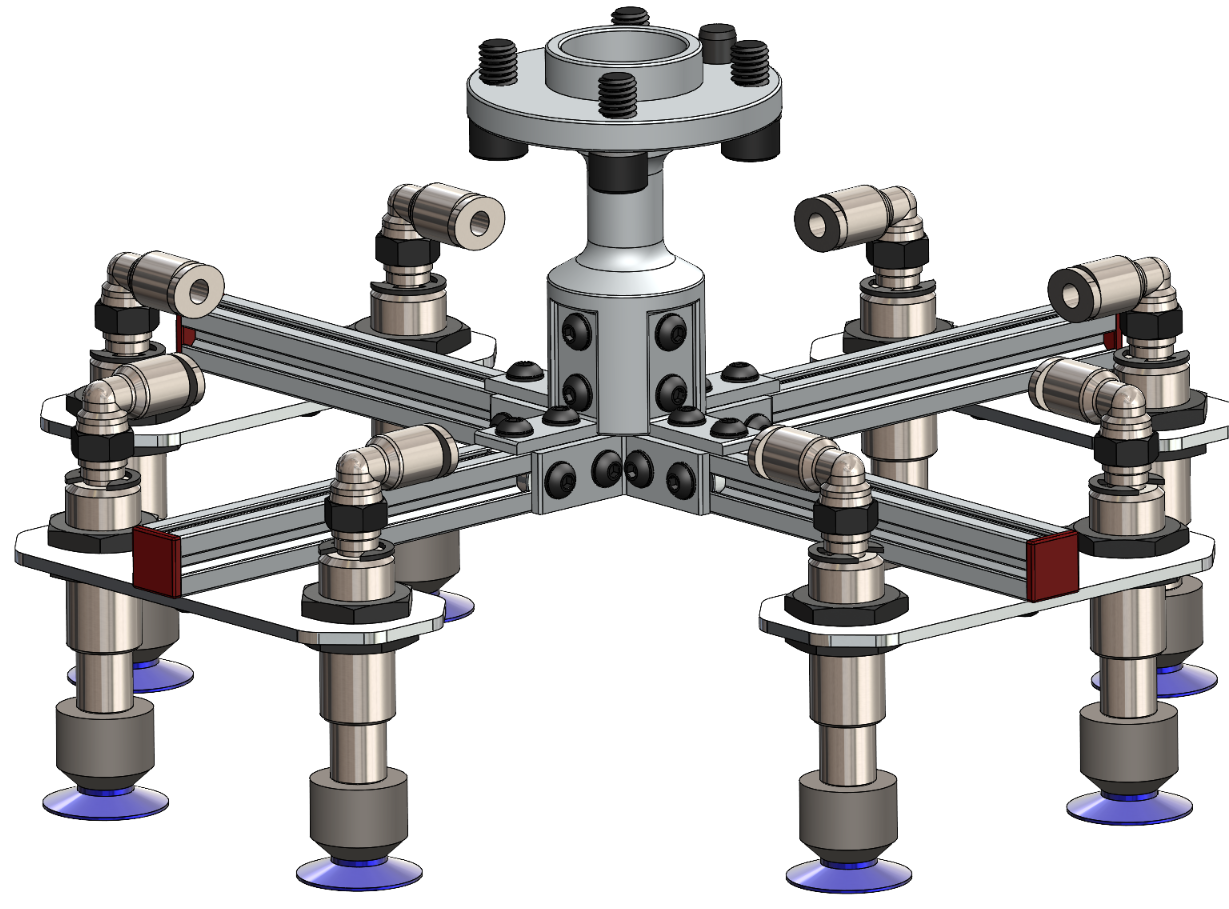
Adjust the footprint, retain the architecture
The EOAT was developed for robotic material handling where one tool had to accommodate more than one workpiece format without requiring a new gripper frame for each size.
Four radial profile arms and four carrier plates support eight vacuum contact points around the central wrist interface. Adjustment changes the pickup footprint while the primary load path and overall tool architecture remain consistent.
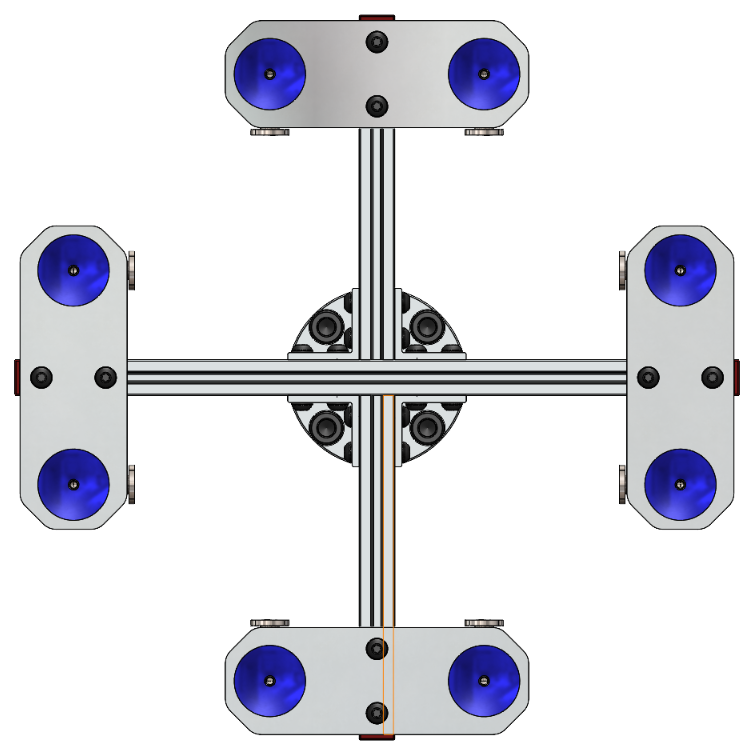
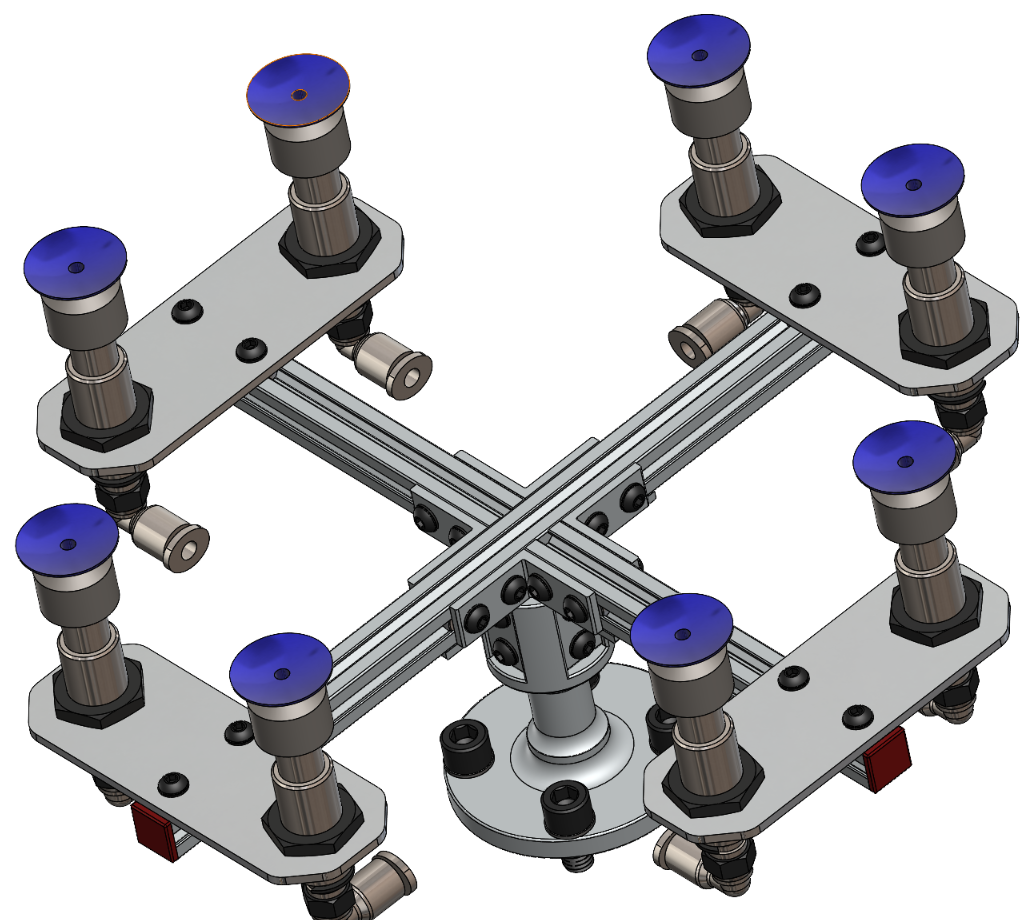
Spread suction across usable surfaces
Distributed suction suits workpieces where suitable sealing areas are spread across the top surface. Local compliance at the cup assemblies absorbs small height differences, softens first contact and helps multiple cups establish a reliable seal.
- Adjustment
- T slot profile arms provide an adjustable X and Y support arrangement for the cup carriers.
- Load path
- The circular central hub transfers loads between the robot wrist and the adjustable profile structure.
- Vacuum services
- Local routing keeps the vacuum distribution close to the cup positions and accessible for maintenance.
Confirm vacuum before the lift
The operating sequence separates contact and vacuum confirmation from robot motion. This ensures the workpiece is retained before the tool begins the transfer path.
- 01
Approach
Bring the adjusted pickup footprint over the selected workpiece.
- 02
Contact
Seat the cups on the available sealing areas.
- 03
Confirm
Confirm the required vacuum condition before lifting.
- 04
Lift and transfer
Move the retained workpiece through the planned robot path.
- 05
Release
Complete a controlled release at the destination.
- 06
Return
Clear the placement area and return for the next cycle.
The project achieved the required robotic handling duty
The completed tool achieved the specified pick to place duty in the successful application. Cycle time was governed by robot travel, payload and the time needed to confirm vacuum before lifting.
Required project cycle achieved.
Corresponding handling rate for the successful application.
Distributed across four adjustable carrier plates.
- Suitable applications
- Cartons, cases, trays, boards and other broad workpieces with a suitable vacuum contact surface.
- Application checks
- Final vacuum sensing, payload verification, robot path and safe release remain part of the complete robot application.
- Interface context
- The robot system sits within the wider ISO 10218 framework, with the mechanical wrist interface aligned to ISO 9409-1 conventions where applicable.
Format flexibility worked because only the contact geometry had to move
The central robot interface and primary load path stayed fixed while the profile arms repositioned the suction points. That separated workpiece adjustment from the core EOAT architecture.
One configurable EOAT for related product formats
The completed EOAT combined an adjustable support structure, distributed suction contact and a compact central robot interface. It successfully handled the intended product family while achieving the required cycle duty for the project application.
- Performance
- The successful application achieved the required 4 to 6 s pick to place duty.
- Format flexibility
- The cup footprint could be repositioned within the adjustable support structure.
- Mechanical balance
- Pickup points remained distributed around the central wrist interface.
- Project result
- One EOAT architecture supported the compatible formats defined for the application.