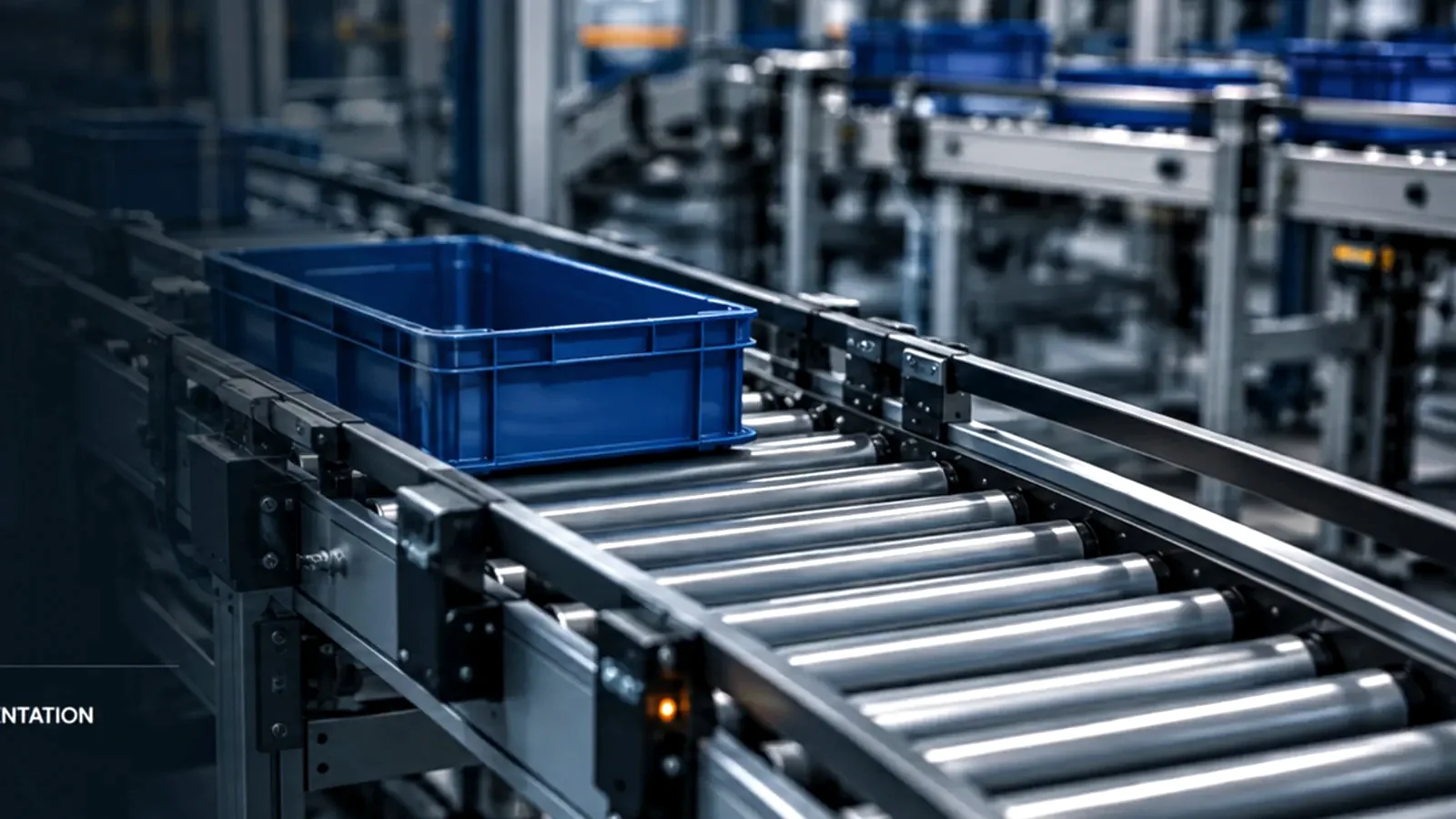
Belt Conveyor Systems
Belt conveyors developed around product support, width, speed, incline, tracking, take up, drive duty, access and operating environment.

Industrial material handling engineering
Conveyor systems and material handling equipment engineered around the product, throughput, route, operating environment and surrounding machinery. Fabrixon connects handling architecture, transfers, drives, structures, validation and controlled manufacturing documentation within one coordinated engineering scope.
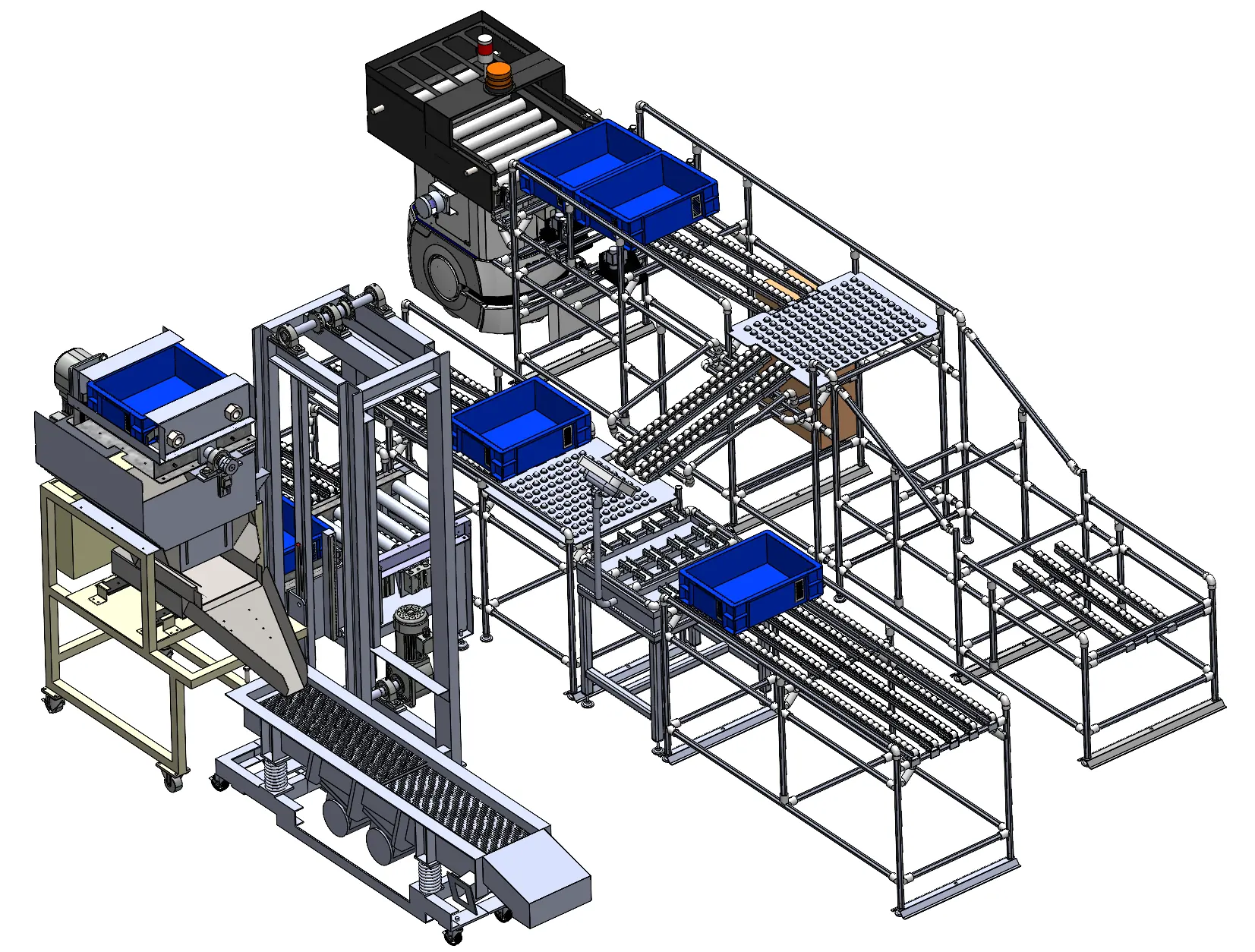
Machinery, conveyors, automation, structures, validation and manufacturing documentation
Conveyor, material handling, machinery and automation engineering projects
Belt, roller, chain, transfers, support structures and controlled line modifications
From product and duty definition through controlled engineering handover
Conveyor engineering capabilities
From a single conveyor section to a multi stage handling line, the equipment is developed around product support, throughput, accumulation, route, elevation changes, interfaces, maintainability and the intended manufacturing and installation route.
Integrated material flow programme
Conveyor type, route, accumulation, transfers, drive selection, structures, guarding interfaces and critical calculations are developed around the same handling duty. CAD, drawings, BOMs, interface information and revisions remain aligned as the line develops.
Belt conveyors developed around product support, width, speed, incline, tracking, take up, drive duty, access and operating environment.
Gravity and powered roller systems developed around product stability, roller pitch, zoning, buffering, stops, merges and line flow.
Handling systems for pallets, heavier loads and demanding duty, including chain pull, sprockets, guides, wear components, drives and maintenance provisions.
Pushers, diverts, pop up transfers, lifts, turntables and purpose designed mechanisms for changes in direction, level, orientation or equipment interface.
Floor mounted, suspended and integrated support structures developed around loads, spans, deflection, anchoring, access and installation constraints.
Controlled redesign for reroutes, extensions, product changes, increased duty, replacement components and new interfaces within existing facilities.
Typical project conditions
Fabrixon supports handling projects when product behaviour, transfer geometry, existing line constraints or equipment duty need to be resolved before detailed design can progress with confidence.
Weight, dimensions, orientation, throughput, spacing, accumulation, route and environment need to become traceable engineering inputs before conveyor architecture is fixed.
Product stability can be lost at dead plates, direction changes, buffers, lifts or interfaces where geometry and timing have not been engineered around the actual load.
Transfer heights, support positions, access, guarding boundaries, floor space and installation sequence can constrain the design more than the conveyor itself.
Speed, torque, chain pull, incline, support loading, span and deflection can affect reliability and component selection when duty moves beyond standard assumptions.
Engineering approach
The handling system develops around the product and duty, with conveyor selection, transfer behaviour, drives, structures, validation and manufacturing information connected through the programme.
Product size, weight and support condition; orientation, throughput, spacing, accumulation, environment, operating duty and acceptance criteria.
Conveyor type, route, sections, transfer points, elevation changes, buffering, interfaces and principal equipment arrangement.
Belts, rollers, chains, pulleys, drives, guides, frames, supports, access, guarding interfaces and maintainability provisions.
Width, speed, capacity, torque, chain pull, acceleration, transfer timing, support loading and structural behaviour where engineering evidence is required.
Layouts, CAD, manufacturing and assembly drawings, BOMs, calculations, assumptions, interface information, revisions and supplier clarification records.
Selected handling work
Selected material-handling projects covering inclined slat-chain conveying, zero-pressure accumulation and multi-zone pallet transfer.
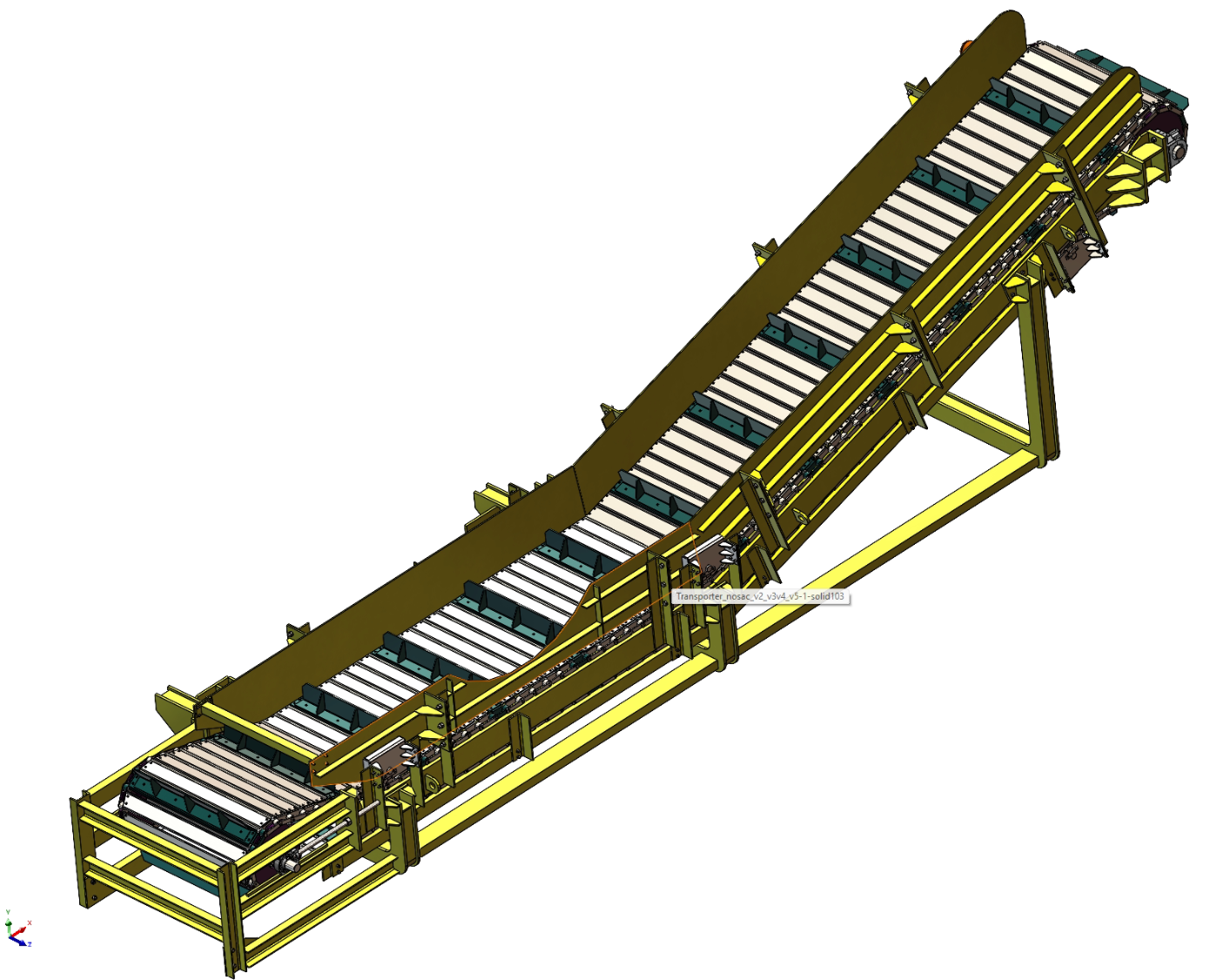
Heavy duty inclined slat chain conveyor with twin chains, replaceable steel slats, transverse flights, controlled transition geometry and a braced support frame.
View case study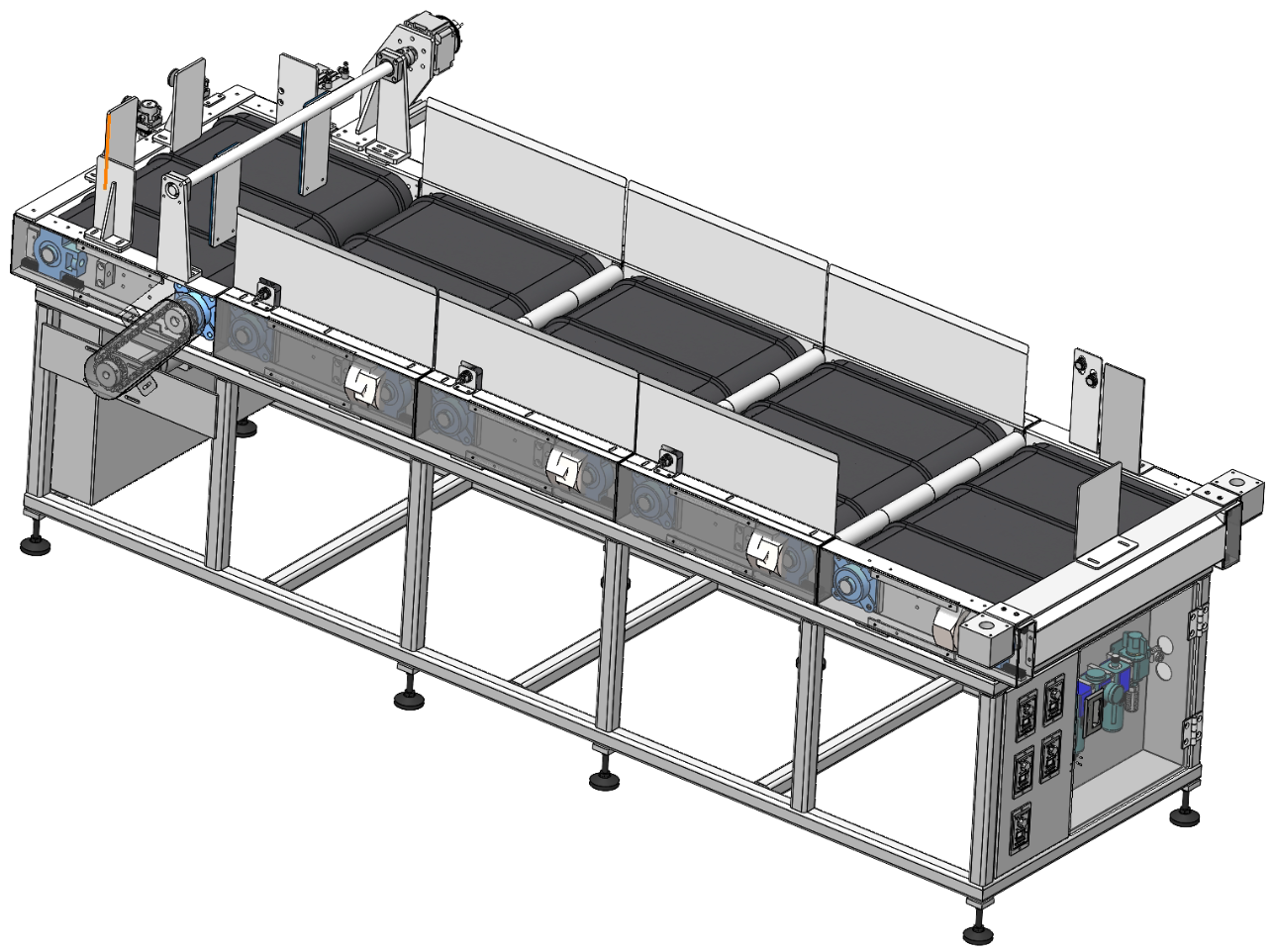
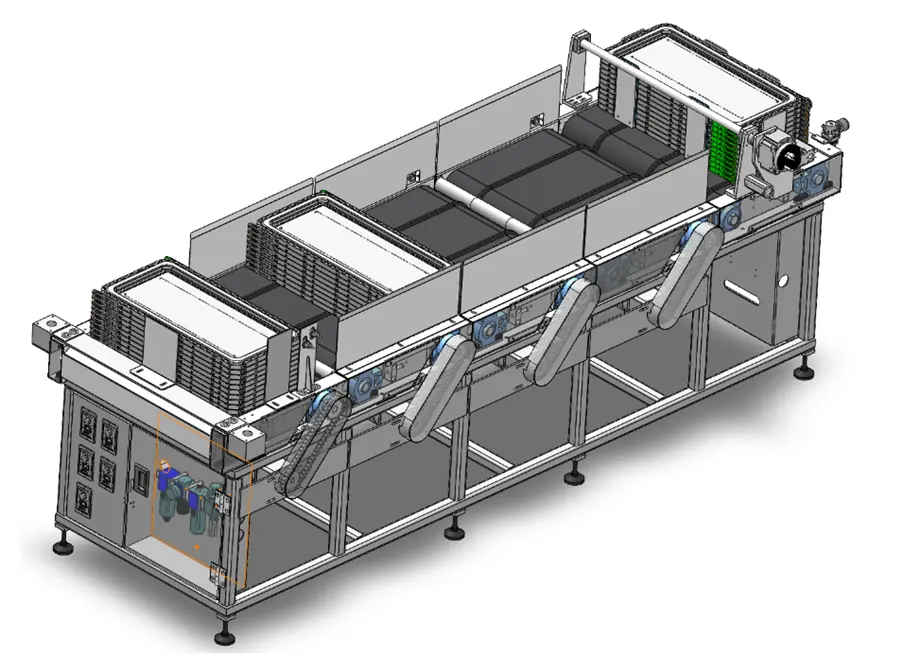
Zoned conveyor mechanical design for separated automotive door panel accumulation and controlled robotic pickup presentation.
View case study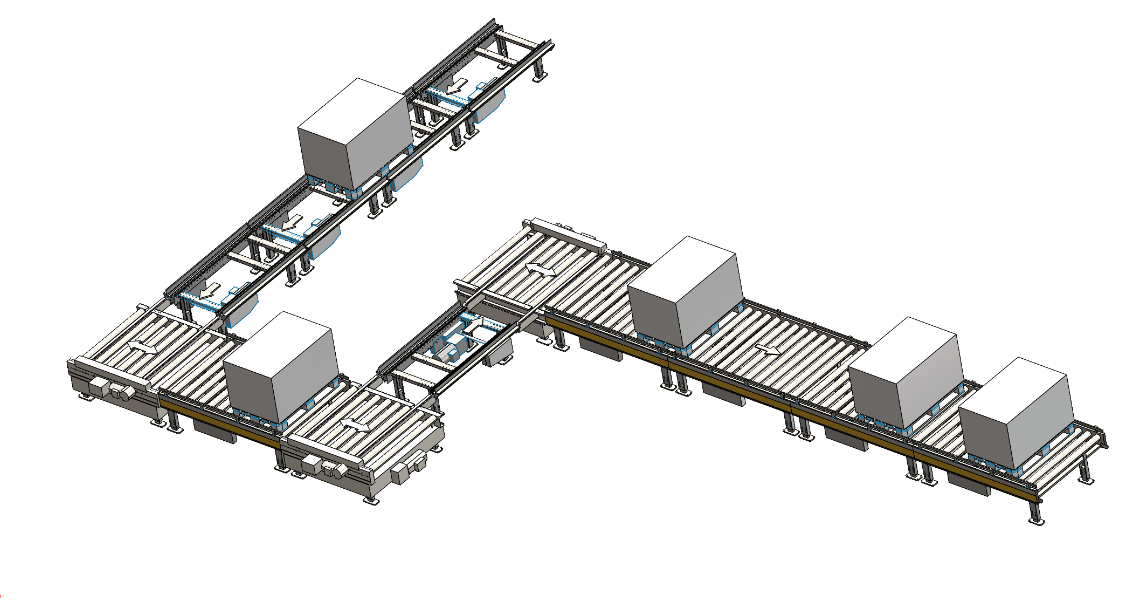
Mechanical engineering of interconnected horizontal and multi level pallet handling systems for reliable Euro pallet flow, buffering and level transfer.
View case studySpecialist engineering review
A conveyor line is reviewed as a connected material flow system, not as isolated conveyor sections. The objective is to challenge the assumptions most likely to affect product flow, equipment duty, integration or downstream release.
Review of product support, orientation, spacing, accumulation, line speed, elevation changes, operating environment and the criteria that define acceptable flow.
Review of transfer geometry, acceleration, belt or chain duty, drive torque, support loading, deflection, wear points, access and connected equipment interfaces.
Review of manufacturing route, assembly and installation constraints, guarding interfaces, maintenance access, assumptions, revision status and supplier information.
Typical deliverables
Outputs are agreed around the system scope and manufacturing route, so the information needed for design review, procurement, manufacture, installation and supplier handover develops with the equipment.
Layouts · CAD · drawings · BOMs · calculations ·interface records · revision control
Overall arrangements, conveyor routes, elevations, product flow, section boundaries, transfer locations and principal installation interfaces.
Conveyor sections, transfers, frames, supports, guides, drives and related mechanical equipment in agreed native and neutral CAD formats.
Part, weldment, assembly and installation drawings with agreed dimensions, tolerances, manufacturing information, notes and revision status.
Speed, capacity, torque, chain pull, incline, support loading, deflection and FEA where required to support critical equipment decisions.
Manufactured items, motors, gearboxes, belts, rollers, chains, bearings, hardware and supplier references aligned with the released design.
Assumptions, transfer interfaces, open actions, change records, agreed manufacturing files and clarification notes for downstream teams.
How engagements work
A clear engagement path keeps product duty, interfaces, assumptions and outputs defined without turning the service page into a process manual.
Send product information, throughput targets, route, CAD, drawings, photographs, measurements or existing line information.
Agree handling duty, interfaces, assumptions, calculations, required outputs, review points, responsibilities and programme.
Engineering progresses through defined technical reviews, with transfer, drive, structural, DFM and integration issues raised as they surface.
Layouts, models, drawings, BOMs, calculations and agreed records are issued under revision control with supplier clarification support as scoped.
Buyer questions
Direct answers to the technical and commercial questions that most often determine whether a conveyor or handling project can be scoped correctly.
The scope can include product and duty definition, conveyor selection, line layout, belt or roller sections, chain and slat equipment, accumulation, transfers, lifts, frames, supports, guarding interfaces, drive and load calculations, manufacturing drawings, BOMs, installation information and revisions. The exact package depends on the starting information and the responsibilities agreed for the project.
Useful starting information includes product dimensions, weight, orientation and condition; required throughput and spacing; accumulation or buffering needs; route and elevation changes; available footprint; environment and cleaning requirements; existing equipment; transfer positions; operating duty; and any CAD, drawings, photographs or site measurements. Missing inputs are identified during the initial engineering review.
The choice depends on the product, load, orientation, required control, route, speed, accumulation, environment, maintenance expectations and surrounding equipment. Belt conveyors suit many continuous support applications, roller systems suit stable unit loads, and chain or slat systems are often appropriate for pallets, heavier loads or harsher duty. Transfers, lifts and special mechanisms may be required where the product changes direction, level or equipment interface.
The design starts with product dimensions and support conditions, target throughput, spacing, acceleration, incline, friction, accumulation, load distribution and operating duty. These inputs inform conveyor width, speed, roller or belt arrangement, chain pull, torque, drive power, gear ratio, support loading and transfer timing. Calculations and supplier data are used where critical load cases or component selections require confirmation.
There is no reliable fixed price because engineering cost depends on the starting information, conveyor type, line length, number of sections and transfers, accumulation requirements, structures, calculations, installation constraints, documentation depth and number of project interfaces. Fabrixon reviews the available information first and then defines the work packages, assumptions, deliverables and commercial basis.
The programme depends on system length and complexity, number of conveyor sections, transfer and structural requirements, availability of product and layout data, review cycles and documentation scope. A defined conveyor section or retrofit can be shorter than a complete handling line with multiple transfers, supports and equipment interfaces.
Yes. Fabrixon can develop new conveyor equipment around existing machines, structures and available space, or modify an established line through reroutes, extensions, duty upgrades and new transfer points. Existing CAD, drawings, measurements, photographs and operating information are reviewed so reusable equipment, changed interfaces, access and installation constraints are explicit.
Next step
Share the product, required movement, throughput, route and available files. An engineer will review the starting point and confirm the most suitable design, validation and documentation scope.
A brief outline is enough to start the conversation.
