
Inclined FlightedSlat Chain Conveyor
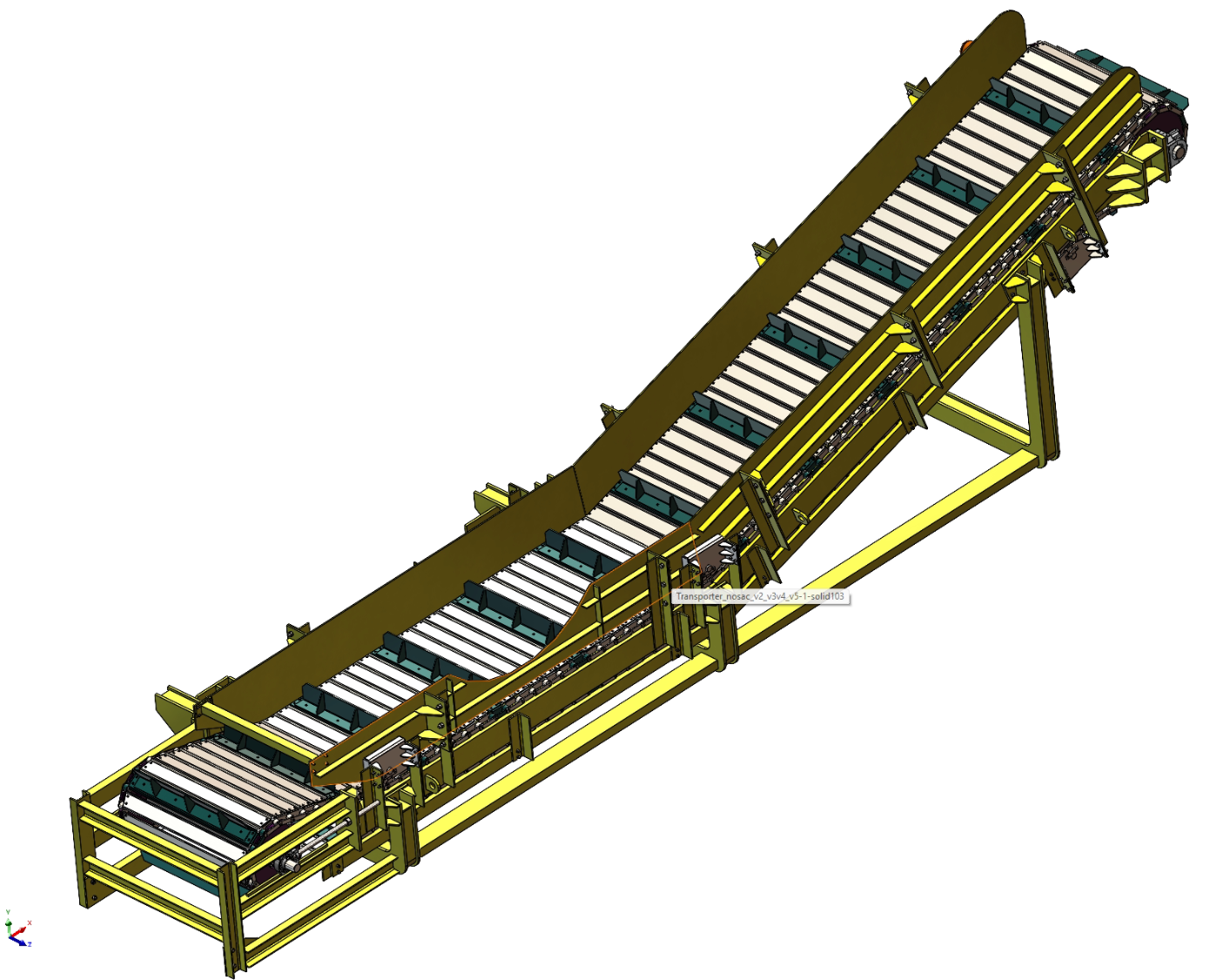
Mechanical design of a heavy duty horizontal to incline conveyor using twin side chains, replaceable steel slats, transverse flights and a braced frame for positive transfer of difficult industrial material.
Use positive conveyance where belt friction is not enough
The conveyor receives material at a low level, carries it through a horizontal loading section and elevates it to a higher discharge point. Heavy, irregular or abrasive material made a conventional friction belt a poor fit for the duty.
Fabrixon selected a steel slat deck driven by twin side chains. Raised flights create positive pockets through the incline so the material remains controlled as gravity acts against the direction of travel.
Treat chain pull and structural alignment as one problem
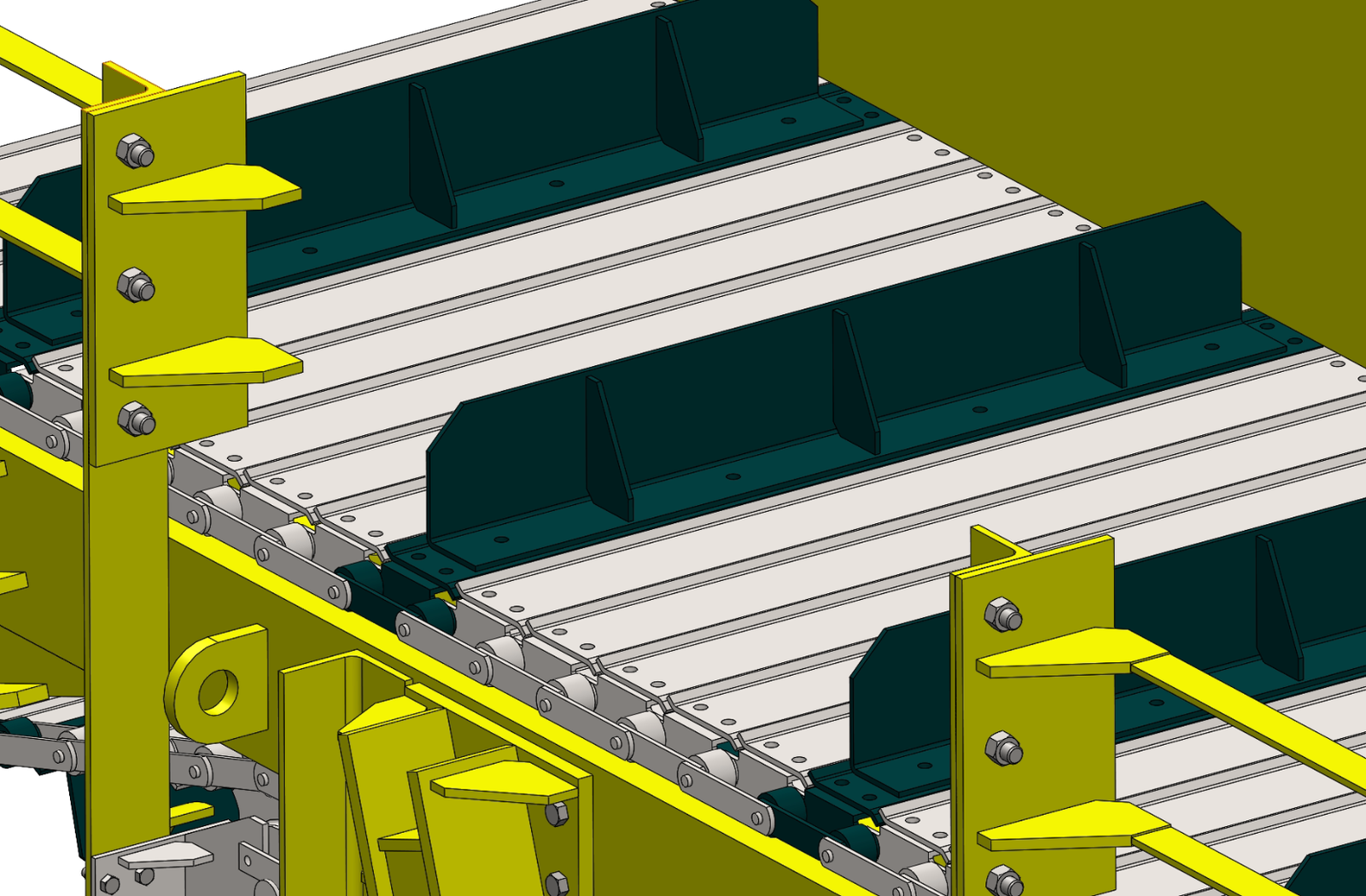
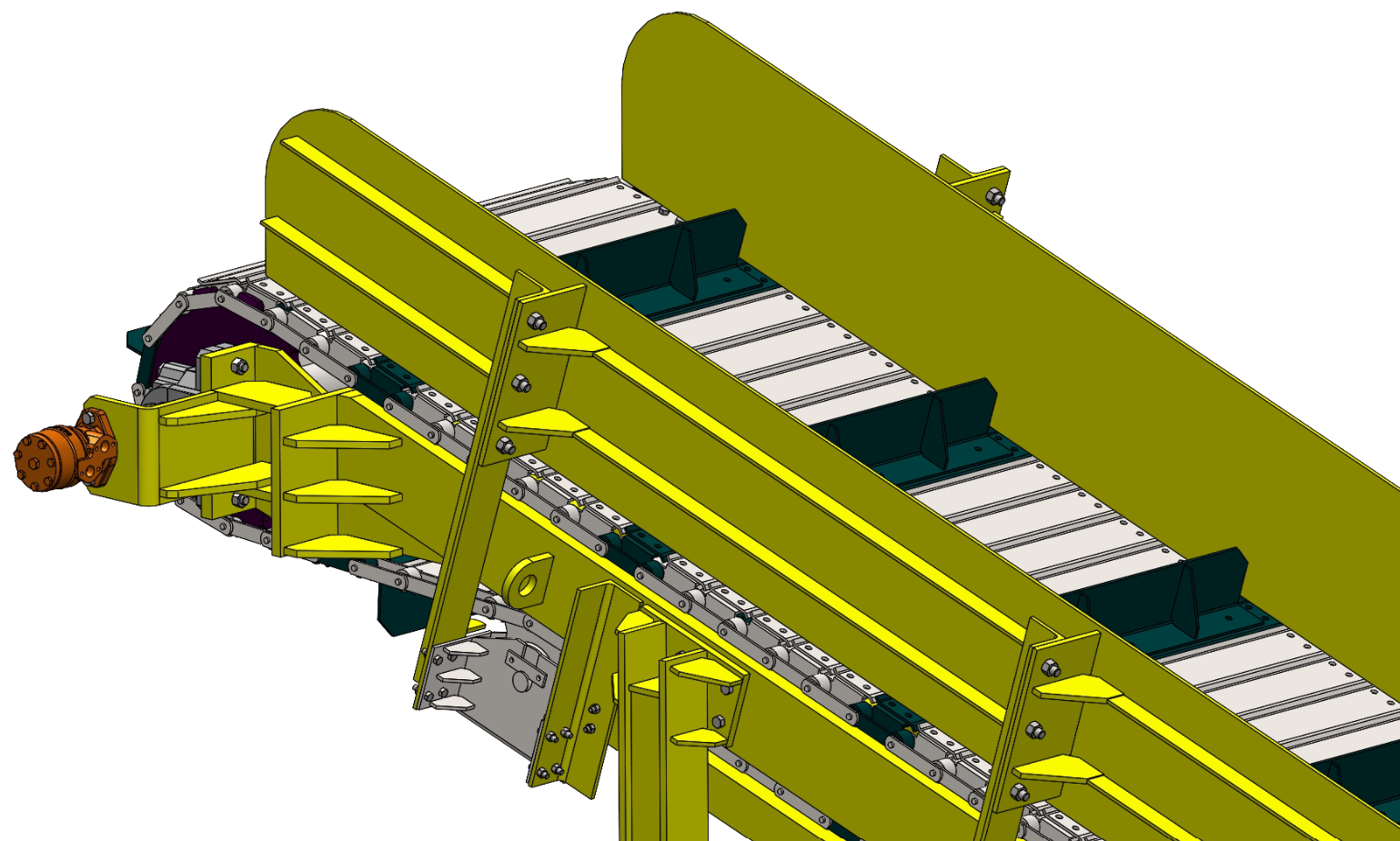
Twin chain strands distribute the deck load and positively relate chain travel to slat movement. The frame has to preserve sprocket, bearing and guide alignment while the loaded chain system pulls material through the incline.
- Twin chains
- Share the conveying load and positively drive the slat deck.
- Replaceable slats
- Wear components remain discrete and locally serviceable.
- Transverse flights
- Form positive pockets that resist rollback during elevation.
- Braced frame
- Maintains drive, guide and carrying geometry under load.
Coordinate the knee transition with the moving deck
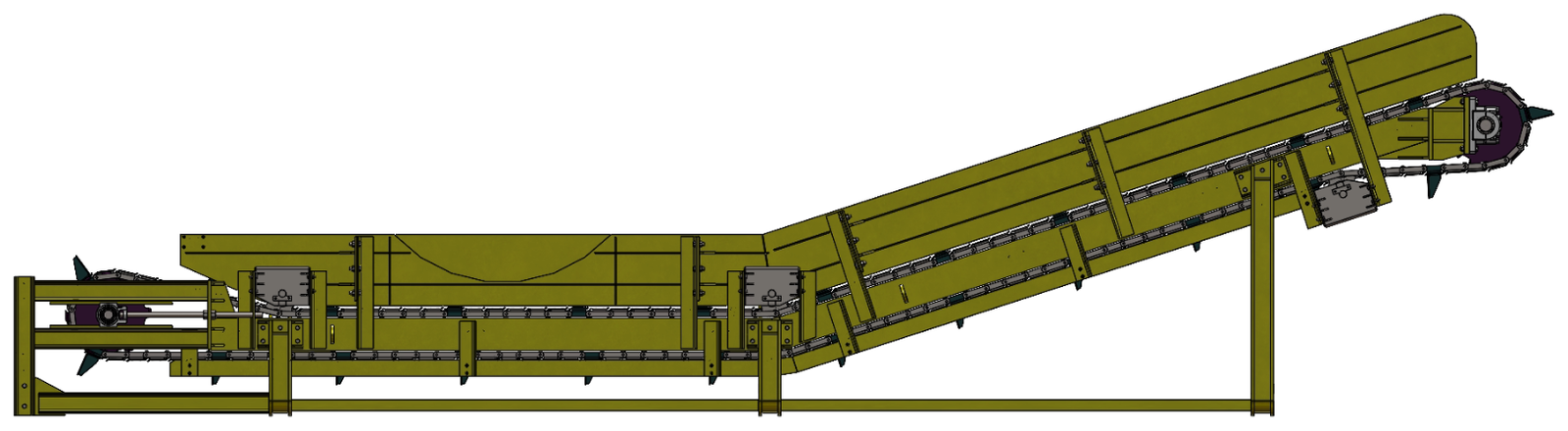
The horizontal to incline transition governs chain articulation, flight clearance, side wall continuity and the change in material attitude. These details must work together for smooth positive transfer.
- 01
Receive
Load material onto the low level horizontal slat deck.
- 02
Transition
Guide chain, slats and flights through the controlled knee geometry.
- 03
Elevate
Use the flighted pockets to control material on the incline.
- 04
Discharge
Pull the loaded run through the head end drive to the elevated discharge.
The conveyor met the required speed and material capacity
The successful conveyor achieved the intended operating duty while preserving the positive carrying method through the full horizontal to incline path.
Required nominal conveying speed achieved.
Required material duty achieved for the intended application.
Geared drive pulls the loaded incline.
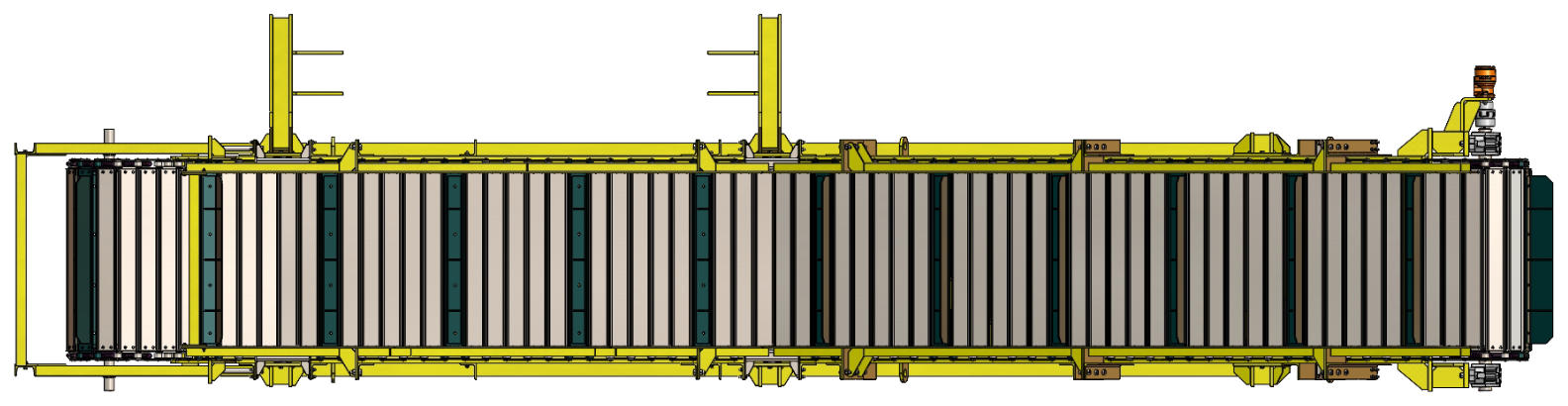
Keep wear and alignment items accessible
Discrete slats, accessible side chain runs and modular structural brackets allow wear or alignment issues to be addressed locally rather than replacing one continuous conveying element.
Inspection priorities include chain elongation, roller condition, sprocket wear, slat and flight fasteners, guide wear and the drive or backstop function.
- Maintainability
- Wear components remain accessible and replaceable.
- Load sharing
- Twin chain strands were developed with allowance for unequal load distribution.
- Incline control
- Flighted pockets provide positive material control through the rise.
- Safety context
- The engineering context references ISO 12100, EN 618 or EN 619 as applicable, ISO 13849-1, IEC 60204-1 and ASME B20.1.
Positive mechanical engagement made the incline predictable
The conveyor achieved its duty because material control did not depend on friction alone. Slats support the load, flights resist rollback, twin chains transmit pull and the braced frame preserves the geometry required for repeated motion.
A positive transfer conveyor that achieved the required duty
The completed architecture provides a mechanically controlled route from low level loading to elevated discharge. The successful system achieved the specified speed and material capacity while retaining accessible wear components and a maintainable drive arrangement.
- Performance
- Nominal 8 m/min speed and approximately 5 t/h material duty were achieved.
- Material control
- Flights maintain positive pockets on the incline and resist rollback.
- Drive system
- Twin side chains transmit the loaded pull through the slat deck.
- Structure
- The braced frame maintains sprocket, bearing, guide and transition alignment.