Automated Production & Process Equipment
Purpose designed equipment for automated operations, multi station processes and production functions where standard machinery does not meet the required sequence, throughput or interface conditions.

Industrial automation engineering
Purpose designed automation for production, handling, inspection and robotic applications. Fabrixon connects equipment architecture, mechanical design, validation and controlled manufacturing documentation within one coordinated engineering scope.
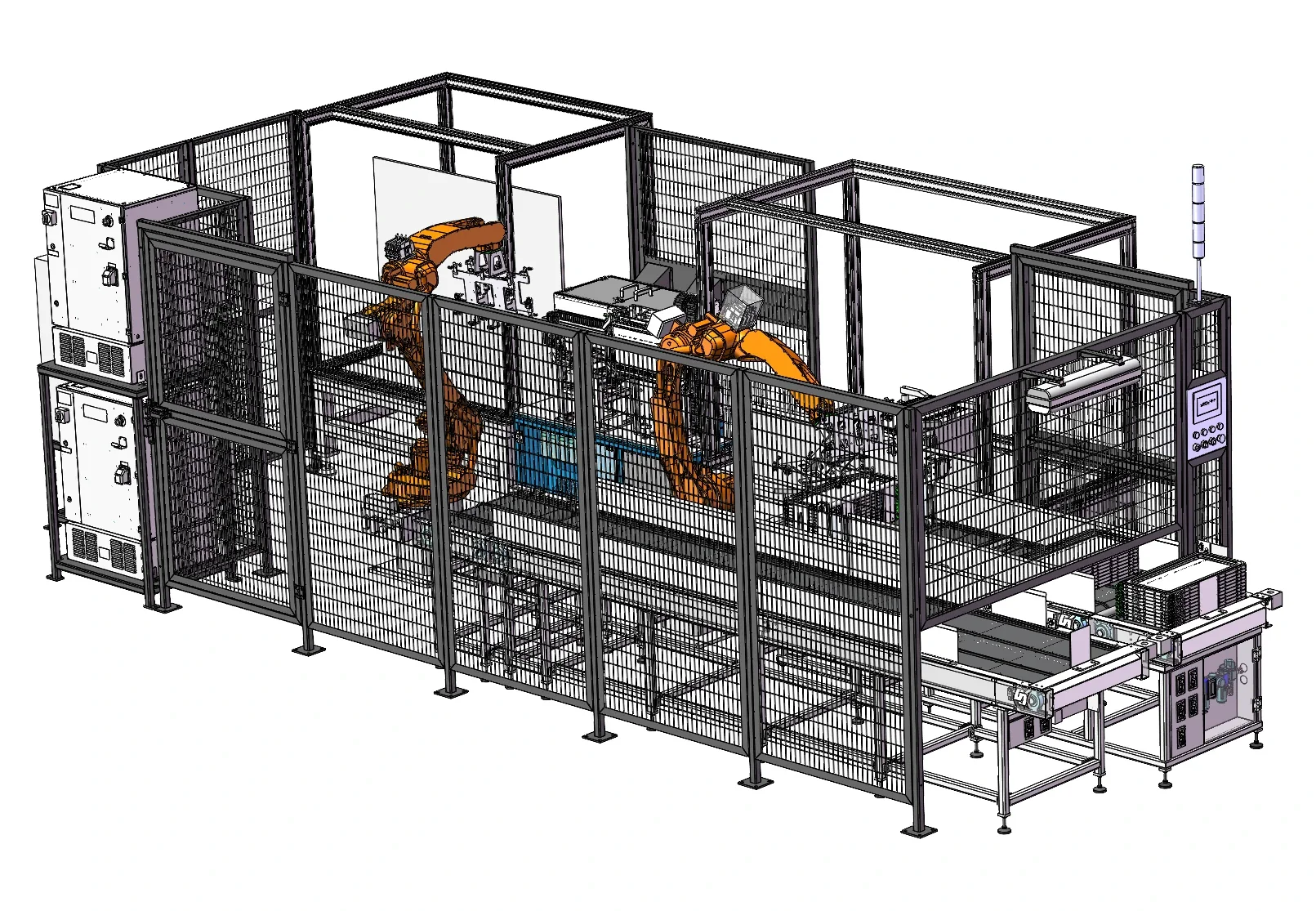
Automation equipment design, mechanisms and integration
Equipment, robotic cells, tooling and production automation
Production equipment, handling, inspection, robotic cells, tooling and retrofits
From process definition through controlled engineering handover
Engineering capabilities
From a defined automated operation to a complete robotic cell or retrofit, the scope is developed around the process, product, duty, interfaces, access and manufacturing route rather than around a generic machine template.
Integrated automation programme
Equipment architecture, mechanisms, tooling, structures, guarding interfaces and critical validation are developed around the same operating requirement. CAD, drawings, BOMs and supplier information remain aligned as the design progresses.
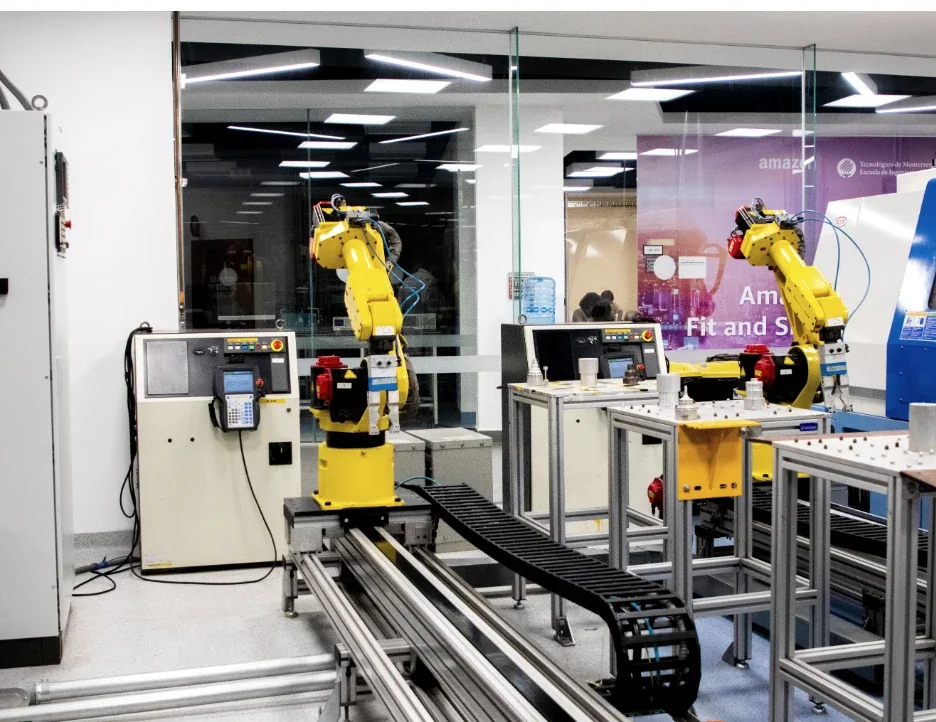
Purpose designed equipment for automated operations, multi station processes and production functions where standard machinery does not meet the required sequence, throughput or interface conditions.
Mechanisms and equipment for moving, indexing, lifting, rotating, separating, positioning or buffering products between automated operations.
Mechanical stations for locating, restraining, presenting, testing, measuring, inspecting and routing products through automated quality or process checks.
Cell layout, robot positioning, reach and interference assessment, bases, fixtures, EOAT, guarding, access and mechanical interfaces with surrounding equipment.
Grippers, vacuum tooling, fixtures and specialist end effectors developed around part geometry, payload, datums, contact conditions, repeatability and changeover needs.
Controlled redesign of existing automated equipment for new products, revised duty, changed interfaces, obsolete components or incomplete engineering documentation.
Typical project conditions
Fabrixon steps in when an automated operation, robotic application or existing installation needs coordinated mechanical engineering before the design can progress with confidence.
Sequence, throughput, product conditions, footprint and interfaces need to be converted into a feasible equipment architecture.
Products must be moved, located, oriented, buffered, tested or inspected without compromising the wider process.
Robot position, reach, tooling, fixtures, structures, guarding, access and adjacent machinery must work as one mechanical system.
New products, changed duty, obsolete components or undocumented modifications create interface and release risks that need engineering control.
Engineering approach
The equipment develops around the required operation and duty, with design decisions, validation and manufacturing information connected through the programme.
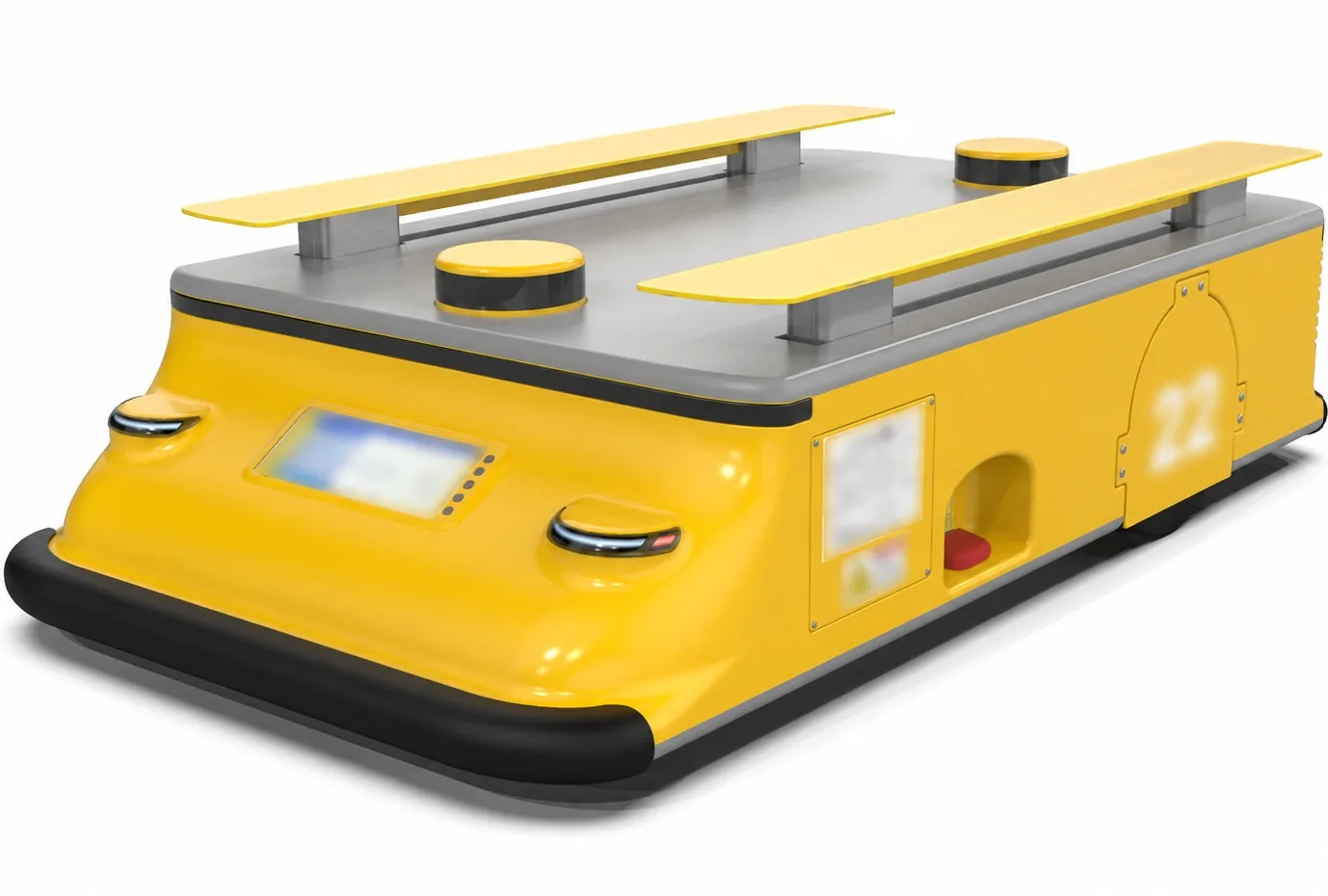
Product, operation, sequence, throughput, cycle target, environment, footprint and known constraints.
Stations, mechanisms, handling strategy, robotic functions where applicable, tooling and principal interfaces.
Structures, fixtures, EOAT, components, tolerances, access, guarding interfaces and manufacturing route.
Mechanism, reach, payload, centre of gravity, stiffness or structural checks where engineering evidence is required.
CAD, drawings, BOMs, assumptions, revisions and interface information issued as one controlled engineering package.
Selected automation work
Selected automation projects covering robotic workcell integration, pneumatic end-of-arm tooling and die-cast production-line integration.
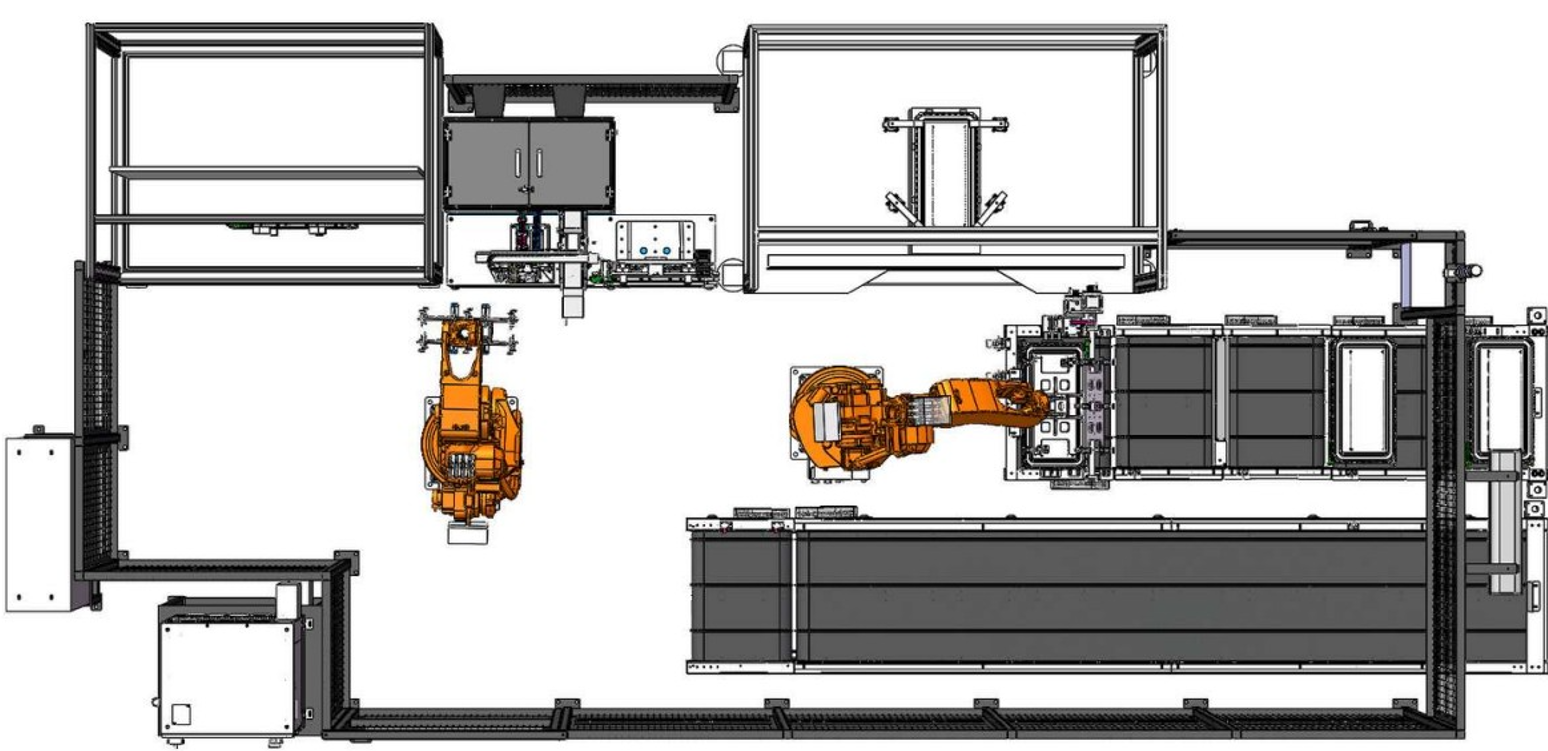
Mechanical integration of OEM process modules, twin robots, conveyors and safety infrastructure into a production workcell.
View case study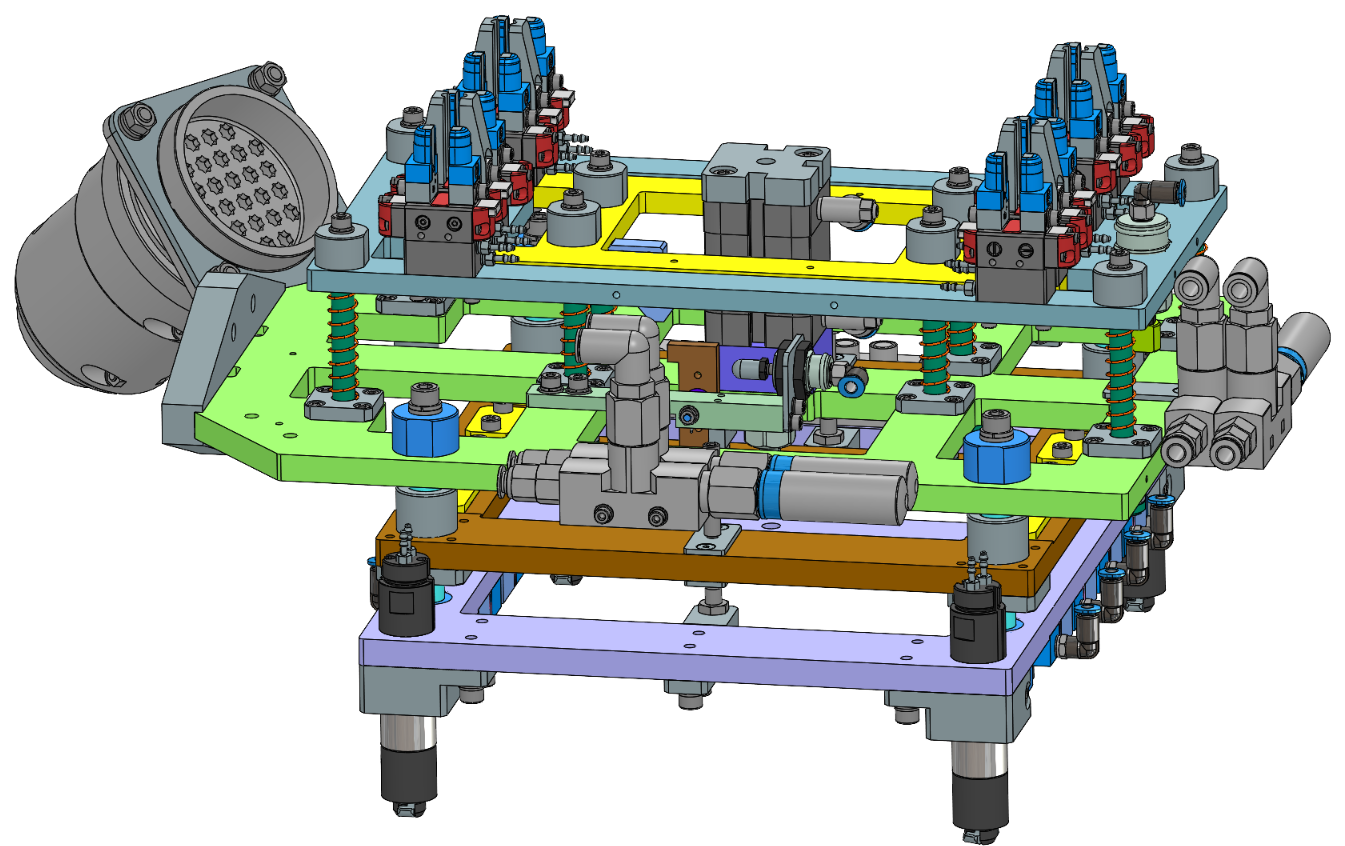
Mechanical EOAT design using distributed pneumatic clamps, compliant seating and a rigid robot interface for repeatable datum controlled handling.
View case study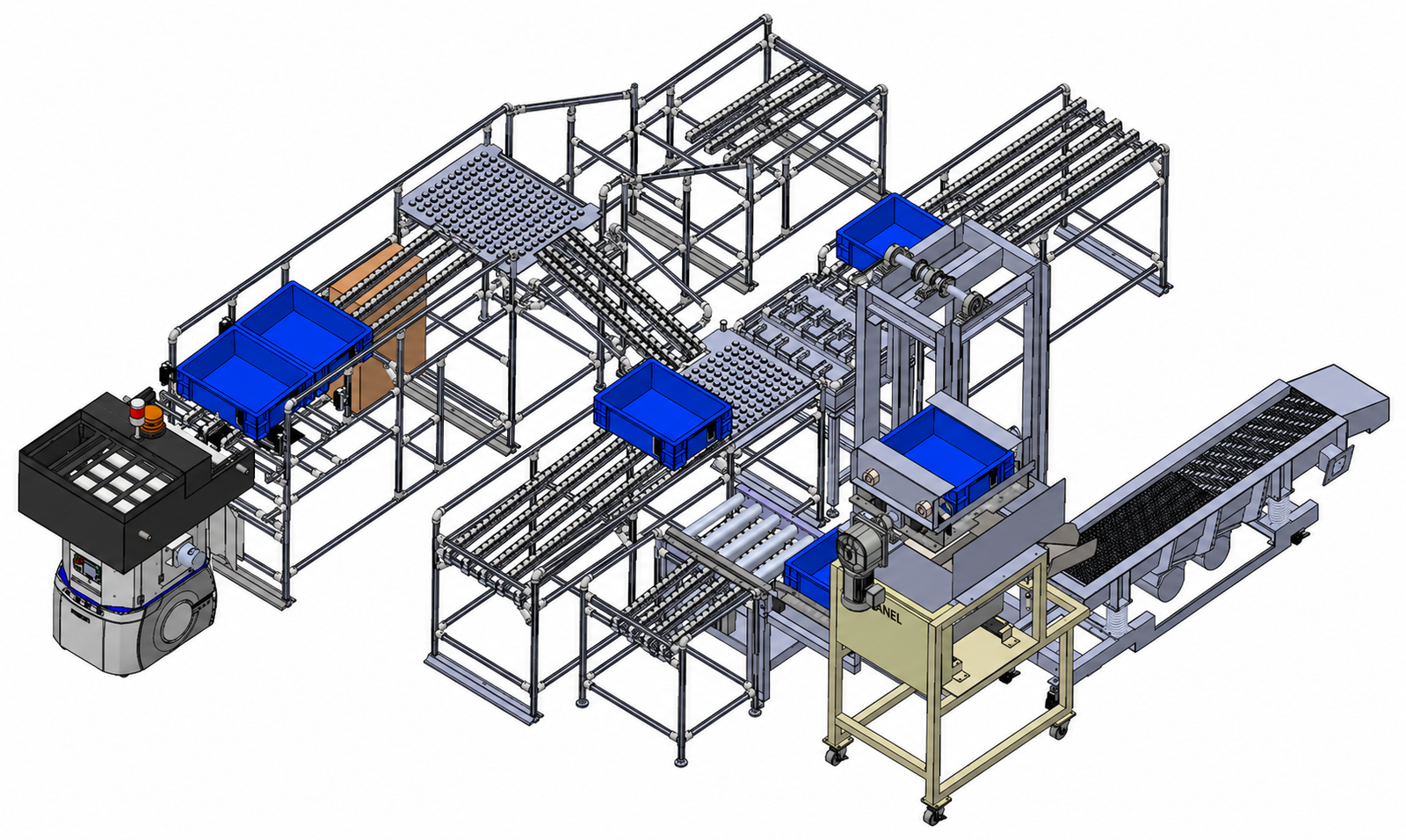
Mechanical integration of supplier process equipment, multilevel tote buffering and an AMR collection interface into a line that met its operating requirements.
View case studySpecialist engineering review
Automation equipment is reviewed as a connected operating system, not as a collection of isolated CAD parts. The objective is to challenge the assumptions most likely to affect function, integration or downstream release.
Review of what the equipment must do, product variation, cycle demands, operating modes, environment and the conditions that define acceptable performance
Review of mechanisms, forces, stiffness, tolerance conditions, purchased components, access and the interfaces between structures, tooling, guarding and controls
Review of manufacturing route, assembly sequence, maintenance access, assumptions, revision status and the information needed by suppliers and adjacent project teams
Typical deliverables
Outputs are agreed around the project scope and manufacturing route, so the information needed for review, procurement, integration and supplier handover develops with the equipment.
CAD · drawings · BOMs · validation evidence · interface records · revision control
Layouts, mechanisms, stations, structures, fixtures, tooling, robotic workcells and mechanical assemblies in agreed native and neutral formats.
Part, assembly and weldment drawings with agreed tolerancing, manufacturing information, notes, title blocks and revision status.
Manufactured items, purchased components, materials, hardware references and relevant equipment or tooling schedules.
Mechanism calculations, payload or centre of gravity checks, structural assessments, FEA and other agreed engineering evidence.
Mounting provisions, product transfer points, guarding interfaces and information required by suppliers and adjacent project teams.
Assumptions, open actions, revision registers, agreed manufacturing files and supplier clarification records.
How engagements work
A clear engagement path keeps the technical and commercial basis defined without turning the service page into a process manual.
Send the process brief, equipment requirement, CAD, drawings, photographs, videos or existing installation information.
Agree process duty, interfaces, assumptions, required outputs, review points, responsibilities and programme.
Engineering progresses through defined technical reviews, with critical mechanism, tooling, workcell and validation issues raised as they surface.
Models, drawings, BOMs, evidence and agreed records are issued under revision control with supplier clarification support as scoped.
Buyer questions
Direct answers to the commercial and technical questions that most often determine whether an automation equipment project can be scoped correctly.
Automation equipment design can include process and duty definition, equipment architecture, mechanisms, handling and transfer equipment, test and inspection stations, robotic workcells, EOAT, fixtures, structures, guarding, component selection, design validation, manufacturing drawings, BOMs and supplier handover. The exact package depends on the starting information and agreed responsibilities.
A complete specification is not required. Useful starting information includes the process or equipment function, product data, operating sequence, throughput or cycle target, duty, environment, available footprint, existing machinery, robot or hardware data where applicable, CAD or drawings, known constraints and the outputs your team needs.
There is no reliable fixed price because the engineering cost depends on project maturity, equipment complexity, number of mechanisms or stations, robotic and tooling requirements, validation depth, drawing and BOM requirements, and the number of client, supplier or integration interfaces. Fabrixon reviews the available information before defining the commercial basis.
The programme depends on the starting information, equipment complexity, number of review cycles, availability of product and hardware data, validation requirements and the speed of technical decisions. A defined fixture, mechanism or retrofit can be shorter than a complete automation equipment or robotic workcell programme.
Yes. Fabrixon can engineer robotic workcells including cell layout, robot positioning, reach and interference assessment, robot bases and structures, fixtures, EOAT, guarding, access and mechanical interfaces with surrounding equipment. Programming, site installation and commissioning responsibilities are confirmed separately where relevant.
Yes. Fabrixon can develop equipment around an existing installation, including footprint constraints, product transfer points, mounting interfaces, access, guarding, adjacent mechanisms and modification requirements. Existing CAD, drawings, photographs, measurements and operating information can be reviewed to define the affected interfaces.
Yes. Mechanism calculations, payload and centre of gravity checks, structural assessments, FEA and other design evidence can be included where they support critical engineering decisions. The same engagement can also cover CAD assemblies, manufacturing drawings, BOMs, interface documentation, revision records and supplier clarification support.
Next step
Share the process, equipment function and available files. An engineer will review the starting point and confirm the most suitable design, validation and documentation scope.
A brief outline is enough to start the conversation.
