
Die Cast Production Line Integration
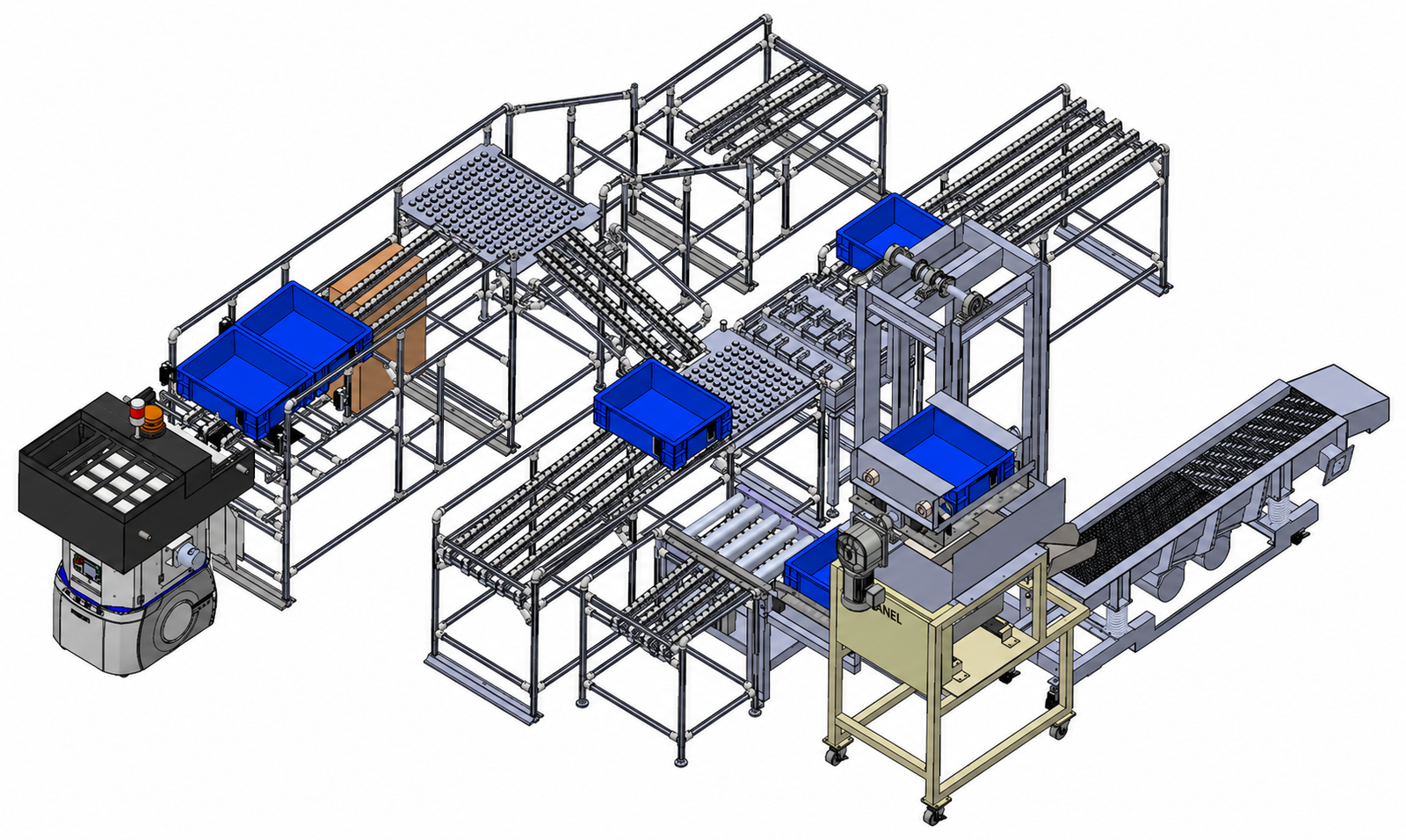
Fabrixon integrated supplier equipment, multilevel tote handling and an autonomous mobile robot pickup interface into one coordinated line that met the OEM’s operating requirements while preserving its process technology.
Make separate machines
work as one line
The OEM had already selected the vibratory feeder, separator, vertical lifter and autonomous mobile robot. Fabrixon’s task was to connect those established modules through the surrounding structure, conveyance and tote handling system, not to redesign their internal mechanisms.
The difficult part was the space between the machines. Discharge positions, tote presentation levels, mounting interfaces and service clearances all had to agree before the line could work as a coordinated system.
- Supplier equipment
- Integrate the feeder, separator, lifter and AMR without changing their internal process functions.
- Interface risk
- Align discharge positions, mounting points, access envelopes and tote handoff geometry before fabrication.
- Scope discipline
- Keep process technology and controls ownership with the OEM and its specialist suppliers.
Resolve the interfaces
before fabrication
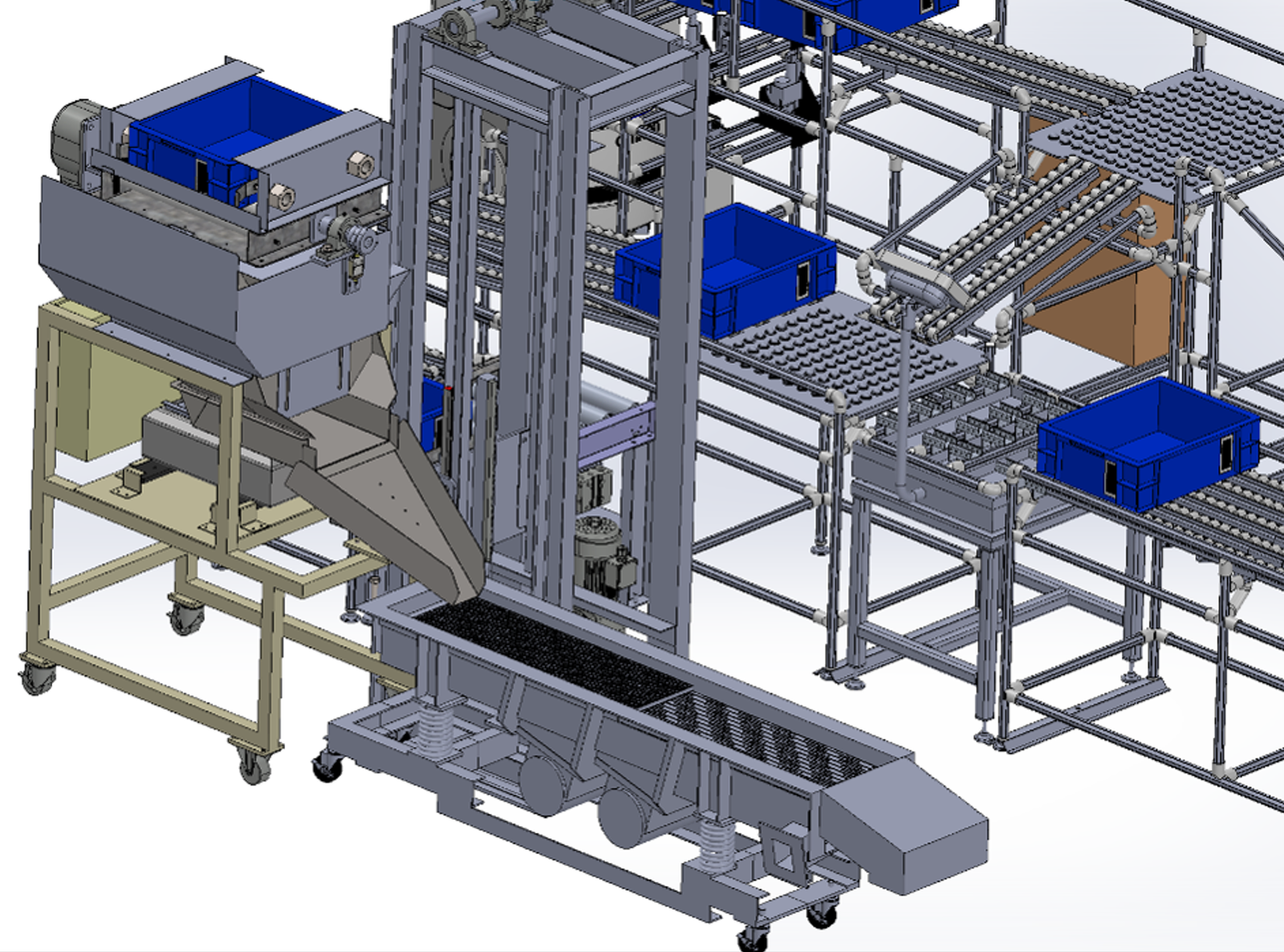
Supplier installation data was brought into the master SolidWorks assembly so feeder discharge, separator access and the lifter envelope could be resolved together.
The transfer chute, support frame and surrounding clearances were then designed around the equipment as supplied, including service access and the structural reactions introduced by the lifter.
- Discharge geometry
- Chute and receiving geometry connected the process modules without asking the suppliers to change their internal technology.
- Structural interfaces
- Mounting regions and the surrounding frame were coordinated to carry equipment reactions while keeping adjacent conveyance clear.
- Service envelope
- Inspection, adjustment and equipment access remained part of the integration model rather than an issue left for installation.
Buffer the timing gap
between stations
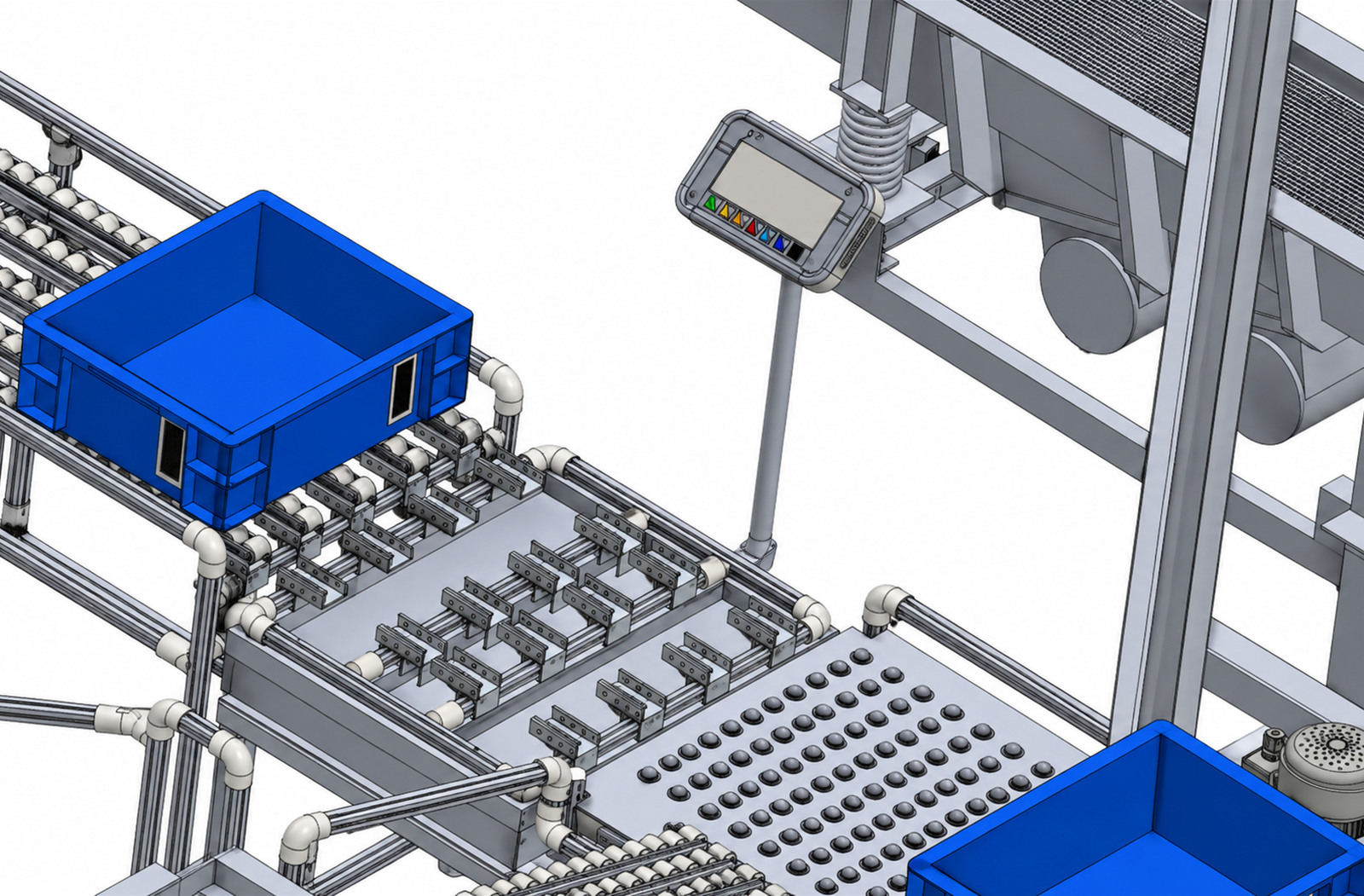
The line combined continuous and intermittent operations, so intermediate accumulation was used to absorb timing differences rather than pass them directly from one process module to the next.
Full totes moved toward collection on gravity rollers while empties returned on a separate level. Rack pitch, roller behaviour and stops were matched to the loaded tote envelope and the required pickup condition.
- Accumulation
- Intermediate holding positions absorbed differences in station timing instead of passing each interruption straight through the line.
- Controlled arrival
- Stops retained the tote at its handoff position until the downstream system was ready to accept it.
Control the last handoff
to the mobile robot
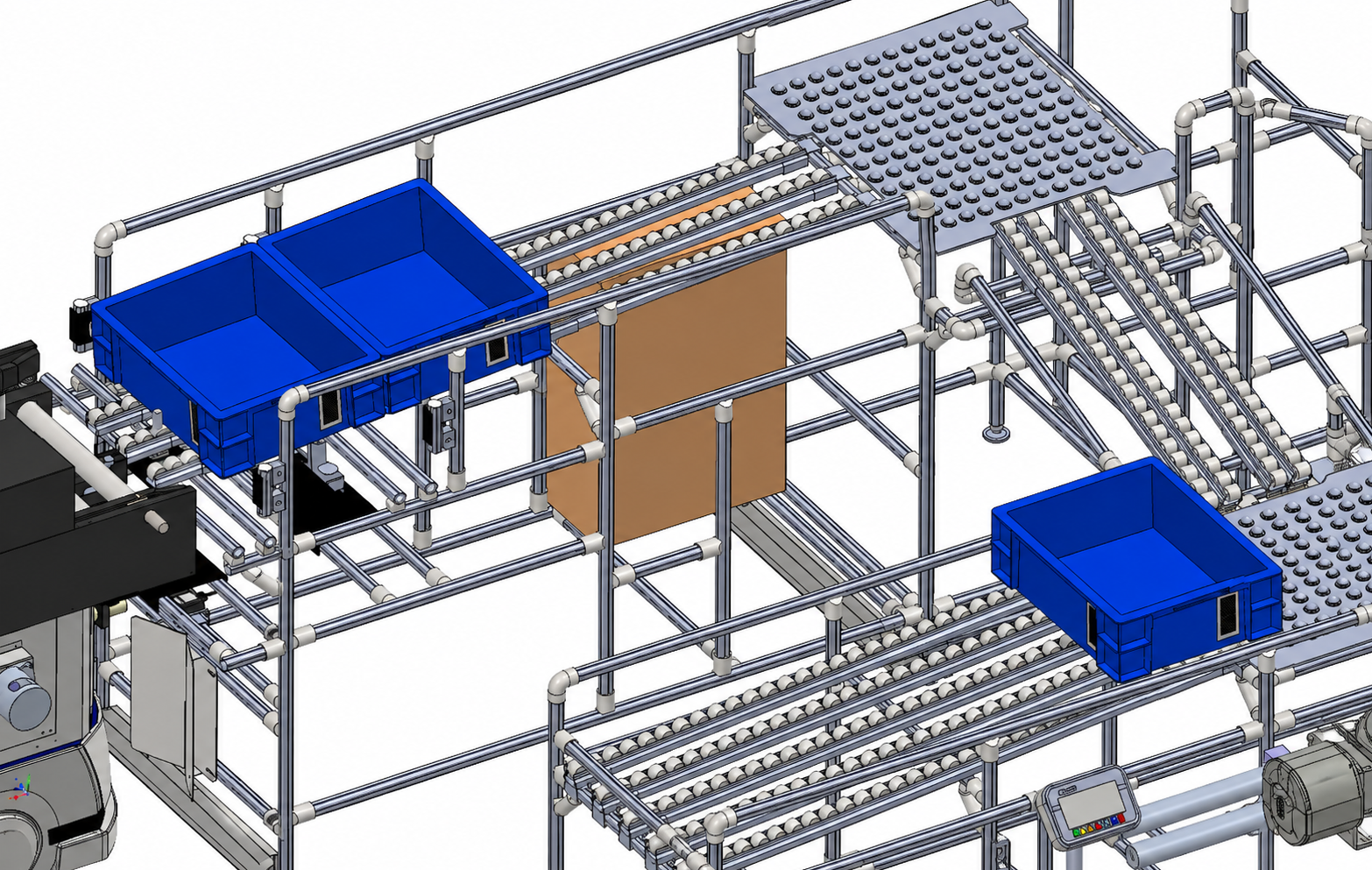
Fabrixon matched the collection station to the supplied AMR’s deck height, docking geometry and tote transfer condition. Alignment features, stops and the surrounding approach envelope were developed around that interface.
This created a defined mechanical handoff that the OEM’s controls team could sequence without modifying the AMR itself.
- 01
Present
Tote arrives in a defined collection position.
- 02
Hold
A stop retains it until the downstream system is ready.
- 03
Transfer
Station geometry aligns with the AMR receiving condition.
- 04
Clear
The docking and departure envelope remains unobstructed.
A common package for
fabrication and controls
The released package tied the mechanical interfaces to the information needed by fabrication and controls teams.
Reviews covered module mountings, access, sensing, cable routes and AMR handoff points,
with Fabrixon supporting interface questions through fabrication.
Fabrixon engineering delivery
Fabrixon owned the mechanical integration around the supplier equipment.
- Structural support, module mountings and interconnecting conveyance
- Multilevel tote racks, collection geometry and positioning stops
- Guarding, access and mechanical sensor and interlock interfaces
- Design clarification and interface support during fabrication
OEM and supplier responsibilities
The OEM and suppliers retained process technology, controls and commissioning.
- Feeder, separator and vertical lifter internals
- The AMR and fleet management system
- PLC programming, panel manufacture and physical commissioning
- Upstream casting process and proprietary product specifications
The interfaces determined the line’s performance
Coordinating discharge conditions, buffering, tote presentation and robot collection allowed independently supplied equipment to operate as one line without redesigning the OEM’s core process modules.
One coordinated line
met the required duty
The completed integration met the agreed handling and collection requirements, preserved the supplier interfaces and was released as one coordinated mechanical package.
- Handling performance
- Buffering and tote flow supported the required line duty across process modules with different operating rhythms.
- Interface control
- Supplier equipment and the AMR were integrated around their mounting, service and handoff requirements without redesign.
- Engineering delivery
- The package was released on schedule, with Fabrixon available through fabrication to close interface queries.