
Tractor Cooling Package DFA Optimization
How early stage Design for Assembly was used to simplify a tractor cooling package before industrialization, reducing part count and assembly effort while improving manufacturability and total package cost.
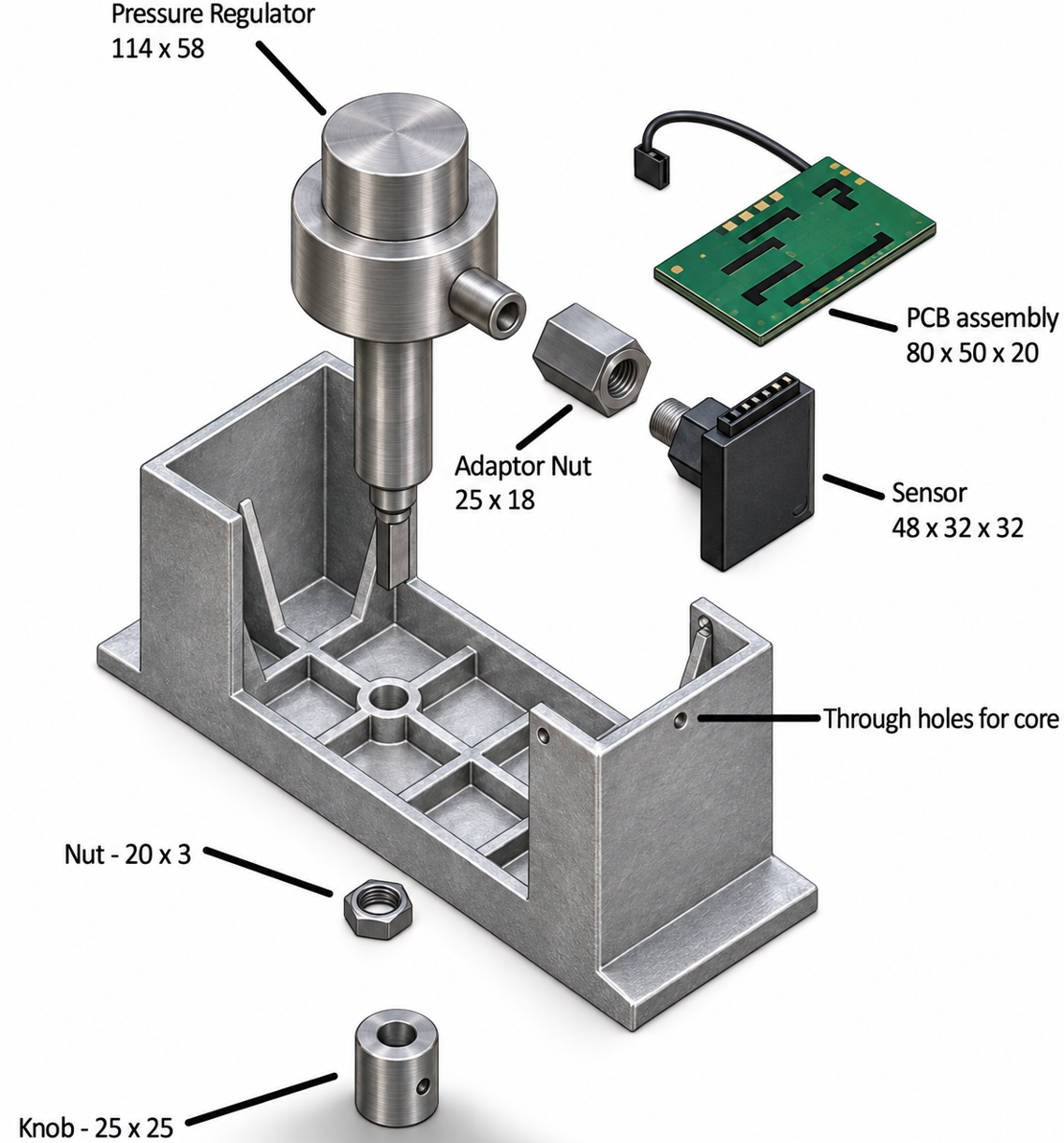
Assembly complexity was already embedded at concept stage
The cooling package was still in the early design phase, but the initial architecture had already grown to 352 parts. That created a high number of handling, fastening and insertion steps before the design had reached industrialization.
The engineering problem was therefore broader than simply cutting cost. The design needed fewer parts, fewer opportunities for assembly error and a cleaner route to production without removing components that were genuinely required for sealing, function or serviceability.
The baseline package contained 352 components before DFA actions were applied.
Repeated fasteners, connectors and handling steps were extending assembly time and labour content.
The work was carried out before industrialization, when geometry, interfaces and joining methods were still relatively inexpensive to change.
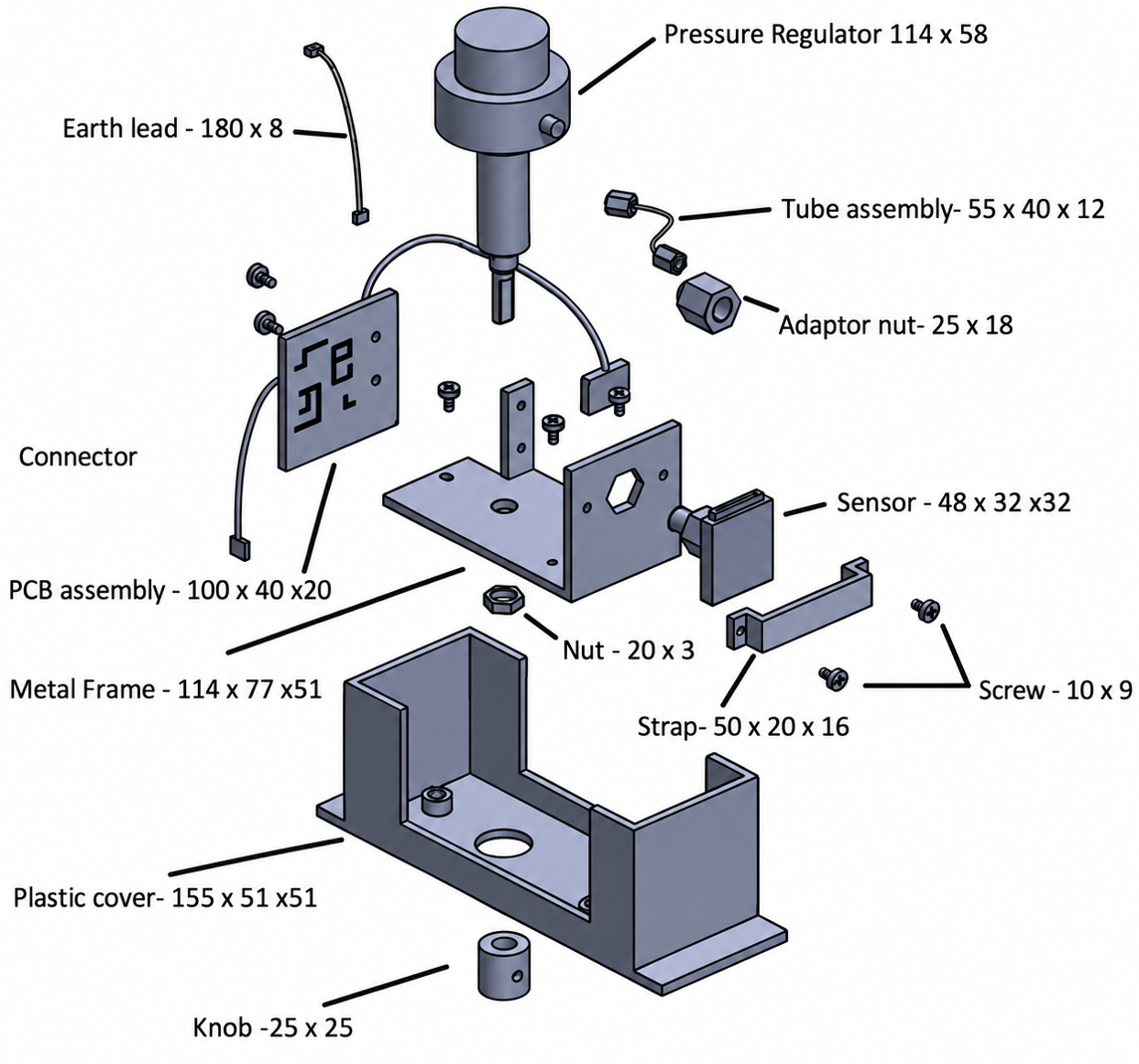
DFA levers turned the bill of materials into design actions
The review combined the bill of materials, CAD envelope data and the actual assembly sequence. Each component was screened for necessity, handling effort, insertion difficulty, securing method and potential integration with neighbouring parts.
Map
Import BOM and CAD information and understand how the package is actually assembled.
Question
Challenge part necessity, separate hardware, repeated connectors and avoidable handling.
Redesign
Use part commonization, multifunctionality, welding, standardization and better tool access.
Reassess
Recalculate part count, assembly time, DFA index and product cost after the changes.
The biggest gains came from combining functions and deleting hardware
Rather than chasing one dramatic redesign, the study accumulated value through a series of practical changes. Parts were combined where one component could perform several functions, brackets were removed when better access made them unnecessary, and welded features replaced avoidable hardware where appropriate.
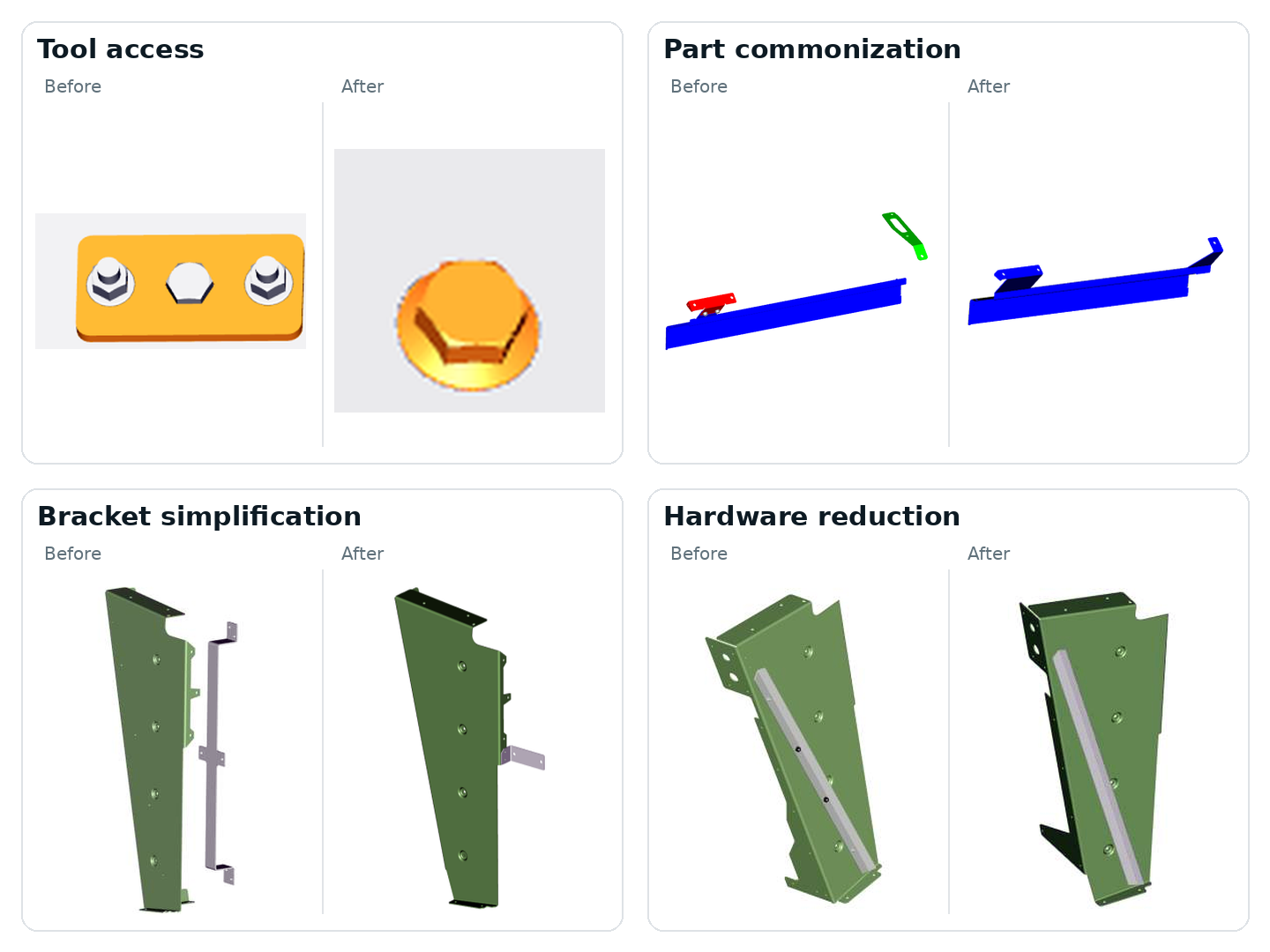
One redesign combined three parts into a single functional part, removing two components and associated hardware.
A bracket could be eliminated after modifying the surrounding geometry so the fastener remained accessible during assembly.
Selected hardware was removed by changing the joining strategy rather than adding more parts to solve the same problem.
The redesigned packagebecame simpler to build
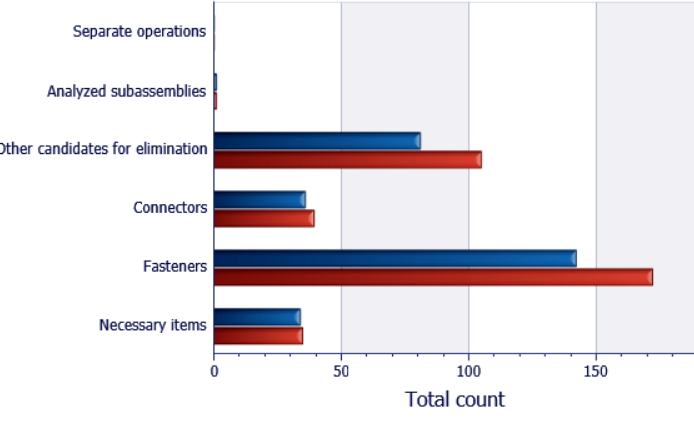
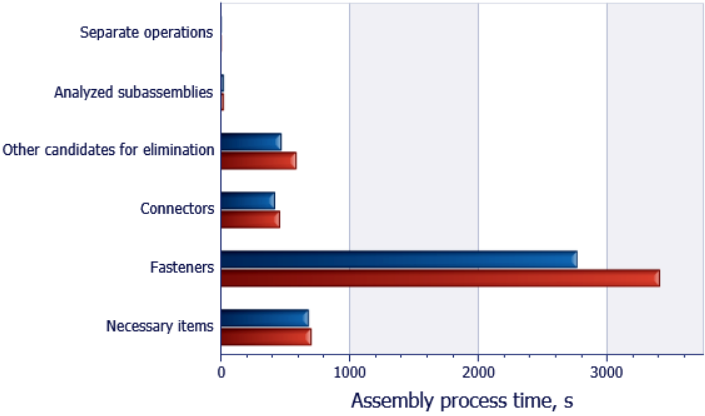
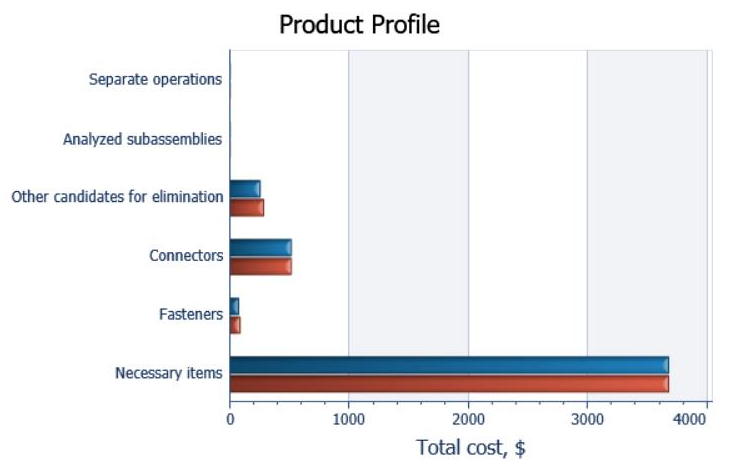
The final DFA reassessment confirmed fewer parts and fasteners, shorter assembly time and a higher DFA index. The total package cost reduction was smaller, but still meaningful for a high value component produced at volume.
Part count
Assembly time
Total cost
The strongest lesson was not the cost percentage on its own. Because the review happened during the initial design phase, the team could remove parts, change interfaces and alter joining methods before the package was locked into industrialization. That is where DFA has the greatest leverage.
A smaller BOM improved both assembly efficiency and design maturity
The revised cooling package used fewer components and less hardware while achieving a higher DFA index. Importantly, the redesign did not treat every part as a candidate for removal. Functional sealing elements and genuinely necessary interfaces were retained, while avoidable structure and assembly work were targeted instead.
Fifty eight parts were removed from the baseline package without changing its required function.
Removing fasteners and simplifying handling reduced the assembly process by roughly one fifth.
The higher DFA index reflected a more efficient product structure rather than a simple cost cutting exercise.
The reported 1.2 percent package cost reduction is modest per unit, but material at production volume on a high value assembly.