
Pressurized TankerTrailer Engineering
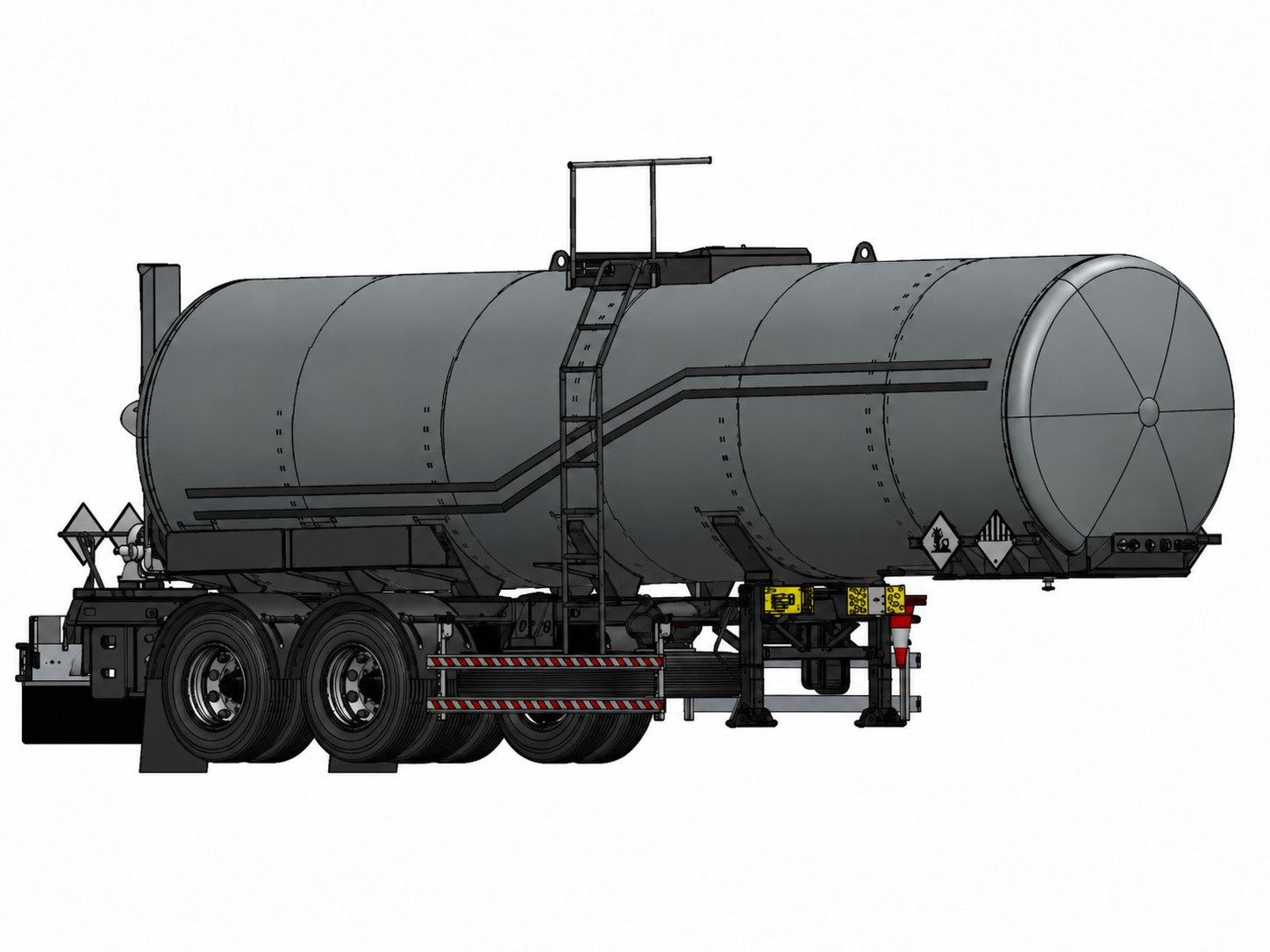
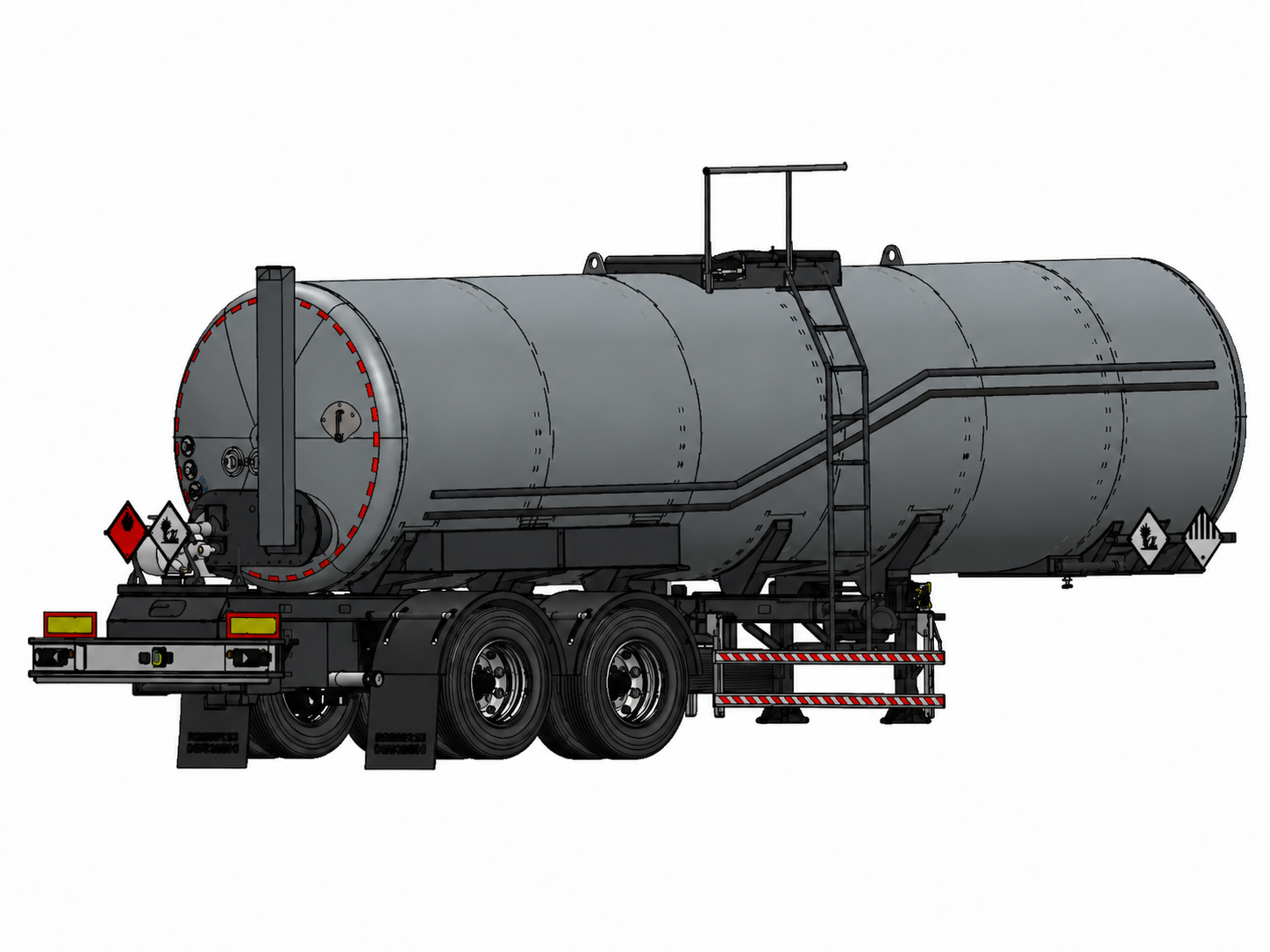
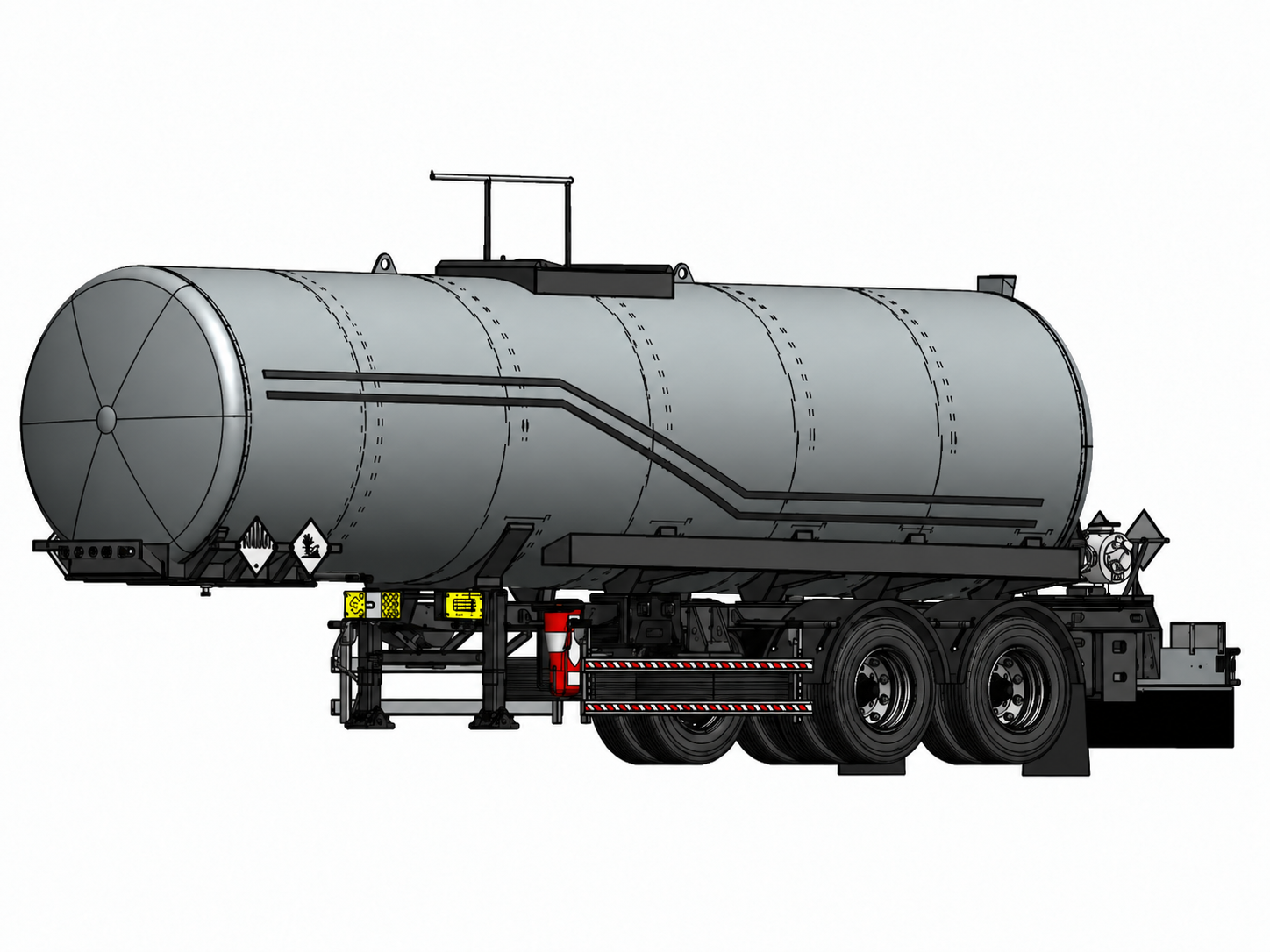
Integrated engineering of a 25,000 litre tanker vessel, tri axle chassis, internal flow control strategy and pressure and discharge systems for controlled bulk liquid transport.
Customer identity, cargo, working pressure, test pressure, shell thicknesses, material grades, exact baffle dimensions, suspension reactions and detailed FEA or CFD results are withheld.
Customer identity, cargo, working pressure, test pressure, shell thicknesses, material grades, exact baffle dimensions, suspension reactions and detailed FEA or CFD results are withheld.
Treat the vessel, liquid and chassis as one dynamic system
A partly filled road tanker is exposed to fluid movement during braking, acceleration and cornering. Those transient loads act together with vessel pressure, payload mass, chassis flexibility and suspension reactions.
The engineering scope therefore extended beyond the shell to internal flow control, support reactions, running gear integration, discharge hardware and downstream manufacturing documentation.
Use FEA and CFD to coordinate shell integrity and slosh control
CFD was used to evaluate free surface response, transient fluid forces, baffle function, pressure concentration and discharge behaviour across the relevant fill conditions.
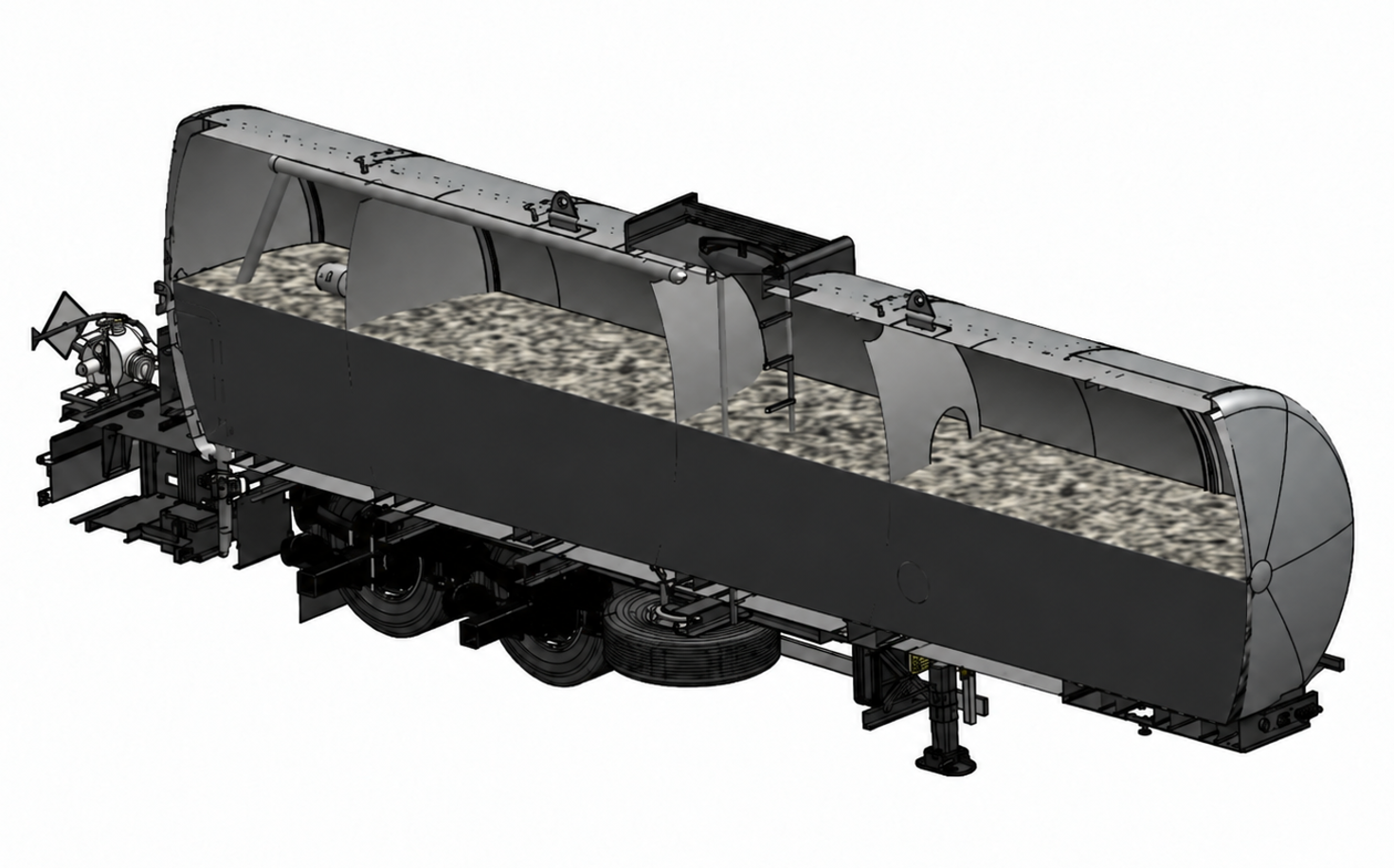
The cylindrical shell, end closures and circumferential reinforcement were evaluated together with local openings and support interfaces. Structural FEA addressed global behaviour and local stress concentration without exposing project pressure values or section details.
- Shell
- Cylindrical pressure vessel with formed end closures and distributed reinforcement.
- Local details
- Service openings, access features and support brackets coordinated with the pressure shell.
- CFD questions
- Surge behaviour, peak fluid forces, baffle influence and flow continuity.
- Public boundary
- Exact baffle dimensions, fluid properties, fill cases and calculated transient forces remain confidential.
Distribute the loaded vessel through three suspension positions
Tank supports had to carry the vessel and cargo mass while transferring longitudinal braking and lateral cornering reactions without forcing the shell to behave like a deep chassis beam.
Centre of gravity and suspension load sharing were reviewed together with the vessel support geometry. Actual cargo density is confidential, so the public case study does not publish a payload figure.
Integrate process hardware without weakening the trailer package
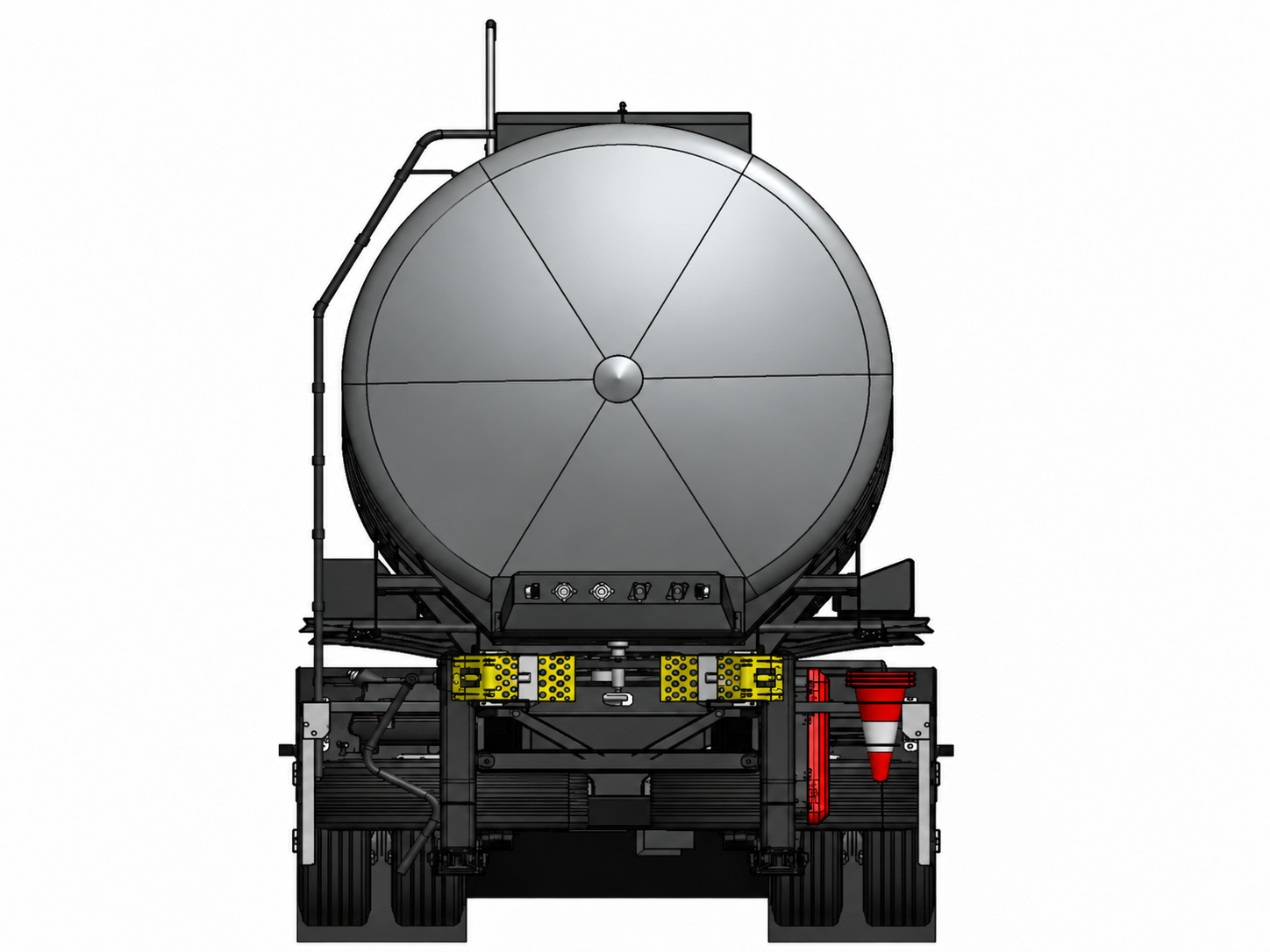
Filler caps, gauge pads, discharge valve housings, pneumatic or hydraulic manifolds, safety valve ports and emergency shut off functions were packaged in CAD with service access, nozzle loads and surrounding structure considered together.
Ladder, top access and guard features were coordinated around the vessel and trailer envelope so routine access did not conflict with piping, chassis structure or running gear.
Deliver the required tanker system as a controlled engineering package
The completed project achieved the required 25 m³ tanker architecture with the vessel, tri axle chassis, internal flow control strategy and service equipment integrated as one design. Exact pressure and cargo values remain confidential.
Required 25,000 litre vessel capacity achieved.
Three suspension positions integrated with vessel load distribution.
Structural and fluid behaviour decisions supported by analysis.
Assembly, fabrication, inspection and pressure test requirements documented.
The liquid in motion was part of the structural problem
A tanker cannot be validated from shell pressure and static axle balance alone. Fluid surge changes support reactions and pressure distribution, so CFD and structural analysis were used together with the chassis and vessel geometry.
The tanker met the required integrated design duty
The successful project delivered a coordinated 25,000 litre tanker trailer in which pressure integrity, fluid behaviour, chassis load sharing, discharge packaging and manufacturing documentation were developed as connected engineering tasks.
- Vessel
- 25 m³ pressurized cylindrical vessel integrated with the road chassis.
- Vehicle integration
- Three suspension positions coordinated with support and centre of gravity requirements.
- Analysis
- Structural FEA and CFD used to guide pressure, load and fluid behaviour decisions.
- Compliance context
- Pressure testing and applicable transport standards remain dependent on cargo, pressure and final jurisdiction; no separate certification is claimed here.