
Multi Level ToteHandling AGV
Mechanical architecture of a tall format tote handling vehicle combining a mobile chassis, guided vertical carriage, side transfer mechanism and seven onboard tote positions in one compact platform.
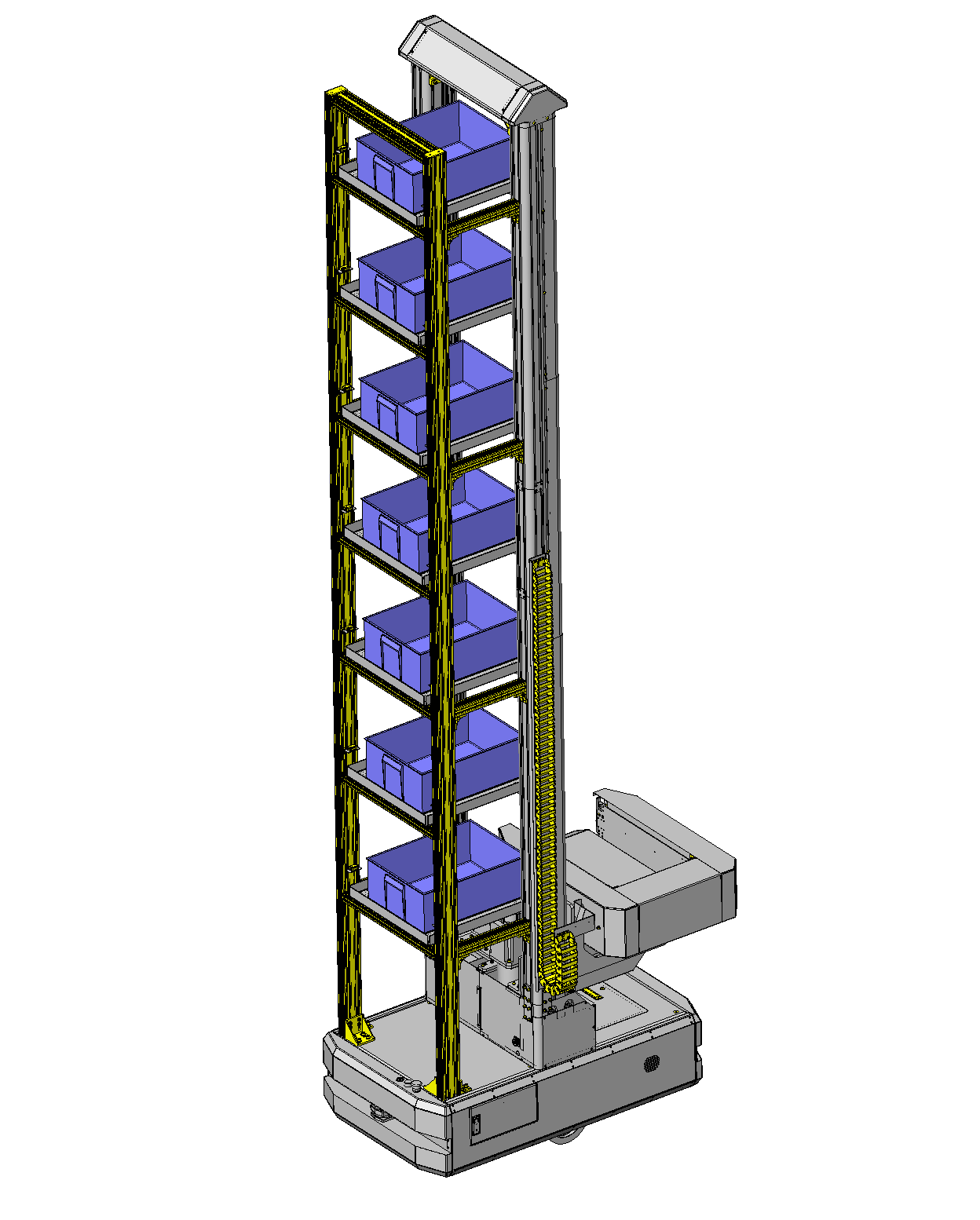
Package four handling functions onto one mobile chassis
The machine had to do more than transport totes horizontally. It combines mobile travel, vertical positioning, tote extraction or insertion and temporary onboard buffering so several tote tasks can be completed during one mission.
The mechanical challenge was to package a tall mast, guided carriage, seven position tote magazine and side transfer mechanism while controlling centre of gravity, mast deflection, carriage alignment, tote retention and service access.
- Mobile chassis
- Supports the mast and maintains the structural base required for acceleration, braking and turning.
- Vertical positioning
- A guided mast and lift carriage establish the datum for tote retrieval and delivery at multiple elevations.
- Onboard buffering
- Seven tote positions allow several retrieval or delivery tasks to be grouped into one mission.
- Side transfer
- A guided side facing transfer mechanism coordinates rack, station or buffer interaction with carriage alignment.
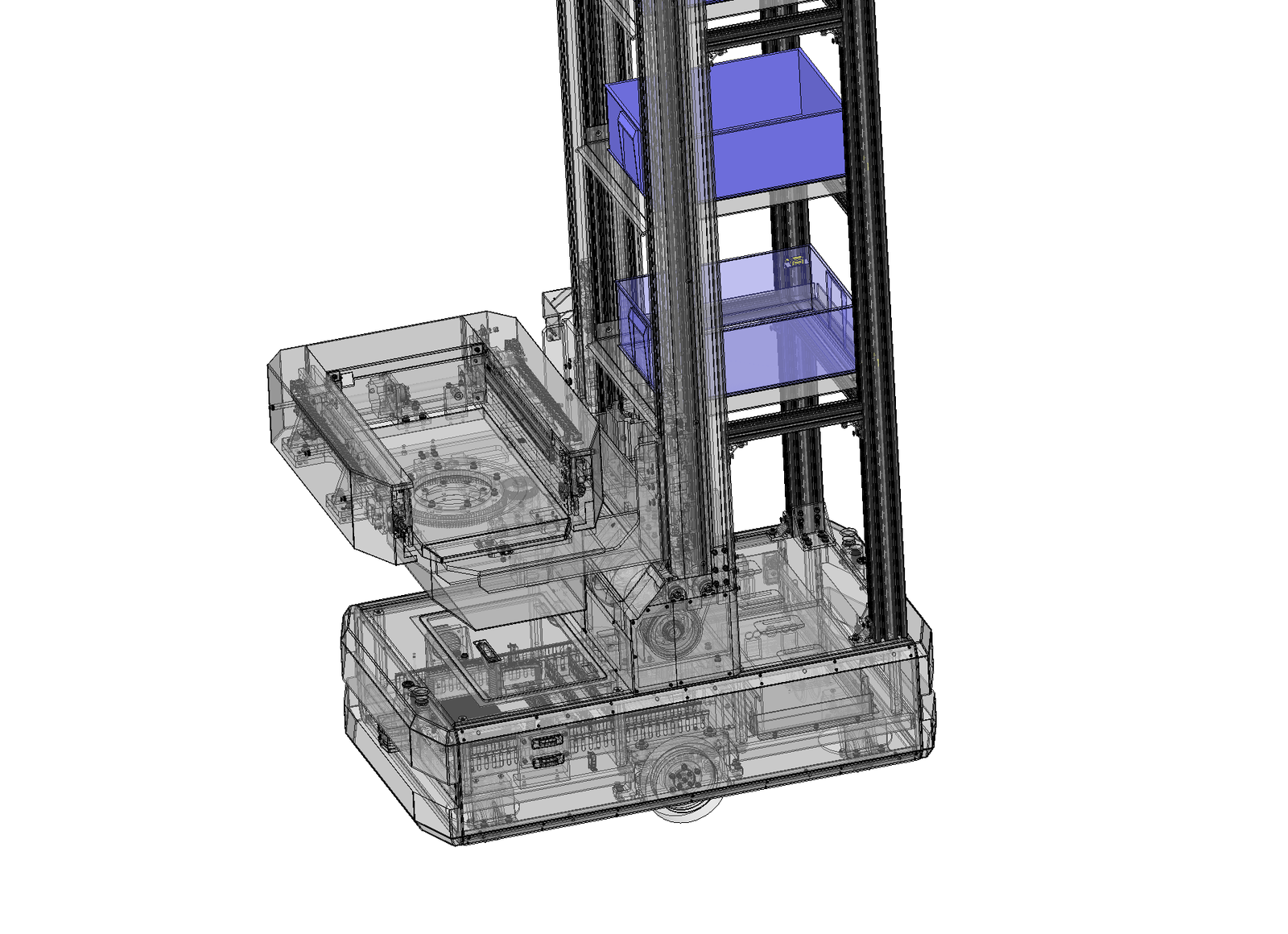
Make the chassis and mast behave as one moving structure
The broad mobile chassis supports the mast and maintains torsional stiffness during acceleration, braking and turning. The vertical mast and guided carriage then establish the datum for retrieval and delivery across multiple elevations.
- Mobile chassis
- Supports the mast and provides the structural base for the moving load.
- Vertical mast
- Establishes the primary vertical datum through the handling height.
- Guided carriage
- Maintains the tote transfer interface relative to each target level.
- Service routing
- Protected routing is integrated through the moving structure for repeated operation.
Keep rack interface, lift alignment and side transfer coordinated
The side transfer module uses a guided tray or fork arrangement with chain driven elements. Reliable handling depends on the complete mechanical chain from the target interface to the onboard buffer position.
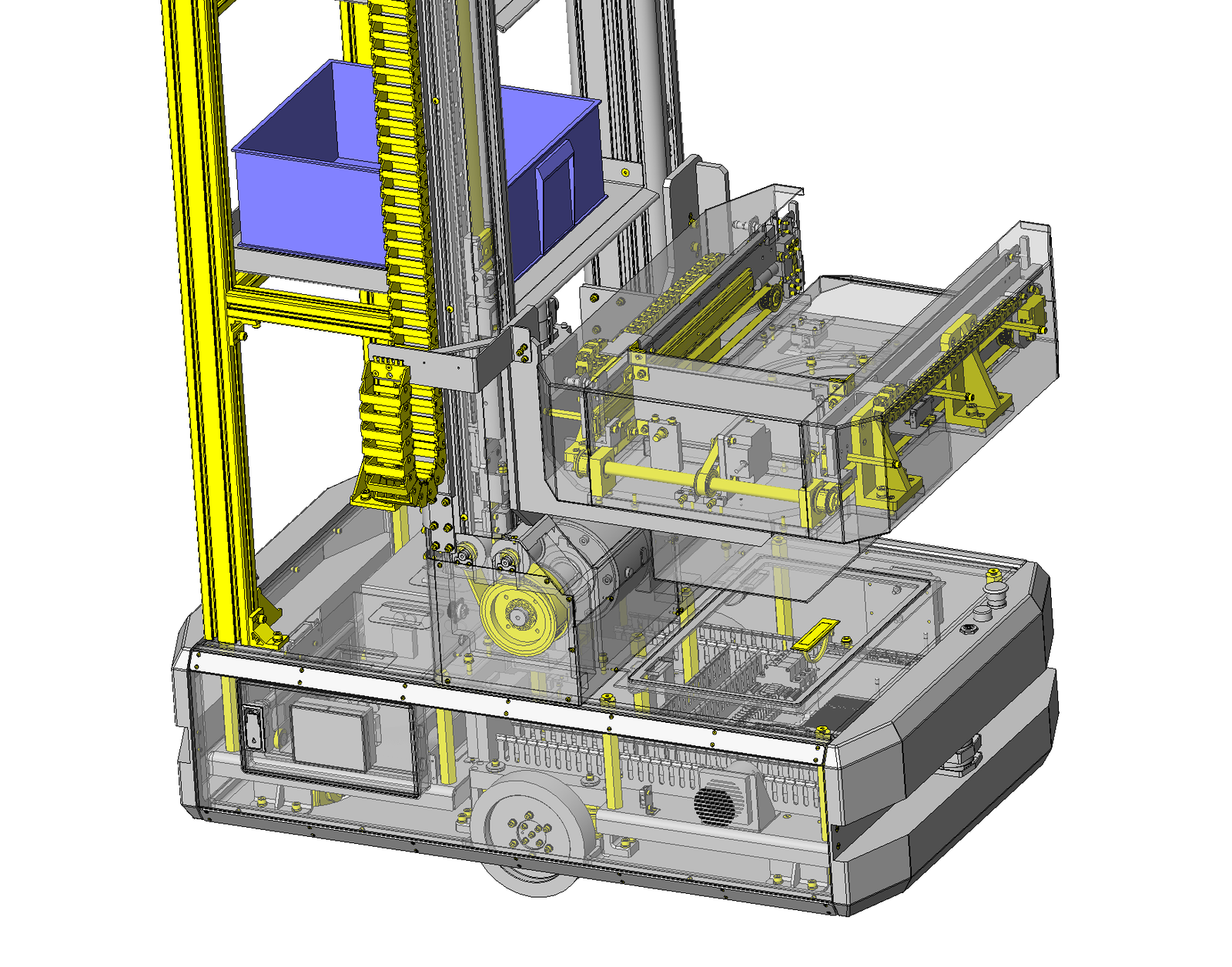
- 01
Align
Position the carriage at the required rack, station or buffer level.
- 02
Extend
Move the guided side transfer into the target interface.
- 03
Engage
Capture the tote and retract it onto the carriage.
- 04
Buffer
Move vertically to an available onboard tote position or the next delivery level.
Seven tote positions reduce unnecessary return travel
The onboard magazine allows several retrievals or deliveries to be grouped into one mission instead of returning to a workstation after every tote movement.
The benefit depends on maintaining transfer repeatability across the full mechanical chain: rack interface geometry, mast stiffness, guide alignment, tote tolerances and carriage positioning must remain coordinated.
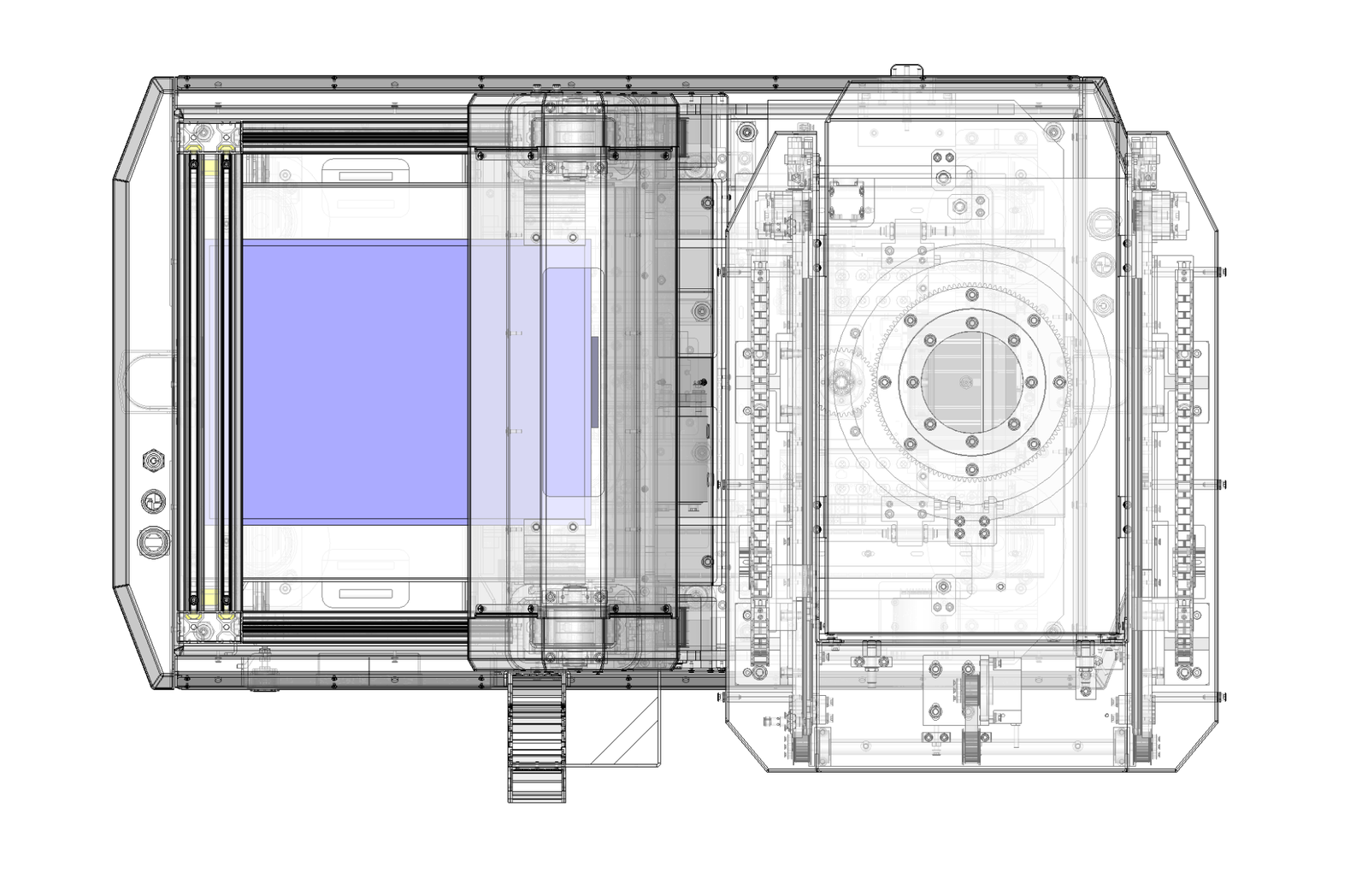
The vehicle achieved the required multi level handling envelope
The successful project met the intended mechanical operating duty, including seven tote positions, the specified tote mass, multi level reach, travel and lift speeds and the representative transfer throughput.
Required multi load buffer capacity achieved.
Nominal payload duty achieved.
Required multi level reach achieved.
Nominal maximum vehicle travel duty.
Nominal lift duty achieved.
Representative mission throughput achieved per vehicle.
- Safety context
- Mechanical design context references ISO 3691-4, ISO 12100 and ISO 13849-1 principles.
- Scope boundary
- This case study covers the mechanical vehicle, mast, carriage, tote buffer and transfer interfaces. Navigation and controls are not presented as Fabrixon scope.
Throughput depended on mechanical coordination across the whole handling chain
The system achieved its duty because rack interface geometry, mast stiffness, carriage guidance, tote tolerances and side transfer repeatability were treated as one mechanical problem. Any one of those interfaces drifting out of alignment would reduce the benefit of the multi load mission strategy.
A compact tote handling platform that achieved the required duty
The completed mechanical design integrated mobile transport, vertical positioning, tote extraction and insertion and seven position onboard buffering into one tall format platform. The successful project met the intended operating envelope and representative handling throughput.
- Capacity
- Seven tote positions support several retrieval or delivery tasks in one mission.
- Handling
- The guided mast and carriage provide multi level vertical positioning up to the required handling height.
- Transfer
- The side facing mechanism coordinates rack or station interaction with carriage alignment.
- Performance
- Travel, lift and representative transfer duties were achieved within the specified project envelope.