
30 Ton HydraulicHooklift Container Trailer
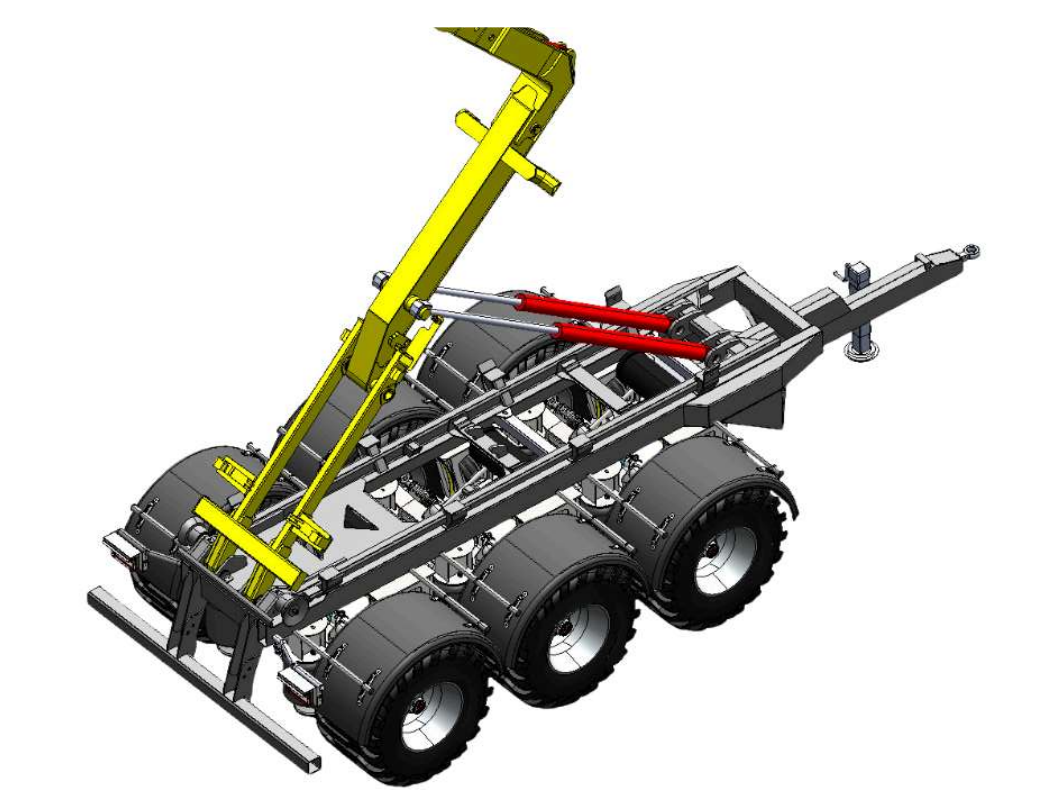
Kinematic, structural and tolerance led development of a heavy hooklift trailer for controlled container pickup, transfer, locking, transport and tipping.
Hydraulic settings, exact dimensions, materials, load cases, hook geometry, interface tolerances, lock force calculations and customer information are withheld.
Hydraulic settings, exact dimensions, materials, load cases, hook geometry, interface tolerances, lock force calculations and customer information are withheld.
Engineer a moving mechanism and a road trailer at the same time
The hooklift had to perform as both a road going 30 ton trailer structure and a controlled material handling machine. As the hook engages and the arm rotates, the container centre of gravity moves relative to the rear support and trailer chassis.
Cylinder leverage, chassis reactions, stability and locking conditions therefore change continuously through pickup, breakover, seating, tipping and set down.
Validate the hook trajectory before release
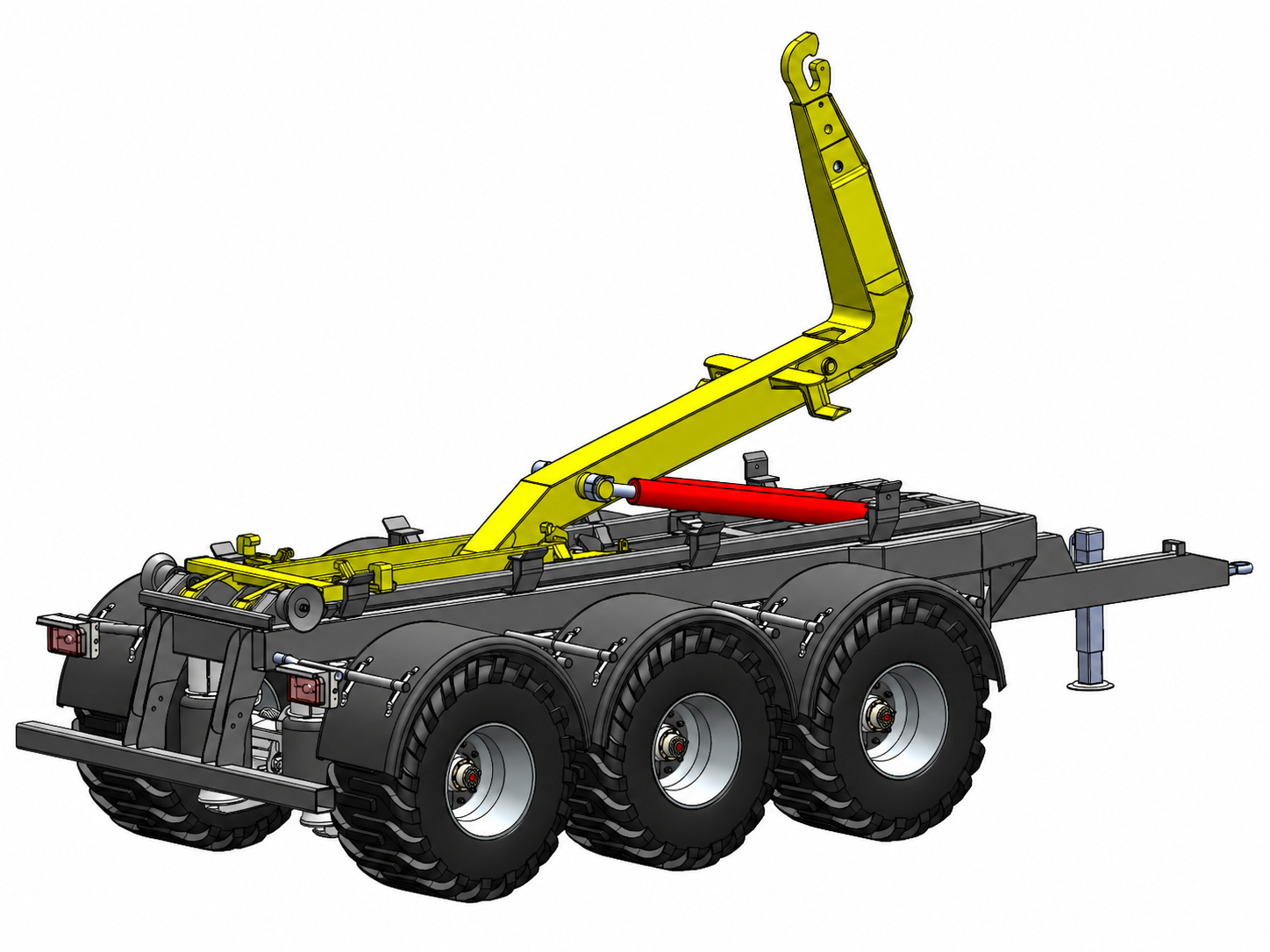
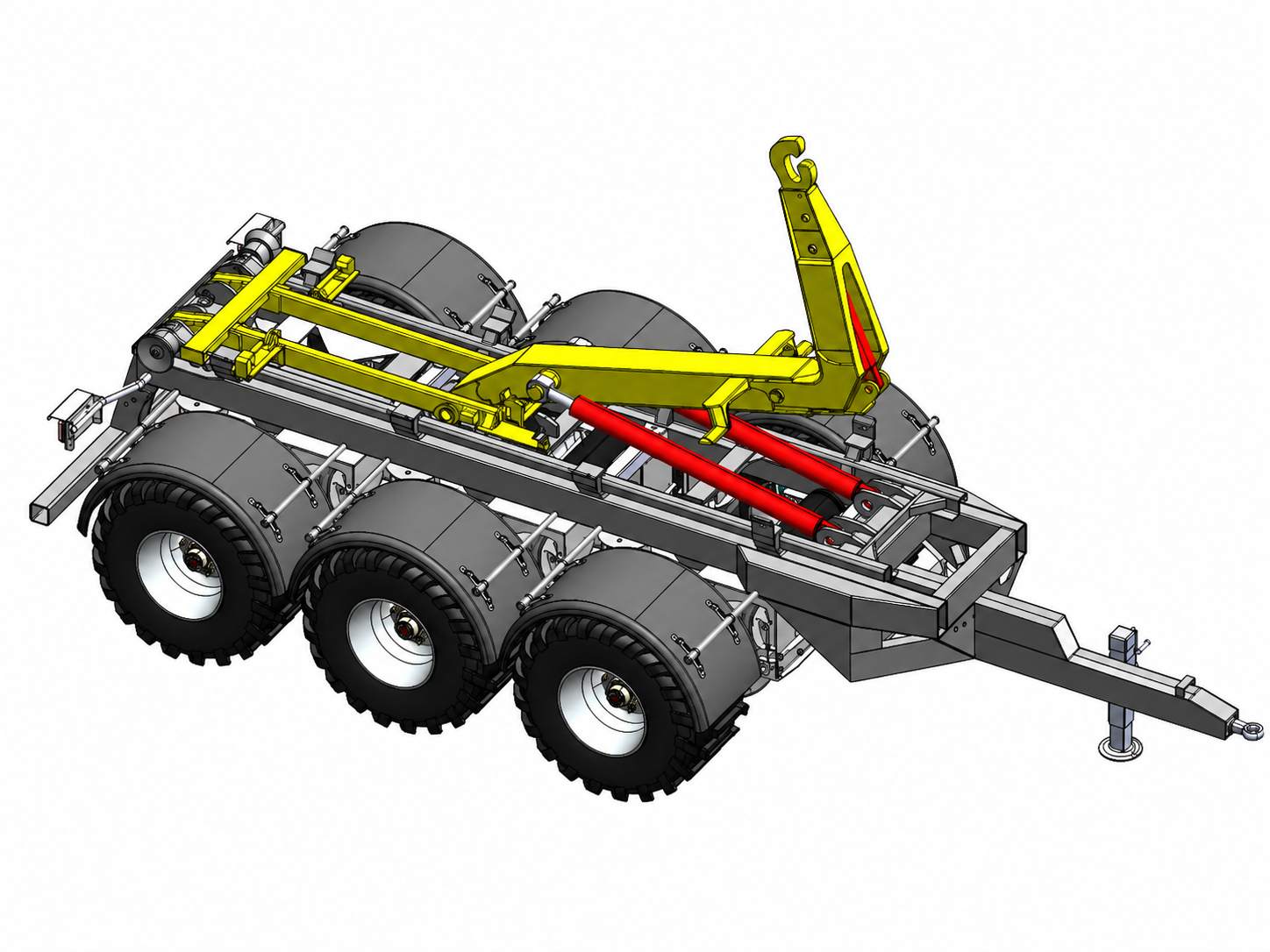
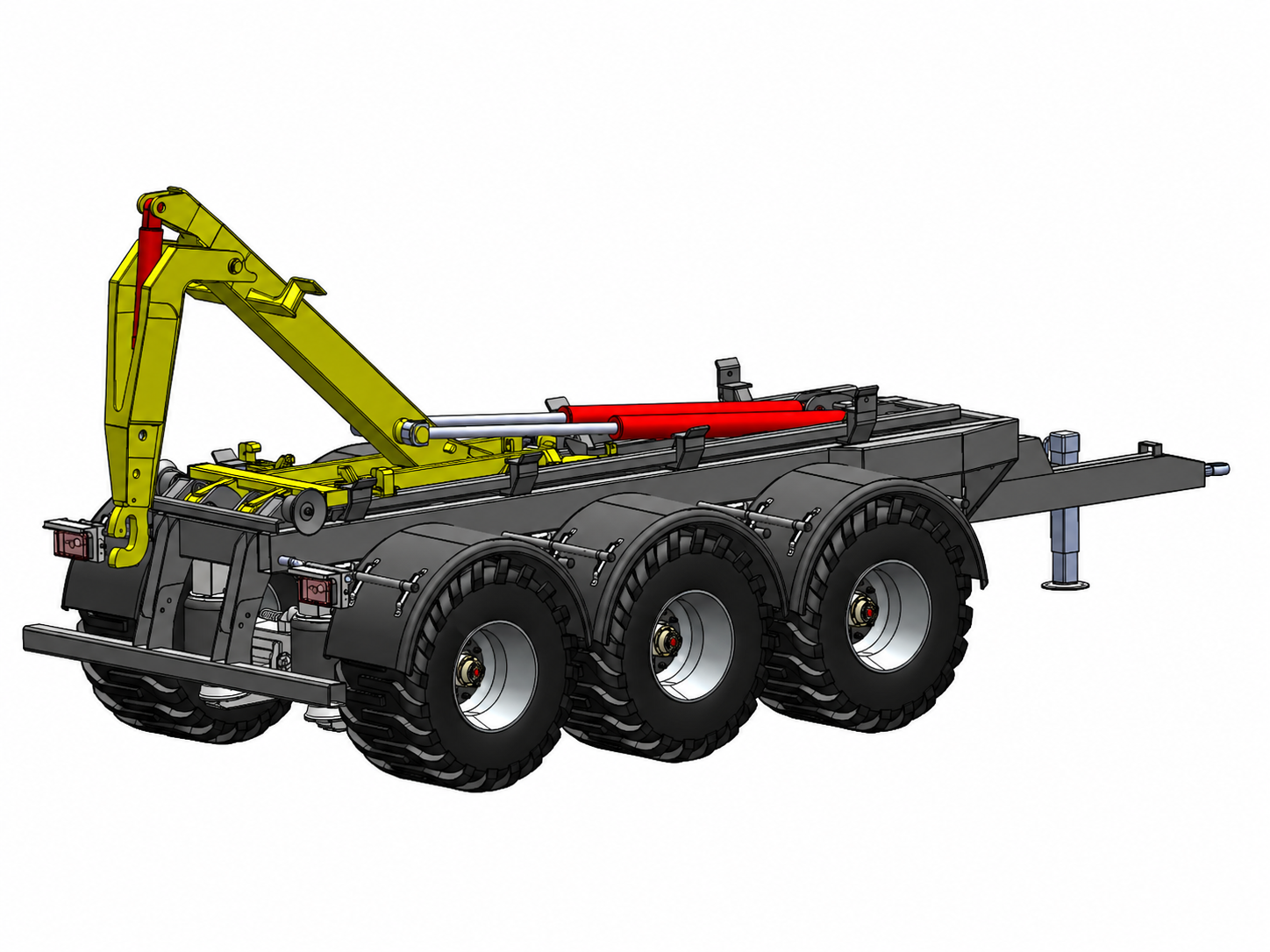
The hook arm was developed as a linked lifting mechanism rather than a simple pivoting boom. Full motion review was used to check the hook trajectory, container transfer and changing mechanical advantage across the operational range.
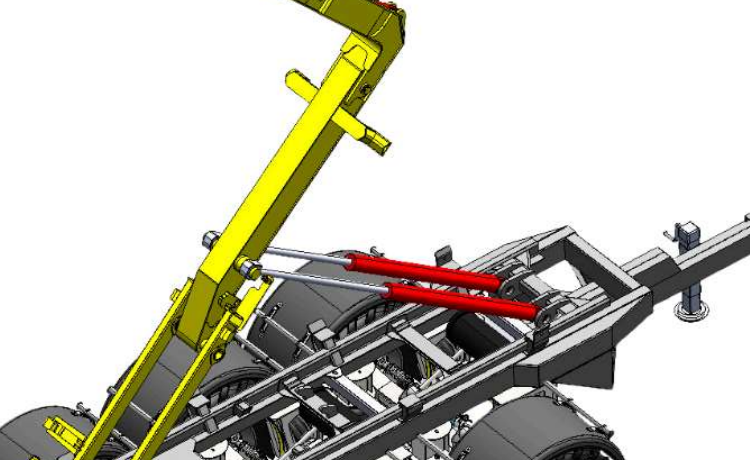
- Pickup
- Hook engagement and initial lift from the ground interface.
- Transfer
- Controlled pull on over the rear support region.
- Seating
- Container brought onto the chassis and into the locking position.
- Tipping
- Rotated operating mode with the load retained by the hooklift structure.
Control container engagement, reach and retention
The hook interface is the datum that begins the handling cycle. Tolerance analysis balanced field accessibility against repeatable engagement, while positive locking and safety detent functions retained the container for transport.
Reinforce the chassis around concentrated mechanism reactions
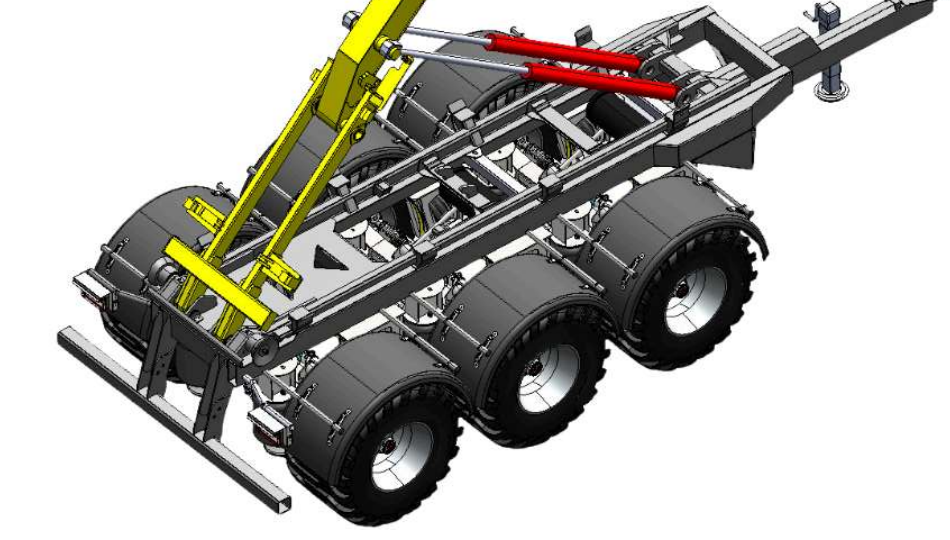
Structural FEA focused on the lift arm pivots, hydraulic cylinder reactions, rear support region and container locking points. The trailer had to manage initial pickup, breakover, mid stroke conditions, seating, tipping and road transport rather than one uniformly distributed load case.
Deliver the 30 ton mechanism with controlled interfaces and manufacturing outputs
The successful project achieved the required 30 ton hooklift duty and completed the engineering workflow from motion definition through structural validation, locking and manufacturing documentation.
Required project capacity achieved.
Pickup, transfer, seating, tipping and set down geometry validated.
Project documentation referenced container compatibility in the tolerance analysis.
Critical geometry and manufactured components released through controlled documentation.
Hooklift performance depends on the sequence as much as the hardware
Geometry, hydraulic leverage, structural reinforcement, interface tolerance and positive locking all change through the operating cycle. Treating them as one mechanism reduced the risk of discovering interference or poor load paths after fabrication.
The completed hooklift met the required handling and structural duty
The project delivered a heavy hooklift trailer as a machine mounted on a vehicle structure, with kinematics, chassis load paths, interface geometry and manufacturing controls developed in one engineering workflow.
- Mechanism
- Linked hook arm with paired primary hydraulic cylinders and controlled operating sequence.
- Structure
- FEA guided reinforcement at concentrated load introduction regions.
- Retention
- Positive container locking with detent and sequence considerations.
- Documentation
- Assembly drawings, fabrication details, GD&T, CMM requirements and DXF outputs.