
Multi Zone PalletTransfer and TransformSystem
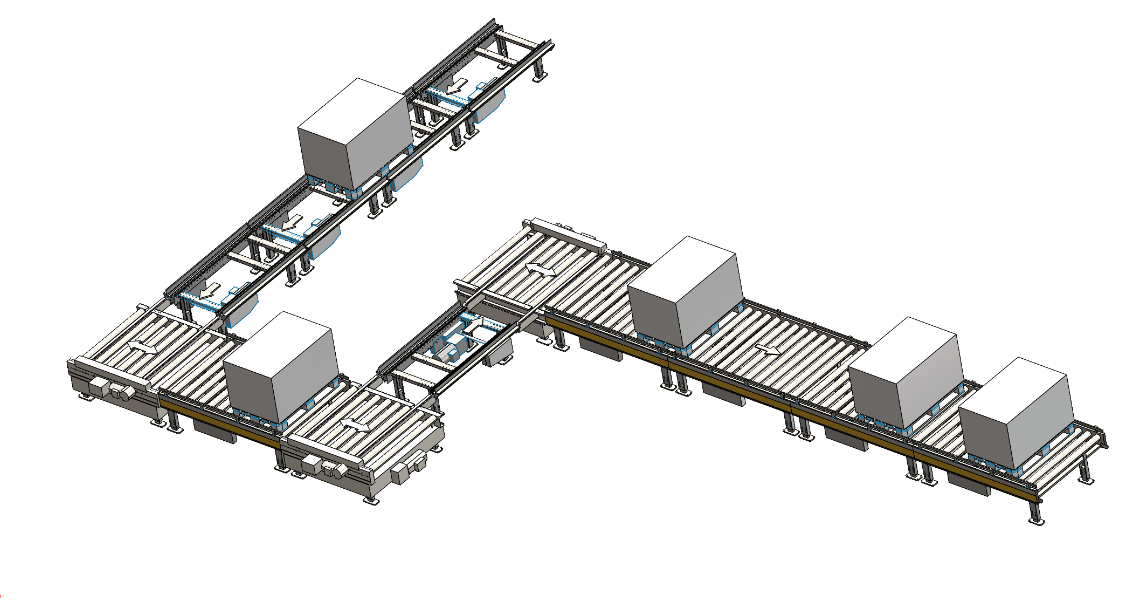
Fabrixon engineered interconnected pallet handling subsystems so horizontal transfer, buffering and multi level movement operated as one Euro pallet flow line.
Make two pallet systems behave as one
The programme combined a horizontal roller transfer line with a separate multi level transform system. Each had its own drives, frames and safety requirements, but both had to work as one coordinated material handling route.
The engineering challenge sat at the interfaces: pallet position, conveyor height, lift alignment and stop locations had to agree before the controls team could sequence the system reliably.
- Common load
- Both subsystems were designed around the same 1200 × 800 mm Euro pallet class and the integrator’s loaded pallet envelope.
- Shared interfaces
- Zone handoffs, lift entry points and right angle transfers required one controlled geometric definition.
- Scope boundary
- Fabrixon delivered the mechanical package while the integrator retained PLC programming, WMS, WCS, panel manufacture and commissioning ownership.
Control pallet flow zone by zone
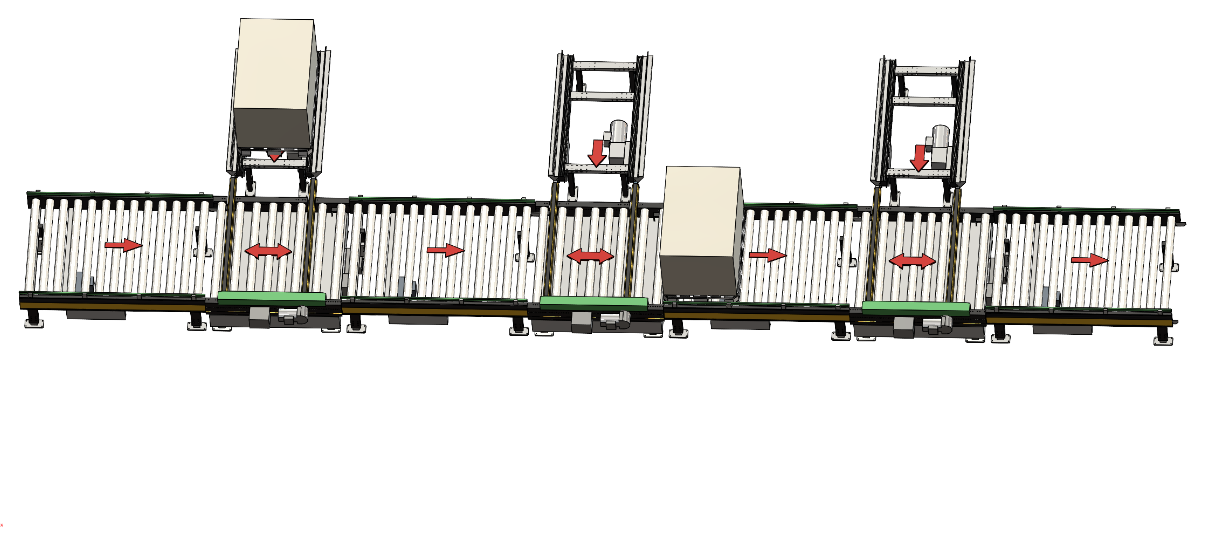
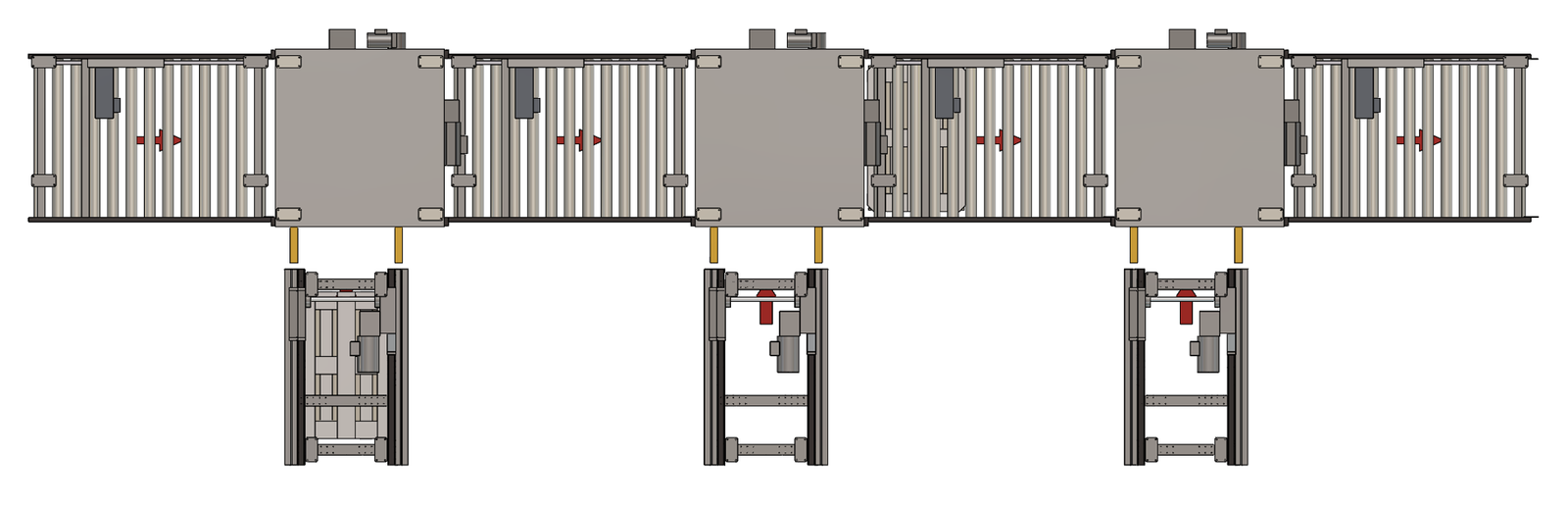
The horizontal line used independently driven roller zones so pallets could advance, hold or reverse without forcing the whole route to run as one drive.
Vertical buffer positions let pallets wait locally while the rest of the line kept moving.
- Accumulation
- Independent zones created controlled buffering instead of stopping the full upstream route.
- Bidirectional flow
- Selected zones were prepared for reverse travel with stops and sensor locations in both directions.
- Drive sizing
- Rollers, motors and frames were sized to the actual pallet load envelope.
Move pallets between levels without breaking the flow
The transform line combined vertical lifting with lateral routing between upper and lower conveyor levels. The mast, carriage and guide system were developed together so lift reactions and transfer geometry stayed controlled through the motion cycle.
- 01
Align
The pallet approaches a defined stop position at the lift interface.
- 02
Lift
The carriage moves the loaded pallet between operational levels.
- 03
Redirect
A right angle transfer changes travel direction without rotating the pallet.
- 04
Release
The receiving conveyor accepts the pallet at a matched transfer height.
Design the mechanical handshake before controls
The conveyor to lift interface was treated as a defined transfer condition. Pallet stopping, carriage alignment, roller height and transfer clearance were resolved in CAD and carried into the manufacturing package.
Lift motor torque, gear ratio and brake selection were tied to pallet and carriage load, acceleration and holding duty.
- Transfer geometry
- Pallet approach, stop position and carriage surface alignment were controlled to avoid dragging or skewing during transfer.
- Lift drive
- Motor, gearbox and brake selection accounted for static lift demand, acceleration, deceleration and holding torque.
- Controls readiness
- Sensor, stop and interlock mounting positions were mechanically defined so the integrator could implement routing logic without redesigning the hardware.
One package across both subsystems
Fabrixon issued one coordinated mechanical package across both subsystems.
Fabrixon supported fabrication and interface queries through commissioning,
while the integrator retained controls, software and final site commissioning responsibility.
Fabrixon engineering delivery
Fabrixon held the mechanical interfaces across both systems.
- Roller conveyor zones, frames and drive sizing
- Vertical lift mast, carriage and drive head engineering
- Transfer stations, stops, sensors and structural supports
- Fabrication and commissioning liaison at mechanical interfaces
Integrator retained scope
The warehouse automation integrator retained controls and site system ownership.
- PLC programming and warehouse control logic
- WMS and WCS integration
- Control panel manufacture
- Physical commissioning and end user system acceptance
The interfaces made two systems behave as one
The project succeeded because pallet geometry, lift alignment and buffering were resolved as shared mechanical conditions. Treating the subsystems independently would have moved integration risk to installation.
Integrated pallet flow without mechanical rework
The completed programme linked horizontal transfer, accumulation, vertical movement and right angle routing into one pallet flow. The mechanical package was delivered on schedule and supported through fabrication and commissioning.
- System integration
- The horizontal and multi level subsystems met the required pallet handling duty as one continuous route.
- Installation result
- Shared level transfer and zone handoff interfaces integrated without on site mechanical rework.
- Project delivery
- The package was delivered on schedule, with Fabrixon remaining available through fabrication and commissioning.