
Chain ConveyorDFMA Redesign
How an existing bottle conveyor was simplified using Design for Manufacture and Assembly, structured concept selection and structural validation to reduce cost, weight and assembly effort without changing its intended function.
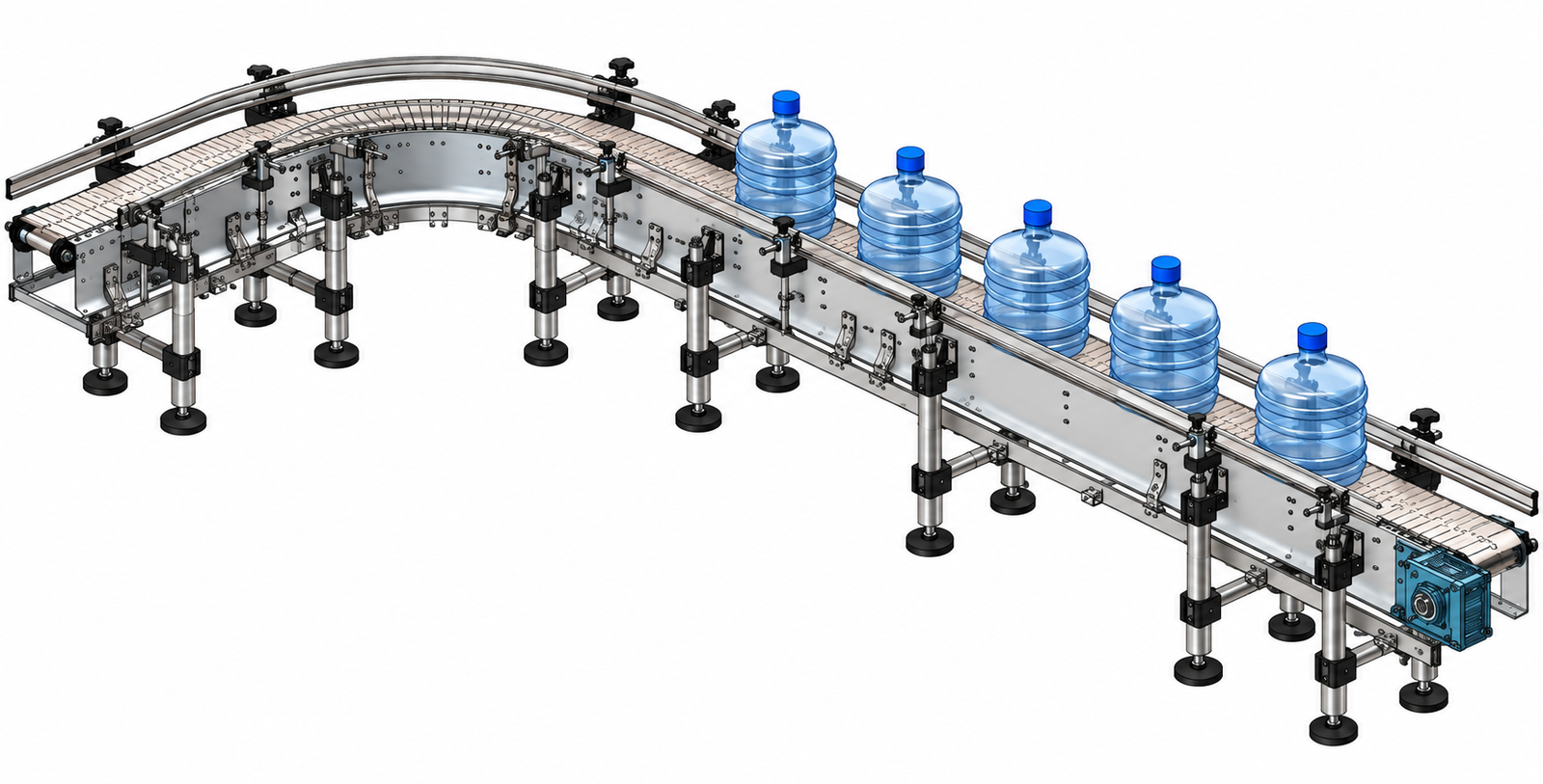
A working conveyor stillcarried avoidable complexity
The original table top chain conveyor already performed its bottle handling function, but it had not been developed through a formal DFMA process. The supporting architecture contained numerous separate brackets, connectors, guide components and fastening operations that increased manufacturing effort and assembly time.
The redesign objective was therefore not to reinvent the conveying process. It was to identify where parts, joining operations and manufacturing effort could be removed while preserving the required function and practical serviceability.
The study started from an in market machine rather than a blank sheet concept.
The original architecture relied on many discrete components and specialist joining operations.
Reduce cost, weight and assembly effort without compromising the conveyor duty.
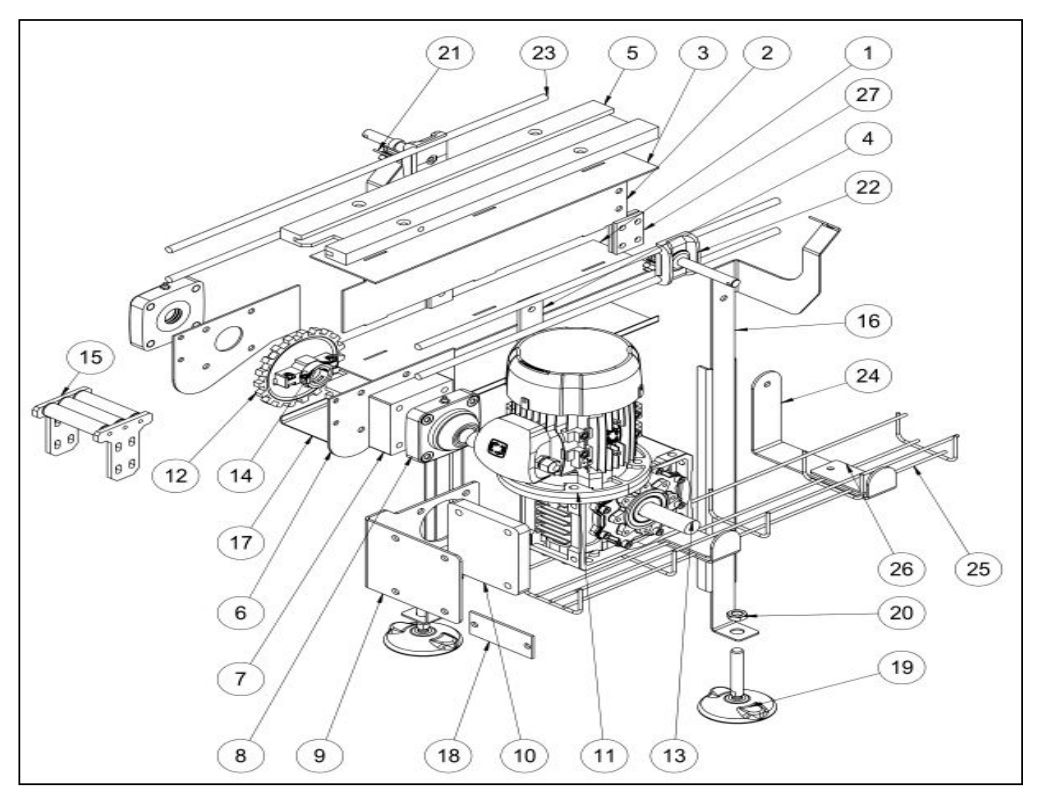
DFMA guided both analysis and concept selection
The existing product was first assessed for part count, handling, insertion, fastening and manufacturing effort. Alternative architectures were then generated and screened using Pugh controlled convergence so the selected direction was based on a structured comparison rather than preference alone.
Review
Assess the current product structure, assembly sequence, securing methods and manufacturing processes.
Generate
Create alternative conveyor architectures that improve cleanability, assembly and part integration.
Select
Use structured concept comparison to select the I beam style architecture for detailed development.
Part integration removed avoidable manufacturing and assembly work
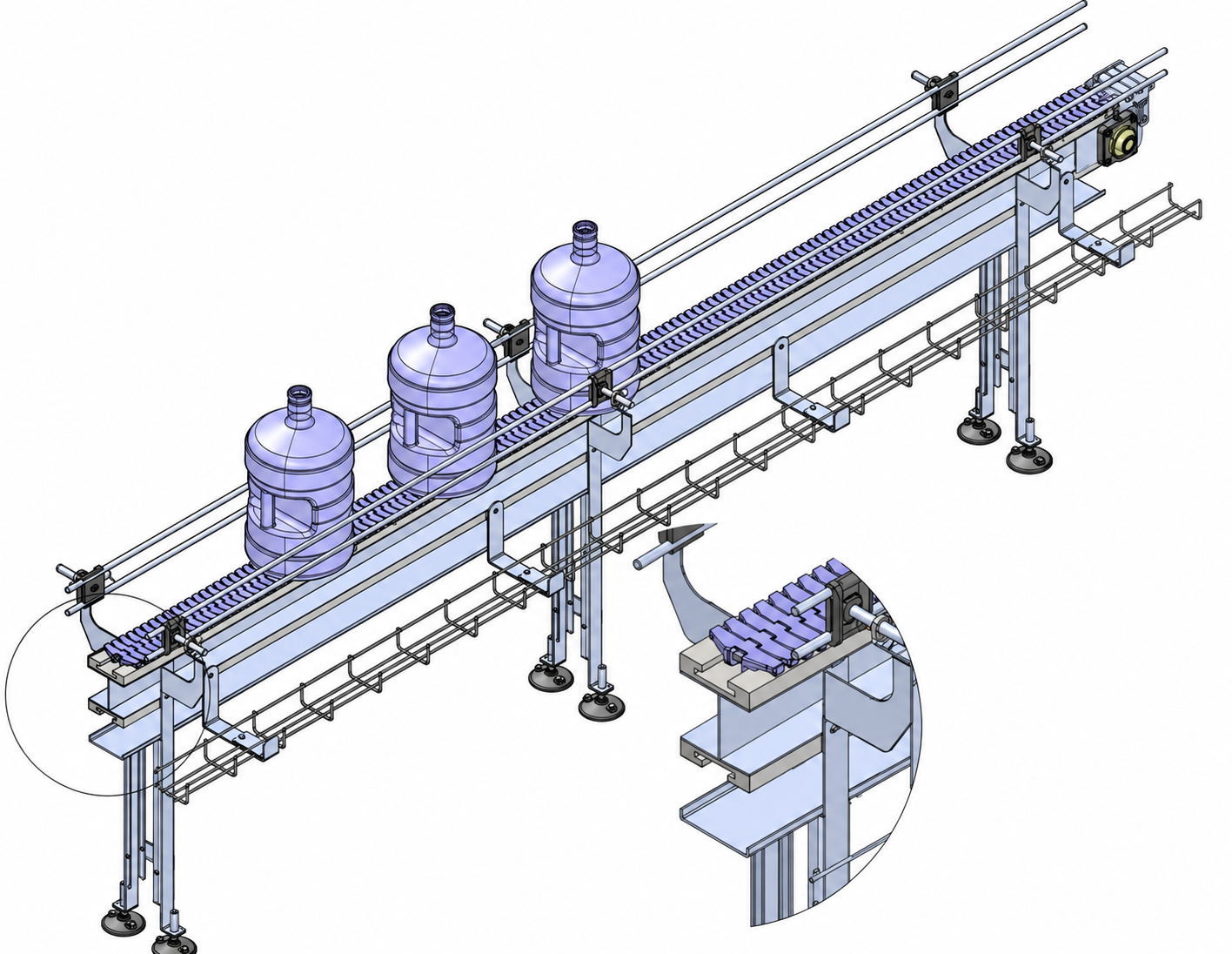
The selected architecture retained the conveyor function while simplifying how the frame, guides, supports and connections were produced and assembled. Separate connectors were replaced by a simpler structural web, specialist riveting operations were reduced, and several support and guide functions were combined into fewer components.
The supporting structure used fewer interconnections and a more direct fabricated load path.
Guide and support features were combined where practical so fewer independent parts had to be manufactured and installed.
DFMA recommendations were filtered through tooling cost, conveyor width variability and service requirements rather than followed mechanically.
The simplified frame was checked before the redesign was accepted
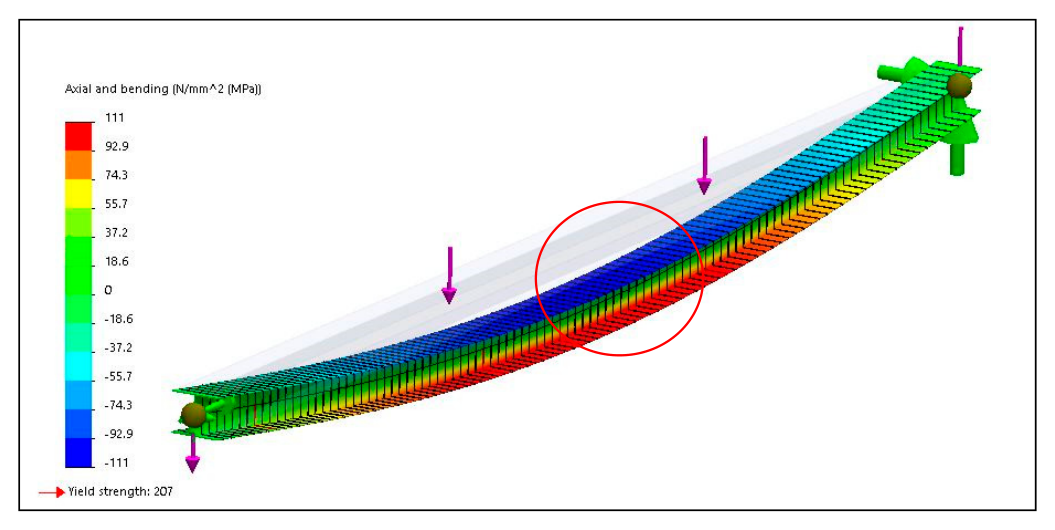
Cost reduction was not treated as sufficient evidence on its own. The longest redesigned frame section was checked analytically and with finite element analysis under a deliberately conservative validation case.
Classical beam calculations and FEA produced closely aligned stress and deflection predictions.
The agreement showed that the lighter architecture had not been achieved by removing structural material indiscriminately.
The strongest DFMA gains came from combining functions, simplifying fastening and removing over designed features. At the same time, the study deliberately retained a fabricated multi part frame where a theoretical one piece solution would have increased tooling cost and reduced flexibility across conveyor variants.
Cost, assembly time and weight all reduced
The final design demonstrated that systematic product simplification could improve commercial performance without sacrificing structural credibility. The strongest results came from fewer joining operations, better part integration and a simpler supporting architecture.
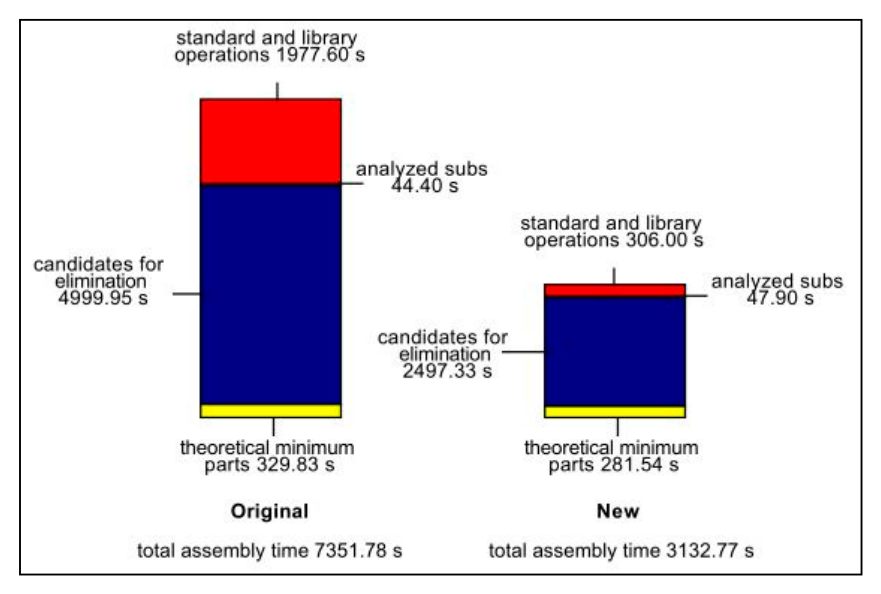
Overall unit cost reduced by approximately 29 percent.
Total assembly time reduced by approximately 57 percent.
Conveyor weight reduced by approximately 25 percent.
The reported DFA index increased from 1.7 to 5.0.