
40 Ton GooseneckLowbed TrailerStructural Design
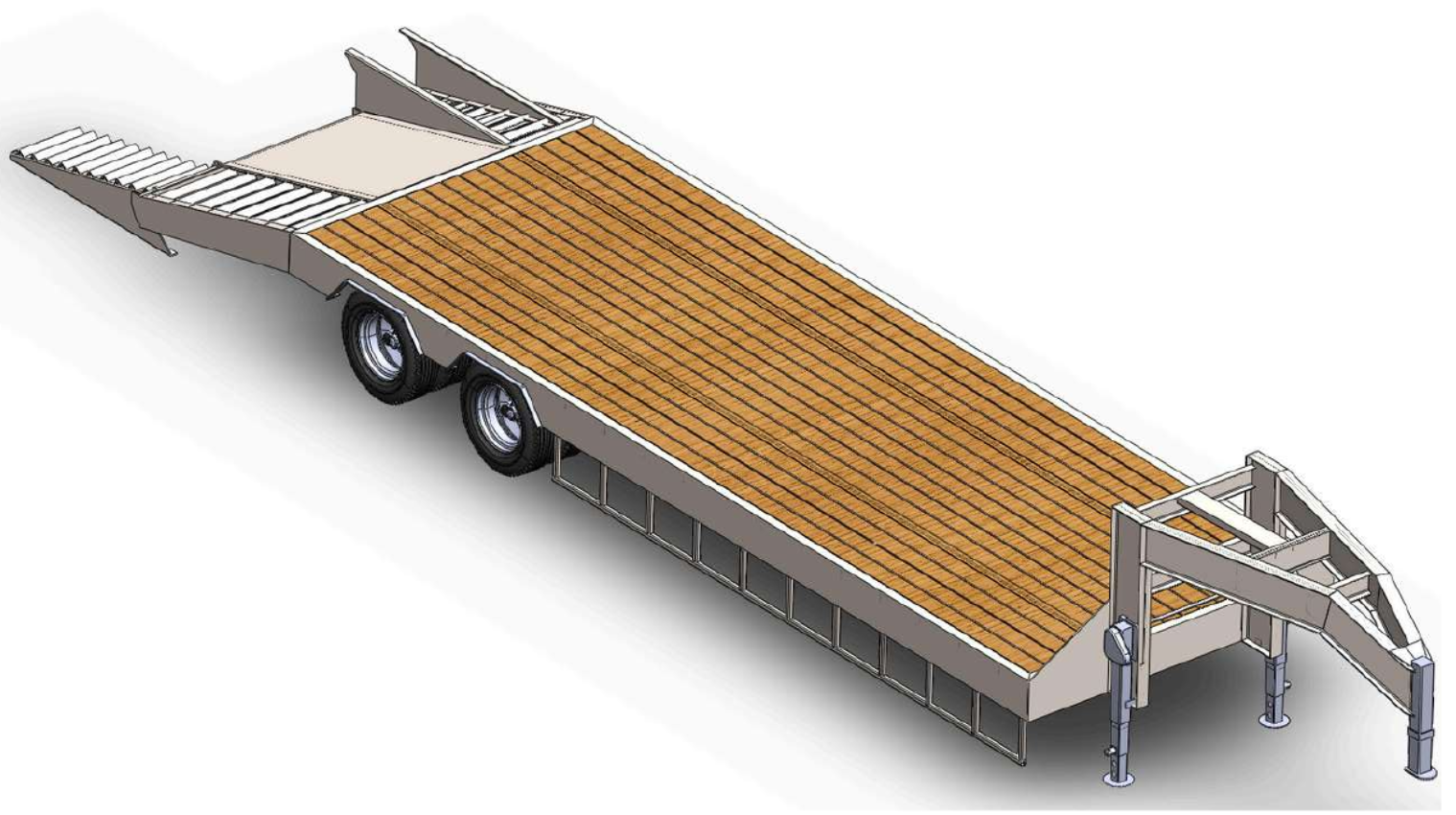
Parametric structural development of a heavy duty gooseneck lowbed platform around a 40 ton capacity, multiple deck configurations and a reinforced fatigue sensitive neck to main frame transition.
Customer identity, selected dimensions, material grades, load assumptions, section sizes, axle reactions, weld details and project specific FEA results are withheld.
Customer identity, selected dimensions, material grades, load assumptions, section sizes, axle reactions, weld details and project specific FEA results are withheld.
A variable trailer family still needs controlled load paths
The project required a heavy lowbed platform that could support the stated 40 ton duty while remaining adaptable to lowbed, step deck and drop deck configurations. The neck to main frame transition was the highest risk load transfer region because geometry, depth and stiffness change before the structure reaches the tractor coupling.
40 ton structural duty
The common platform had to retain the required heavy haul capacity as configuration details changed.
Variant geometry
Gooseneck length varied through an approximately 1.2 to 2.5 m project range, so dependent geometry and interfaces could not be treated as fixed.
Critical transition
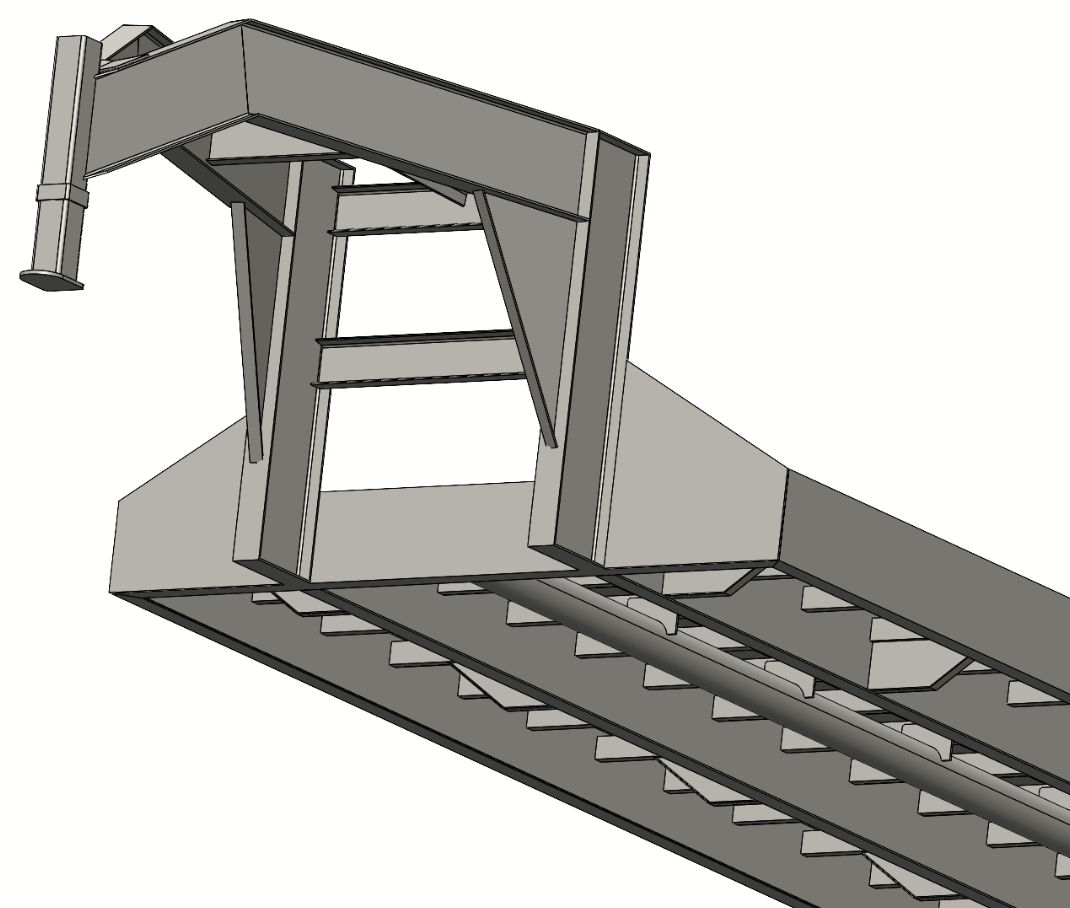
The neck to main frame region was treated as a fatigue sensitive load transfer problem rather than only a packaging feature.
Link configuration changes to structural design logic
The trailer was modelled as one configurable platform rather than a collection of unrelated assemblies. Constraint relationships carried gooseneck changes into adjoining structure and interfaces, while structural FEA remained focused on the reinforced transition where load path discontinuities were most important.
- 01
Variable neck
Approximately 1.2 to 2.5 m gooseneck geometry supported multiple lowbed related configurations from the same model.
- 02
Dependent geometry
Frame and adjoining interface geometry updated with the selected configuration rather than being redrawn manually.
- 03
Common interfaces
Neck, main frame and suspension mounting logic stayed coordinated across the product family.
- 04
Validation linkage
FEA concentrated on the reinforced neck transition so structural decisions remained tied to configuration changes.
Address global bending, torsion and fatigue sensitive details
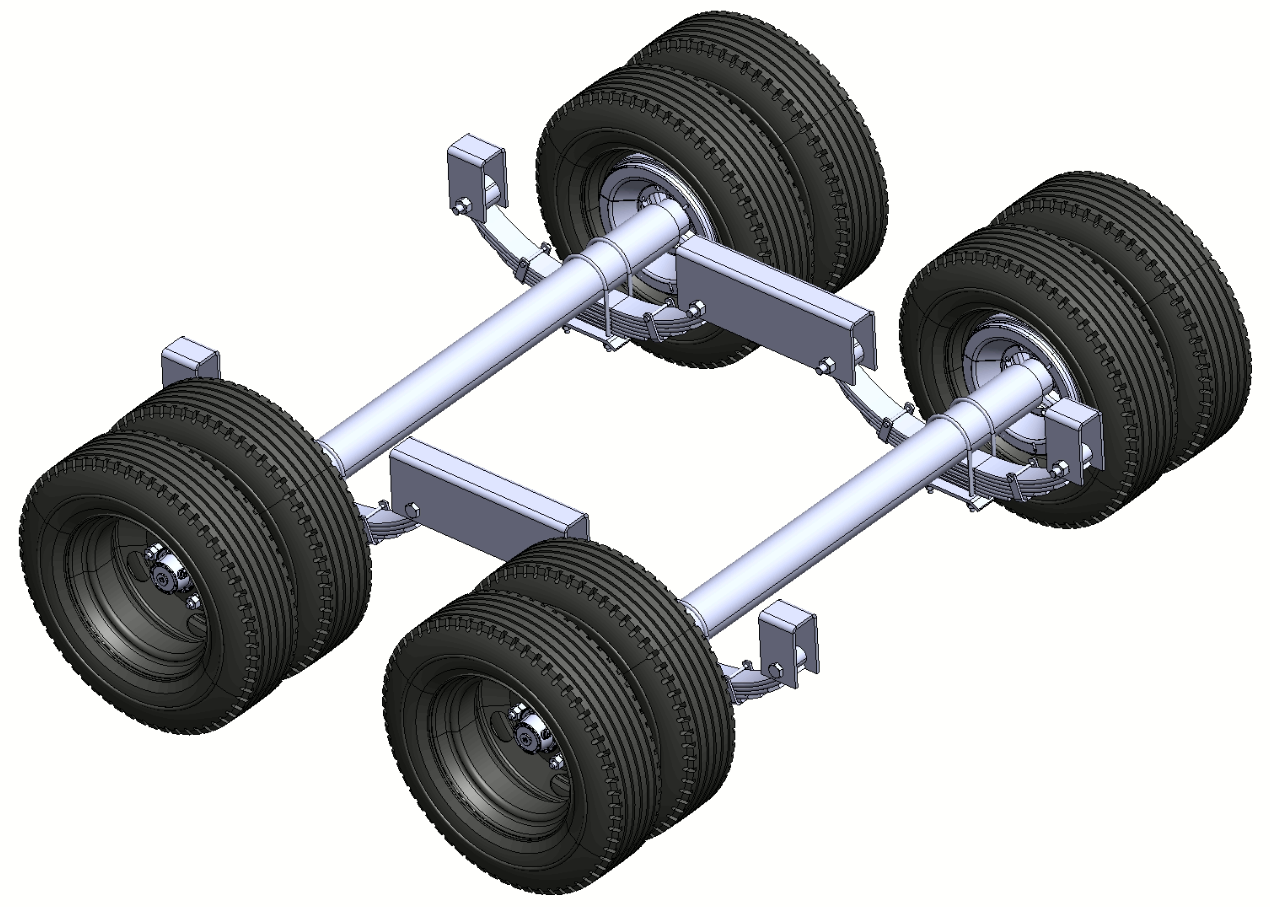
The main longitudinal members carry dominant bending demand while repeated crossmembers distribute local equipment loads into those paths. Asymmetric loading and uneven ground introduce twist, making continuity through the neck transition and suspension region important for both strength and cyclic durability.
Keep suspension and couplingmovement clear across every variant
The assembly was digitally checked through the recorded suspension and articulation envelopes so changes to the parametric model did not create avoidable conflicts around tyres, deck structure, brackets or coupling side hardware.
- Suspension travel
- Approximately -150 mm to +100 mm movement envelope used for tyre, deck and bracket clearance review.
- Kingpin articulation
- Approximately ±25° coupling side articulation checked rather than validating only the straight ahead position.
- Variant control
- Clearance verification remained linked to each trailer configuration so a parametric change did not create a hidden packaging conflict.
Carry the parametric design intent into repeatable fabrication outputs
The final package included assembly drawings, fabrication details, sheet metal bend drawings, GD&T specifications and DXF exports. Weld access, material use and fabrication friendly subassemblies were reviewed so the configurable CAD model translated into controlled manufacturing documentation.
- DFM
- Weld access and welding efficiency reviewed around reinforced regions.
- Material use
- Reinforcement concentrated where it improved the critical load path.
- Outputs
- Repeatable drawing and DXF packages generated across variants.
- Interfaces
- Tolerance definition carried through suspension mounting and coupling geometry.
Configuration management and structural analysis had to stay connected
A parametric trailer model is only useful when geometry changes preserve structural load paths, movement envelopes and fabrication interfaces. The project treated the gooseneck transition as a fatigue sensitive region while keeping every variant tied to the same engineering logic.
The completed platform achieved the required 40 ton trailer duty
The successful project delivered a configurable heavy trailer family rather than one fixed geometry. Multiple lowbed related variants were generated from the same model while retaining controlled structural interfaces, articulation checks and manufacturing documentation.
- Capacity
- Required 40 ton project duty achieved.
- Configuration
- Variable gooseneck architecture supported multiple trailer variants.
- Validation
- Structural FEA and fatigue sensitive reinforcement focused on the high risk transition.
- Manufacturing
- Assembly, fabrication, GD&T, bend and DXF outputs released from the controlled design.