
Zero PressureAccumulation Conveyor
A multi zone feed conveyor engineered to transport large automotive door panels, accumulate them without contact and establish a repeatable downstream pickup condition for a robotic process.
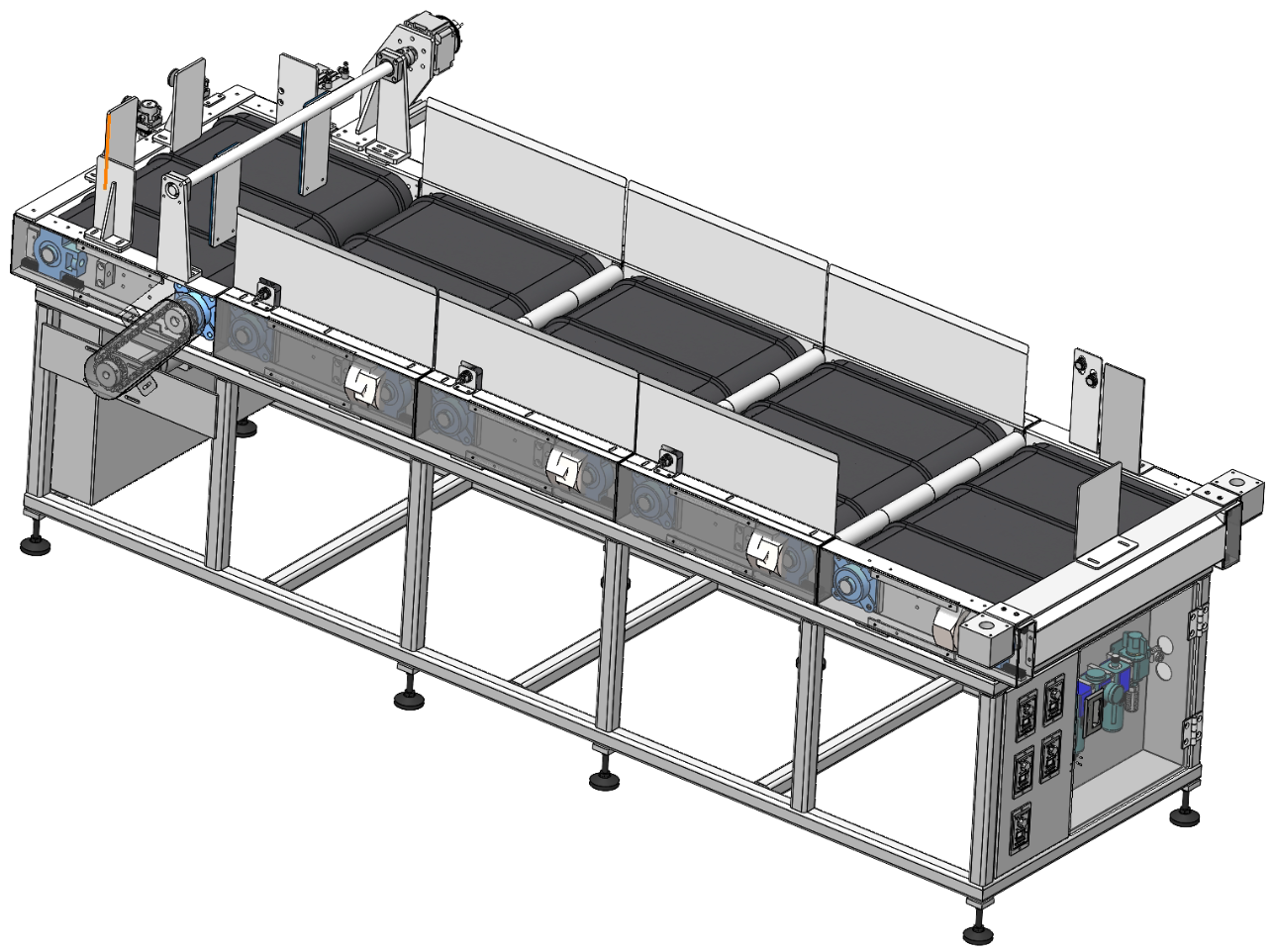
Hold one panel without pushing the next
Unlike a single continuous transport belt, the conveyor uses separate wide belt zones. Each zone can advance or hold a panel independently, maintaining deliberate workpiece separation while the downstream process is occupied.
- Panel support
- Wide belt sections provide broad support for the large, thin door panels.
- Zone transitions
- Transverse rollers bridge the interfaces between major belt sections.
- Lateral guidance
- Segmented guides maintain orientation and provide local clearance around sensors, transfers and the pickup station.
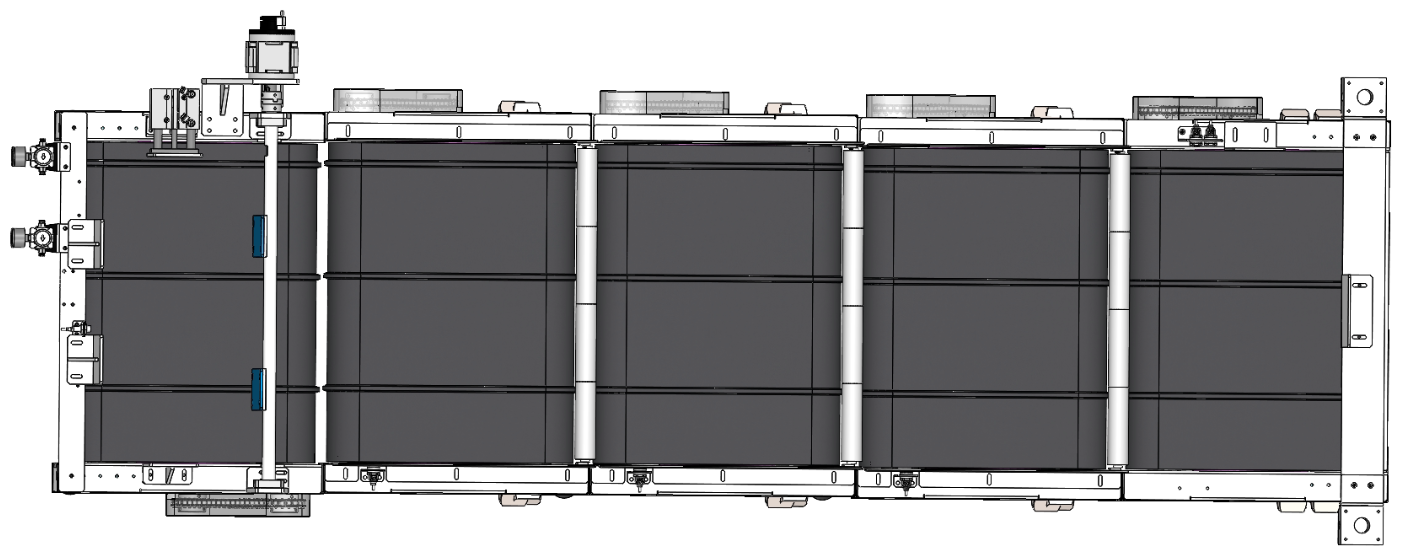
Keep drives and services outside the product path
Side mounted drive hardware and the open lower frame support maintenance access without occupying the product path. Repeated frame bays coordinate belt tracking, guide alignment and the downstream pickup geometry.
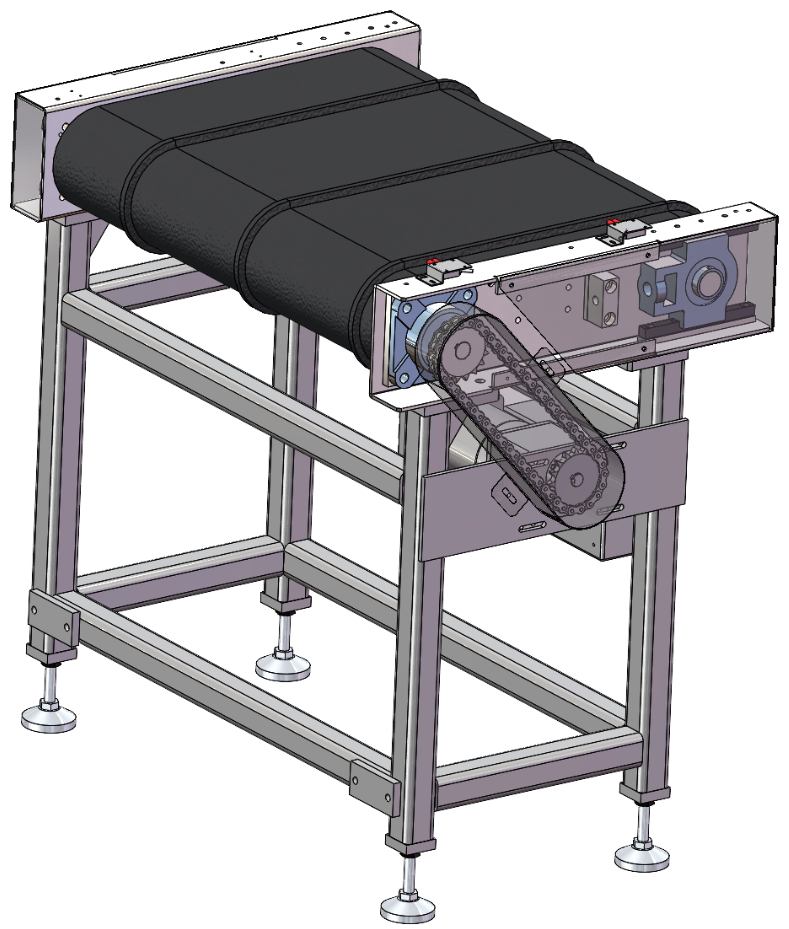
Belt zone and drive
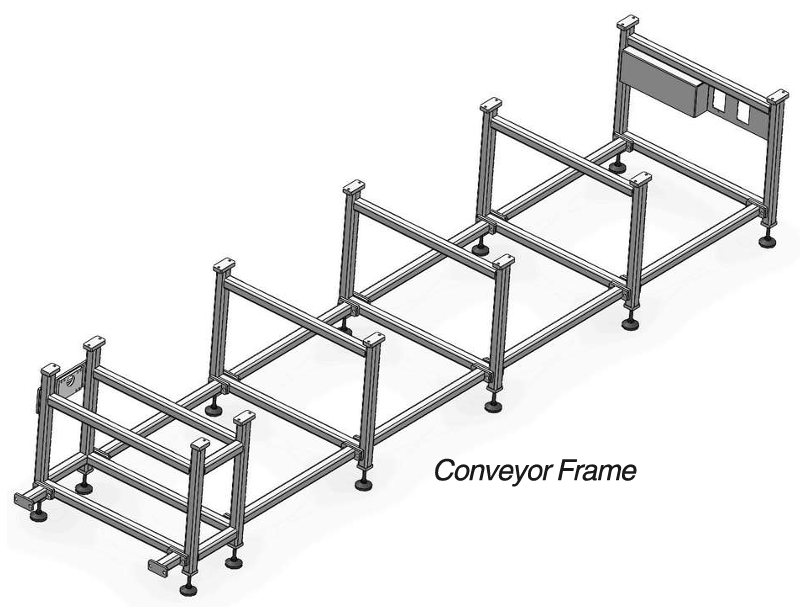
Supporting frame
Release to the process, not simply downstream
At the discharge end, the conveyor becomes a controlled presentation station. Positioning features and sensing provisions establish the required pickup condition before the downstream robot enters the handling sequence.
- 01
Buffer
Hold upstream panels in separate zones while the process is occupied.
- 02
Present
Advance the next panel to the defined downstream positioning condition.
- 03
Confirm
Use the required sensing and positioning condition to establish pickup readiness.
- 04
Release
Advance the sequence only when the downstream process is ready for the next panel.
The conveyor met the requiredtransport and release performance
The successful system achieved the specified conveyor speed and presentation duty. Belt speed and release pitch describe different parts of the operating requirement: the line rate is governed by the controlled presentation sequence rather than continuous belt motion alone.
Required nominal belt speed achieved.
Required release and pickup presentation interval achieved.
Required nominal line duty achieved.
- Accumulation
- Independent zones provided zero pressure buffering with deliberate workpiece separation.
- Robot interface
- The downstream end established a dedicated stop and presentation condition for repeatable pickup.
- Safety context
- The project context referenced EN 619, ISO 12100, ISO 13849-1 and ISO 14120 principles as applicable to the wider system.
- Documentation
- Manufacturing documentation carried the conveyor zones and mechanical integration interfaces into the project package.
Independent zones made the conveyor a buffer and a presentation device
The key engineering decision was to decouple panel movement between zones. That allowed the conveyor to absorb upstream flow, maintain separation and release the next workpiece only when the robotic process was ready.
An active material handling subsystem that achieved line duty
The finished conveyor integrated controlled transport, non contact accumulation and robotic presentation into one feed system. It successfully buffered upstream panels, preserved orientation and delivered the next workpiece into the required pickup condition at the intended line rate.
- Performance
- The system achieved 10 m/min nominal conveyor speed, approximately 15 s presentation pitch and approximately 4 panels/min line duty.
- Controlled flow
- Each belt zone could hold or advance a panel independently.
- Robot presentation
- The downstream geometry established the repeatable physical pickup condition required by the process.
- Project result
- The conveyor operated as an active part of the successful automated riveting material flow.