
ASRS and StackerCrane MechanicalDesign
Fabrixon delivered the mechanical engineering for a single aisle ASRS, including storage rack, stacker crane, telescopic fork and ground level discharge interfaces.
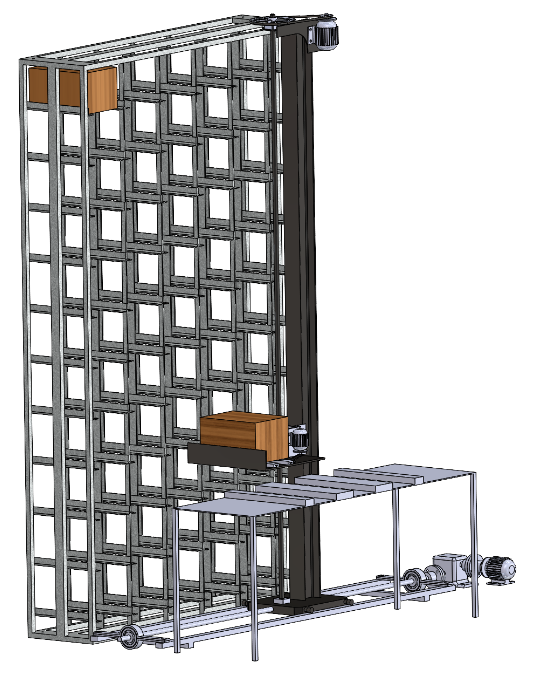
Turn a system concept into a buildable ASRS
The integrator supplied the capacity, throughput, footprint and discharge requirements. Fabrixon developed the rack, stacker crane and discharge mechanics into one coordinated package for fabrication and controls integration.
- Storage structure
- Rack members carried stored payload and crane induced dynamic reactions.
- Mobile mechanism
- The stacker crane combined horizontal travel, vertical lift and fork extension.
- Scope boundary
- Fabrixon owned mechanical engineering while the integrator retained software, controls and final commissioning.
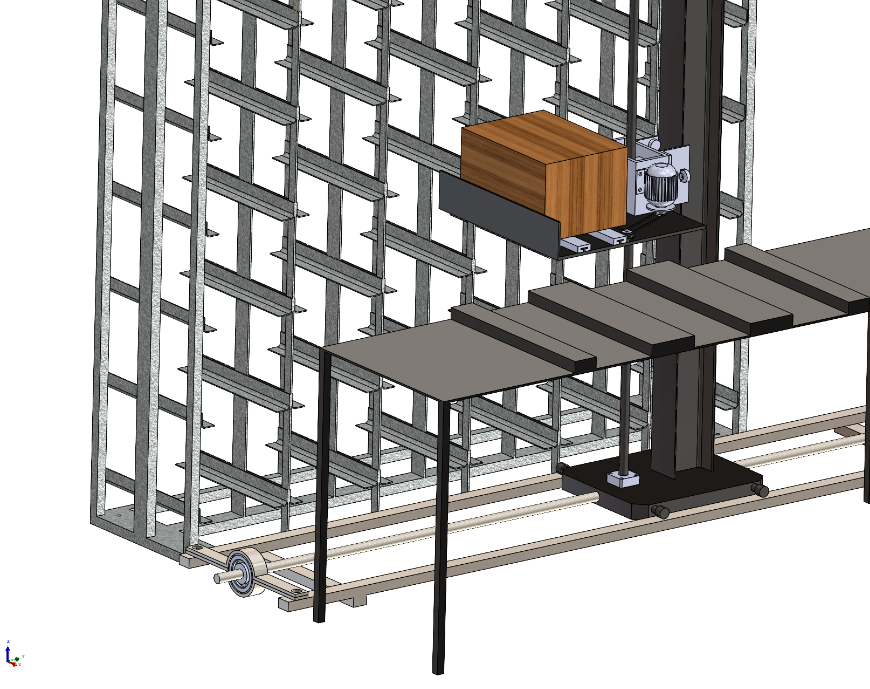
Carry storage and crane reactions in the same frame
The single aisle rack was developed around stored case and tote loads while also accommodating reactions from crane motion and transfer. Discharge tables were integrated at ground level as part of the same mechanical envelope.
- Structural basis
- Rack sizing considered static storage, crane motion and installation conditions.
- Fabrication
- Welds and structural details were documented for the fabrication partner.
- Discharge interface
- Carriage and table geometry were coordinated to maintain controlled load transfer.
Coordinate lift, travel and forkextension as one moving structure
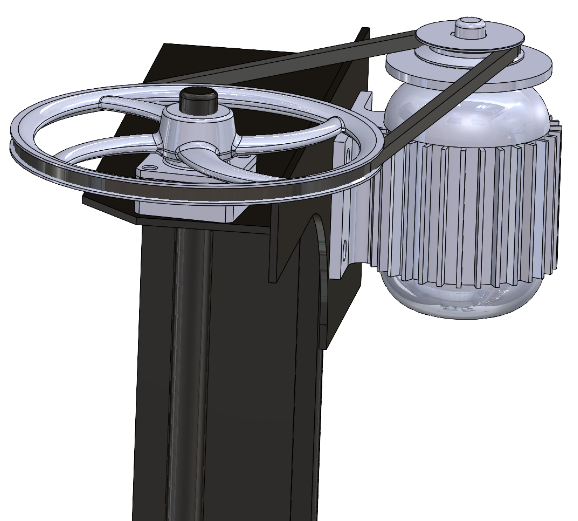
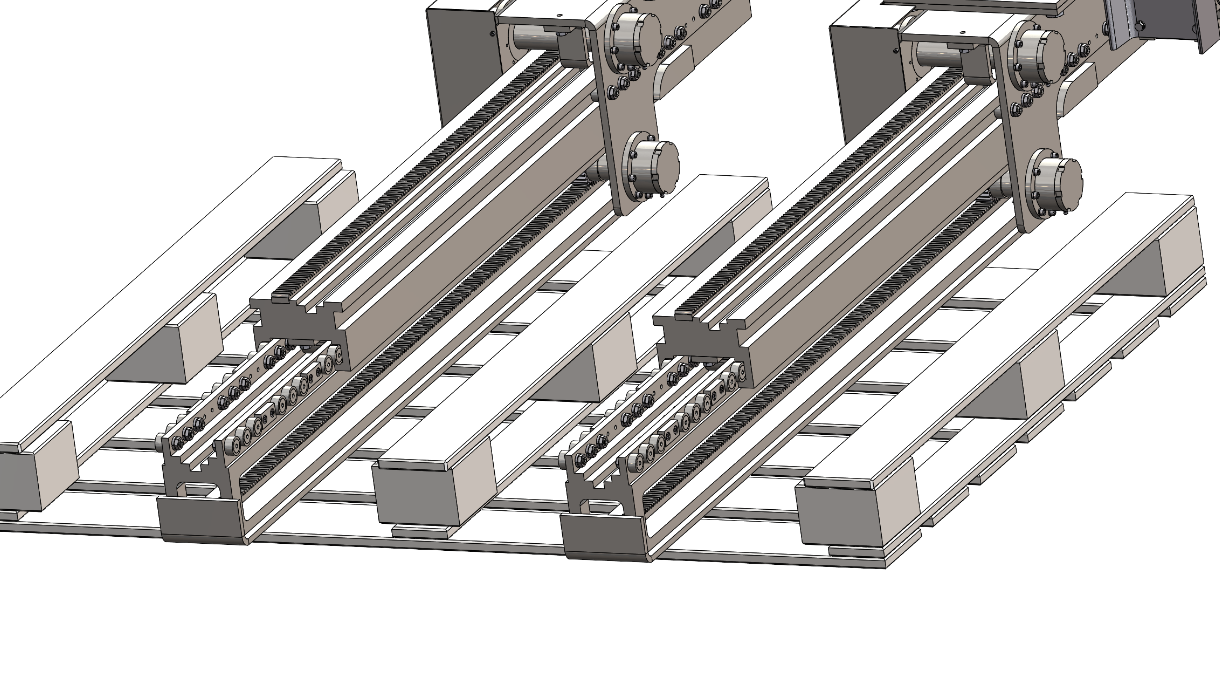
The single mast crane used a guided carriage, belt driven vertical lift, geared horizontal travel and telescopic forks. Full extension of the fork introduced a cantilever moment that had to be carried through the carriage and mast.
Meet the required storage and retrieval duty
Travel and lift profiles were tuned against the integrator throughput requirement using the project cycle time methodology. The commissioned system met the required operating duty without exceeding the structural load envelope used for the design.
- Throughput basis
- Approximately 40 to 50 combined cycles per hour was used as the project design target.
- Motion control
- Acceleration and deceleration profiles were coordinated with structural loading.
- Positioning
- Mast deflection and carriage guidance were controlled to support accurate fork engagement.
Mechanical interfaces readyfor controls and commissioning
The released package defined drives, sensors, guarding and mechanical interfaces so the integrator could complete controls integration without redesigning the equipment around them.
- Fabrixon scope
- Rack, crane structure, carriage, fork, drives, discharge mechanics and safety hardware interfaces.
- Integrator scope
- PLC, WMS, WCS, panel manufacture and site commissioning.
- Support
- Fabrixon remained engaged through fabrication queries and commissioning.
The rack and crane had to be engineered as one dynamic system
Storage structure, carriage guidance, fork cantilever load and crane motion all affected the same mechanical envelope. Treating them separately would have moved alignment and stiffness risk to commissioning.
A complete ASRS delivered into operation
The mechanical package was released on schedule. The ASRS and stacker crane were built, installed and commissioned at the end user site and are operational.
- Mechanical delivery
- Rack, crane, fork and discharge interfaces were released as one package.
- Operating result
- The installed system achieved the required storage and retrieval duty.
- Project status
- Built, commissioned and operating at the end user site.