
Pressing Machine Fatigue Failure Investigation
How fracture evidence, measured operating loads and local FEA were combined to explain a service failure at a critical threaded connection and define a targeted corrective path.
Tracing a progressive service fracture
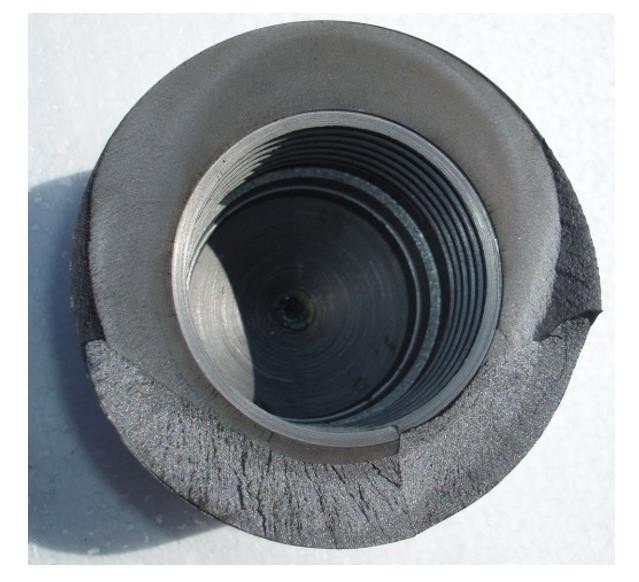
A principal guide component in a large industrial pressing machine developed a fatigue crack after extended operation. The fracture pattern showed progressive crack growth rather than a single overload event, so the investigation focused on what was happening locally at the connection instead of assuming the complete frame was under designed.
The fracture surface showed that fatigue had propagated through most of the section before final separation occurred.
The crack initiated at the root of the first engaged internal thread where the local stiffness changed abruptly.
Metallurgical review did not identify a major material defect capable of explaining the failure on its own.
Evidence led failure investigation
The root cause was built from several independent evidence streams. The study first established what failed and whether the material itself was defective, then measured the real operating response, and finally correlated a refined local model before assessing fatigue risk.
Inspect
Review the fracture surface, material structure and hardness to separate material quality from structural demand.
Measure
Use strain measurements during operation to quantify the combined axial and bending response acting on the connection.
Validate
Correlate the local FEA with measured response, verify notch severity independently and assess the resulting fatigue risk statistically.
Operating data established the real load state
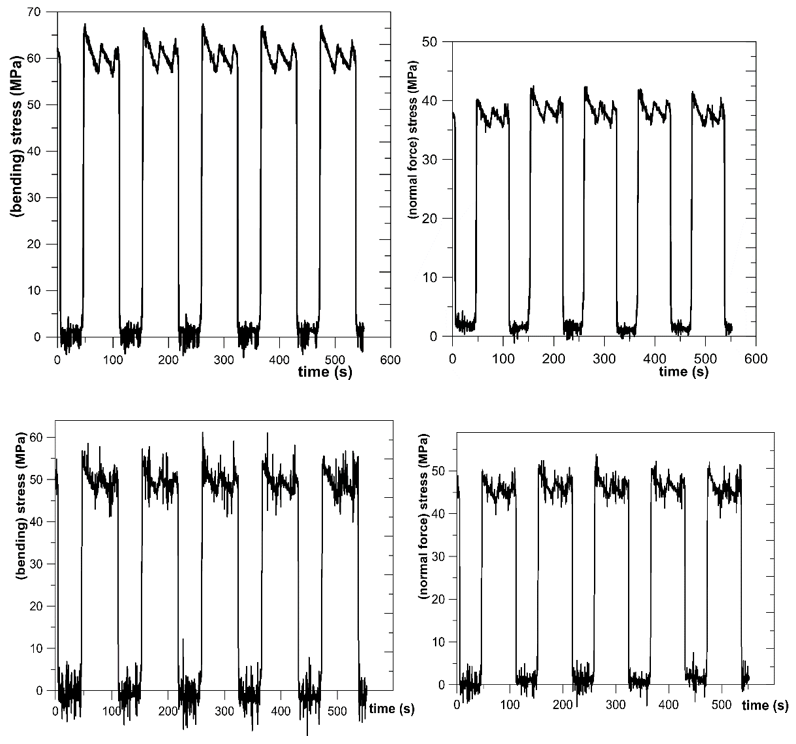
Strain gauges were installed around the critical section while the machine was operating. The measurements separated normal force from bending response and showed repeated cycle to cycle variation through the working sequence.
The connection carried axial load, additional bending and bolt preload at the same time.
The subsequent local analysis was grounded in real service response rather than nominal design assumptions alone.
The first engaged thread controlled local fatigue demand
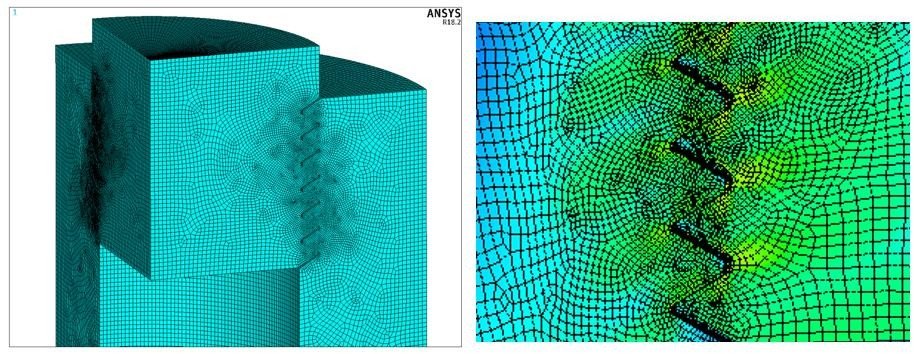
A refined finite element model was developed around the internal threaded connection to resolve the notch root properly. Contact and boundary conditions were adjusted until the model reproduced the measured external response, giving a stronger basis for interpreting the local stress field.
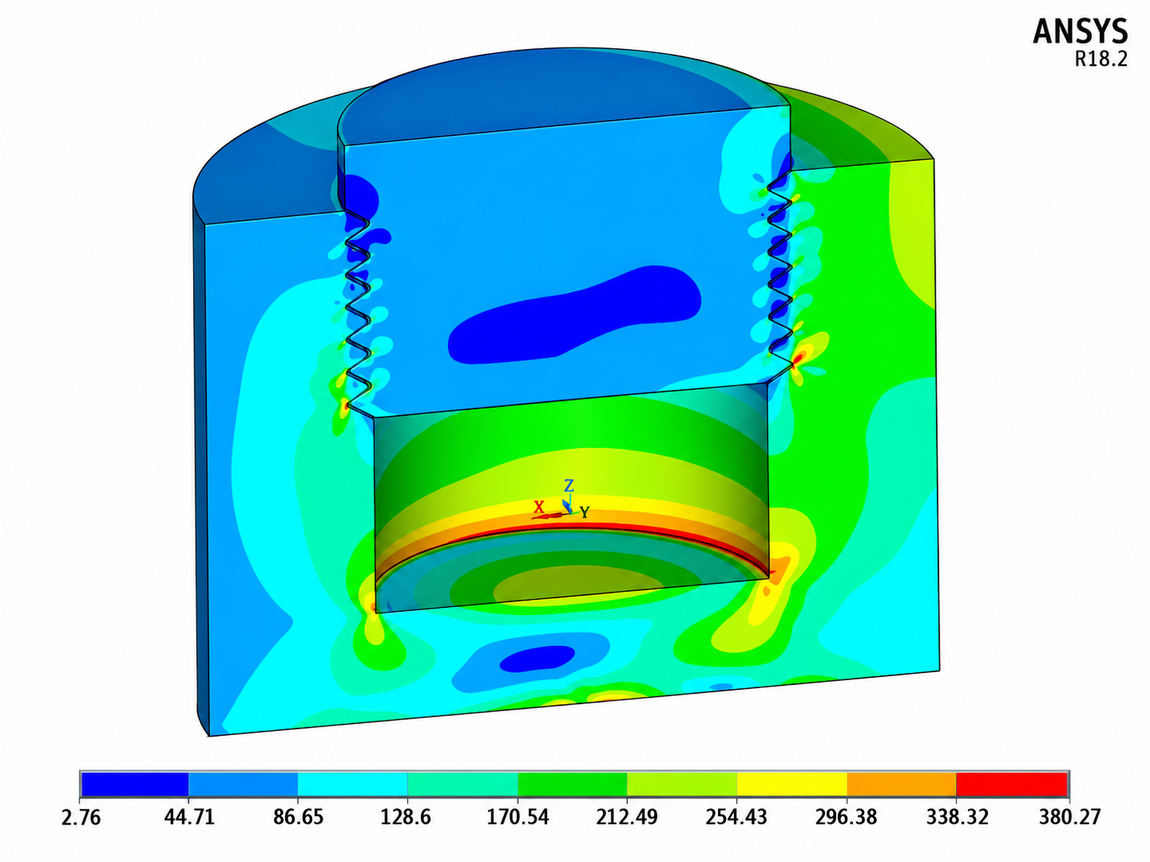
The internal thread created a severe stress concentration that was not visible from the nominal section stress alone.
Measured thread geometry was also assessed analytically and supported the severity predicted by the finite element model.
The nominal stress state appeared moderate, but bolt preload, service tension, bending and the local thread geometry combined to create a much more severe cyclic condition at the first engaged thread. The physical crack origin matched the location identified as most highly demanded by the analysis.
Targeted changes addressed the real failure mechanism
The probabilistic fatigue assessment showed meaningful overlap between local cyclic demand and the available fatigue strength. That moved the corrective strategy away from increasing the size of the complete machine and toward changes that directly affected the critical connection.
Severe local stress concentration at the internal thread combined with preload, service tension and bending.
Reduce demand at the critical threaded section through connection and preload changes rather than adding mass throughout the machine.
Increase fatigue resistance where the local cyclic demand could not be reduced sufficiently by geometry and loading changes alone.
The study reports that a material change was adopted in practice after the investigation.