
High PrecisionGrinding MachineVibration Analysis
How modal FEA, impact testing and structural optimization were used to increase resonance margin in a precision grinding machine while preserving rigidity.
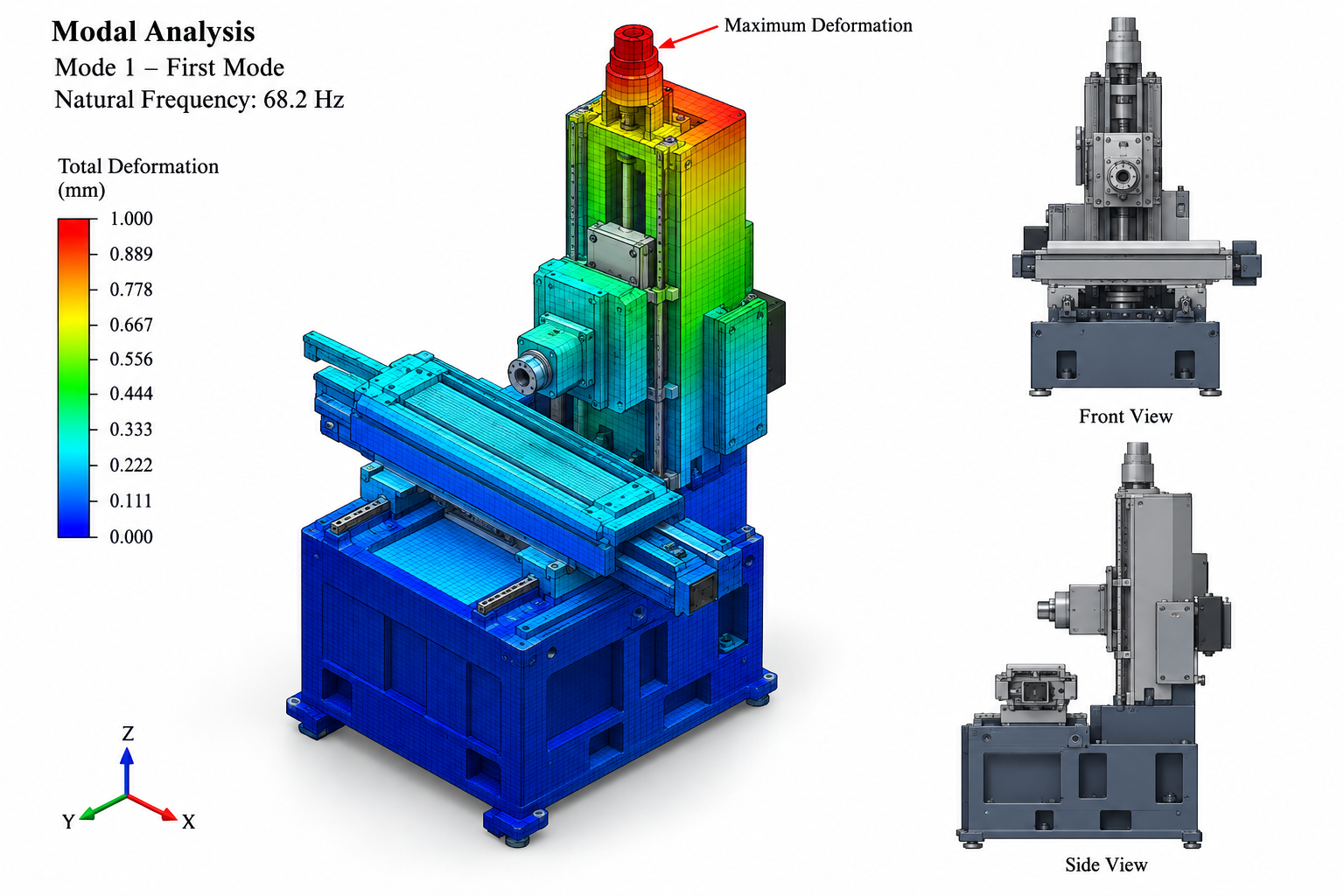
Operating excitation sat close to the first structural mode
Grinding accuracy depends on a dynamically stable machine structure. Initial modal assessment placed the spindle operating excitation close to the first whole machine mode, leaving limited separation from resonance. The investigation therefore focused on whether stiffness could be redistributed without sacrificing static rigidity or practical machine interfaces.
Determine where the dominant whole machine modes sat relative to spindle excitation.
Identify which major assemblies dominated the lower frequency deformation patterns.
Improve dynamic stiffness without removing material required for mounting, travel or machine function.
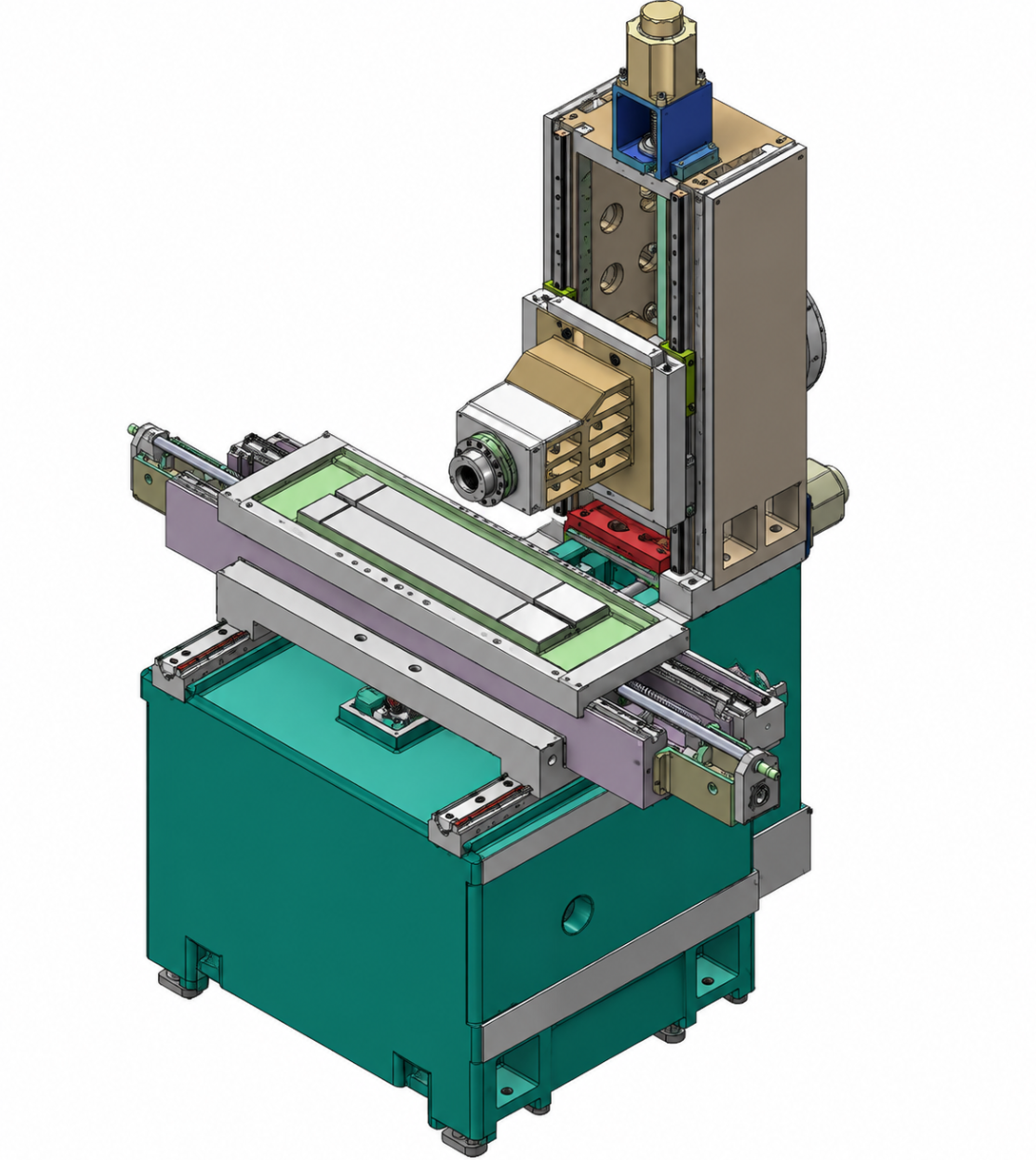
Validate first then redesign
The work combined a whole machine FE model with physical modal testing before structural optimization decisions were accepted. Once the numerical model showed suitable correlation, selected components were redesigned and then returned to the complete machine for modal and static reanalysis.
Establish whole machine dynamics
Represent the major load carrying structures and connection interfaces, then extract the dominant whole machine modes.
Correlate with physical testing
Use impact testing and measured response to confirm that the predicted modal behaviour is representative of the real machine.
Redistribute structural material
Apply topology guided redesign to critical components, retain required interfaces and add reinforcement where stiffness is more valuable than weight reduction.
Low frequency modes identified the stiffness critical structure
The first mode was dominated by motion of the vertical column and spindle region, while the next mode introduced torsional behaviour through the same upper structure. This confirmed that resonance control depended on stiffness distribution through the column, spindle housing and supporting base rather than on machine mass alone. After redesign, the whole machine modes shifted upward while the overall deformation pattern remained mechanically consistent.
The lowest whole machine mode sat close enough to operating excitation to justify a resonance mitigation exercise.
The revised machine showed greater frequency separation without a meaningful penalty in overall mass or static rigidity.
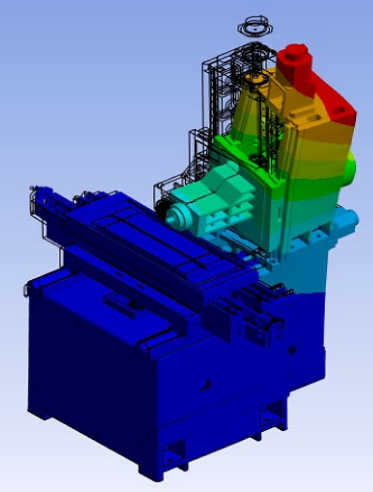
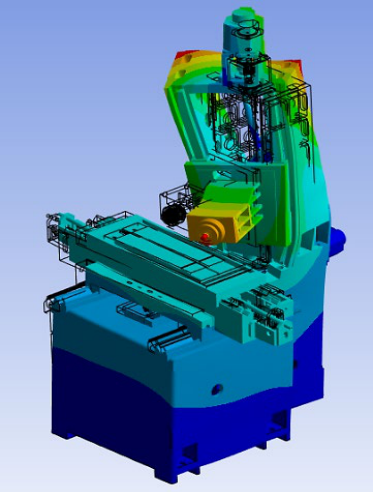
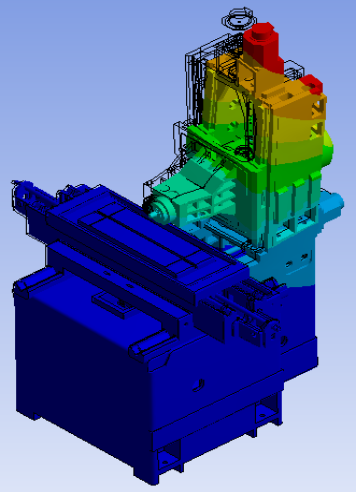
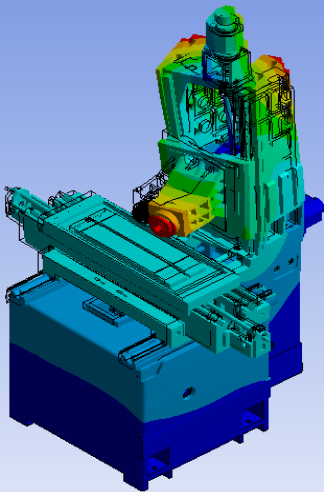
Selected whole machine modal FEA results showing how deformation patterns changed before and after structural redesign.
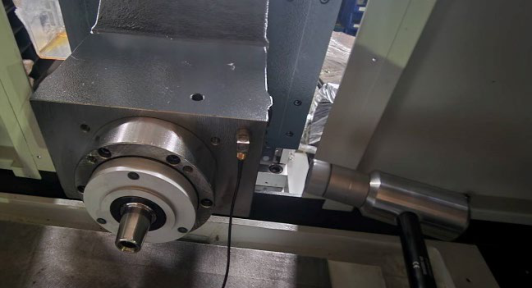
Impact testing confirmed the modal model
Physical modal testing was used to compare measured structural resonances with the FEA predictions. The principal frequencies and deformation patterns showed close agreement, providing sufficient confidence in the model before it was used to guide structural redesign.
The measured and predicted primary modes remained within a small engineering difference, with reported frequency errors below approximately ten percent.
Agreement in both frequency and mode shape supported use of the numerical model for the subsequent optimization work.
The vibration issue was concentrated in the load carrying path through the column, spindle housing and base. The strongest redesign strategy was therefore selective material redistribution and reinforcement, not simply removing mass from the machine.
Higher modal margin with rigidity preserved
The validated model was used to guide topology based redesign of selected structural components. Once the revised components were returned to the complete assembly, the first whole machine mode moved beyond the project target while the machine remained slightly lighter and static spindle deflection was maintained.
The first structural mode moved farther from the spindle operating excitation and beyond the specified design target.
Material was removed where it contributed little to stiffness and reinforcement was retained or added where the load path required it.
Whole machine reanalysis confirmed that the dynamic improvement did not require a sacrifice in static structural performance.